
By: Staff Writer
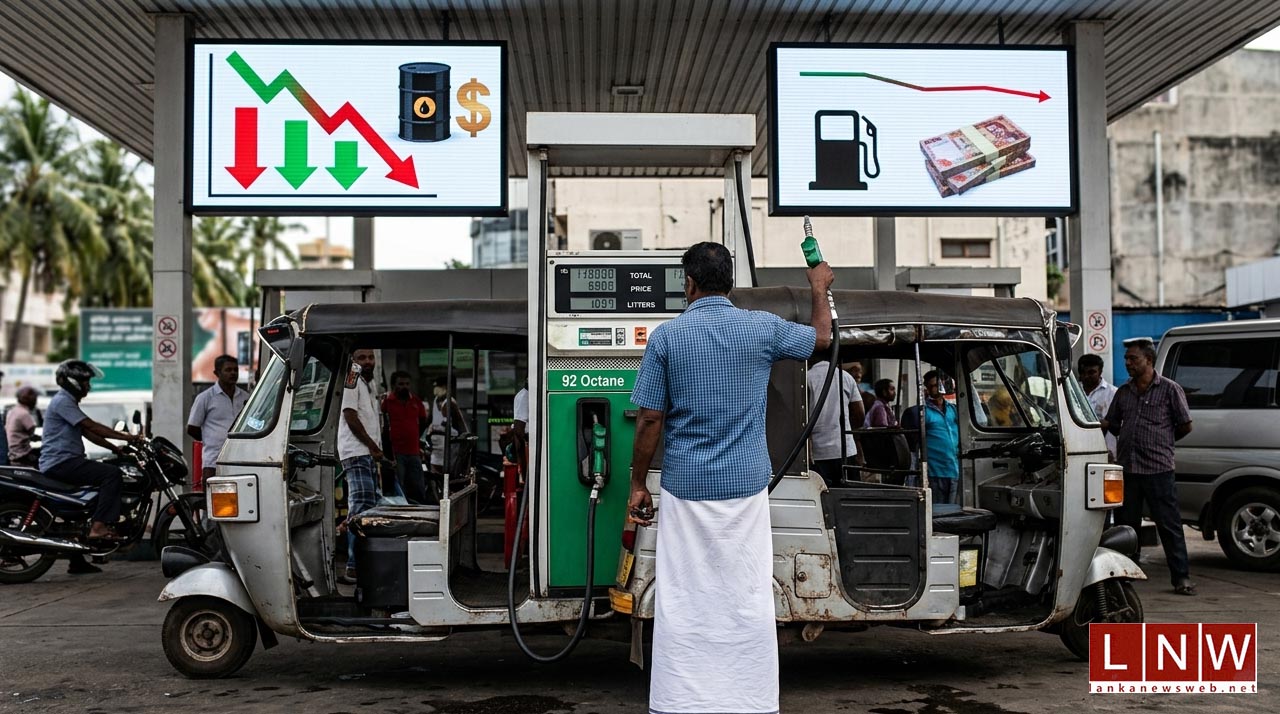
June 29, Colombo (LNW): The Government’s explanation for not reducing fuel prices despite falling international oil prices has triggered fresh questions over whether Sri Lanka is honouring its commitment to the International Monetary Fund (IMF) to maintain a transparent, cost-reflective fuel pricing mechanism.
Deputy Finance Minister Anil Jayantha recently stated that fuel prices cannot be reduced immediately because Sri Lanka imports petroleum through term tenders rather than spot purchases. According to him, fuel cargoes arriving today were contracted several weeks or months ago when international oil prices were considerably higher. Therefore, current global price reductions cannot be immediately reflected in local retail prices.
Technically, the Minister’s explanation is commercially valid. Term tenders are widely used by governments and large fuel importers because they guarantee uninterrupted supplies and reduce procurement risks. Prices under these contracts are generally linked to international benchmarks plus negotiated premiums. They also prevent sudden supply shortages that could cripple the economy.
However, the larger issue is not whether term tenders are appropriate procurement instruments. The real concern is whether this explanation contradicts Sri Lanka’s repeated assurances to the IMF that domestic fuel prices would be revised using a cost-reflective pricing formula based on prevailing international market prices.
Following the economic crisis, Sri Lanka pledged to eliminate politically determined fuel pricing and instead introduce an automatic formula ensuring consumers pay prices that accurately reflect international petroleum costs, exchange rate movements and operational expenses. This commitment became one of the key structural reforms under the IMF programme.
If procurement contracts signed months earlier now determine local fuel prices instead of current international market conditions, then an important question arises. Is the fuel pricing formula still functioning as originally promised, or has procurement policy effectively overridden the pricing mechanism?
The Government has consistently referred to the V= V1+V2+V3+V4 pricing formula. Although each component represents different cost variables including benchmark prices, freight, exchange rate fluctuations, taxes and distribution costs the public was led to believe that international price reductions would eventually result in corresponding reductions at the fuel pump.
Instead, consumers are now being told that contractual commitments under term tenders prevent immediate price adjustments. This explanation may satisfy procurement professionals, but it offers little comfort to millions of Sri Lankans already burdened by soaring transport costs, higher food prices and rising household expenses.
Transparency therefore becomes essential. The Government should clearly explain how term tender prices are incorporated into the official pricing formula and whether the formula continues to comply with IMF requirements. Without such clarity, public confidence in both the pricing mechanism and the Government’s economic reform programme may gradually erode.
Ultimately, the debate is no longer simply about fuel procurement. It is about accountability, policy consistency and whether ordinary citizens are receiving the benefits they were promised when global energy prices decline.