
By: Staff Writer
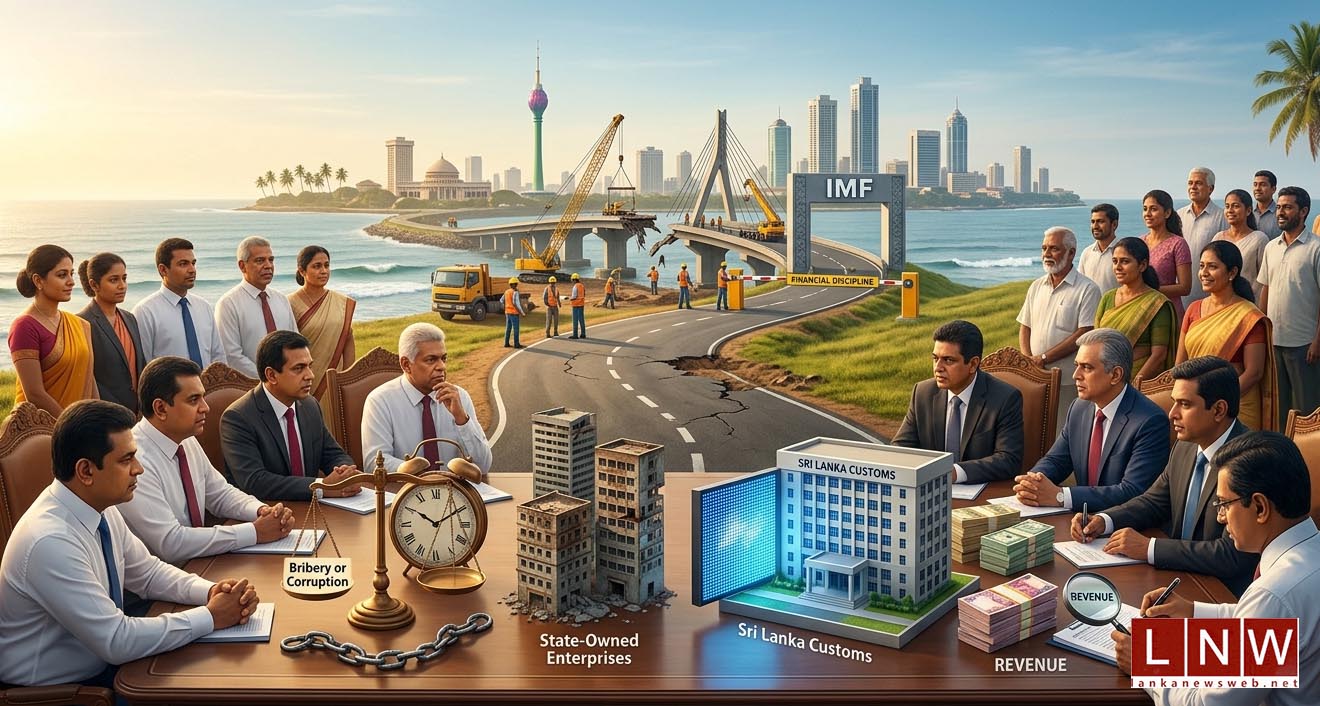
June 30, Colombo (LNW): Sri Lanka’s latest discussions with the International Monetary Fund extend far beyond financial targets, with governance reforms, anti-corruption measures, and state-sector restructuring emerging as decisive factors in determining the country’s continued access to international financial support.
An IMF delegation led by Mission Chief Evan Papageorgiou is conducting a week-long assessment in Colombo to evaluate progress under the country’s Extended Fund Facility programme. The review comes at a time when Sri Lanka is attempting to balance economic recovery with fresh challenges created by global geopolitical tensions and natural disasters.
Among the most closely monitored commitments is the full operationalisation of the Commission to Investigate Allegations of Bribery or Corruption (CIABOC). IMF officials expect independent commissioners to be appointed without political interference while ensuring the institution receives adequate budgetary allocations to conduct sophisticated financial forensic investigations.
The emphasis on anti-corruption reflects the IMF’s broader objective of strengthening governance and improving public confidence in state institutions following Sri Lanka’s economic crisis.
The delegation is also reviewing the government’s progress in reforming state-owned enterprises, many of which have accumulated significant losses over several years. Authorities are expected to demonstrate concrete action either through restructuring or divestment to ensure these enterprises no longer require continuous financial support from taxpayers.
Revenue generation remains another priority. Government officials are working on updated tax diagnostic measures and an enhanced Medium-Term Revenue Strategy designed to improve tax administration while increasing state income over the medium term.
Customs modernisation has also received significant attention during the IMF mission. Delegation members visited the Sri Lanka Customs Department to examine ongoing digitalisation initiatives intended to improve transparency, reduce leakages, and enhance revenue collection.
Despite temporary flexibility granted after Cyclone Ditwah and economic disruptions arising from Middle East tensions, the IMF continues to insist on strict financial discipline. The government received approval for a Rs.500 billion supplementary budget to finance disaster recovery and provide relief to affected communities, but officials must demonstrate that spending remains confined to the approved emergency allocation.
Similarly, the Central Bank is required to maintain zero net monetary financing, preventing the printing of money to finance government expenditure. Authorities must also continue strengthening foreign exchange reserves despite interventions to stabilise the rupee.
The IMF is carefully examining whether Sri Lanka has remained on schedule with debt restructuring commitments while avoiding any renewed external payment defaults. Maintaining credibility with international lenders remains central to the country’s recovery strategy.
If the seventh programme review concludes successfully, Sri Lanka is expected to qualify for the release of the eighth IMF EFF instalment valued at SDR 254 million, equivalent to approximately US$335–350 million. Analysts believe continued access to IMF funding will largely depend on the government’s ability to demonstrate sustained fiscal discipline, stronger governance, and meaningful implementation of long-promised structural reforms.