
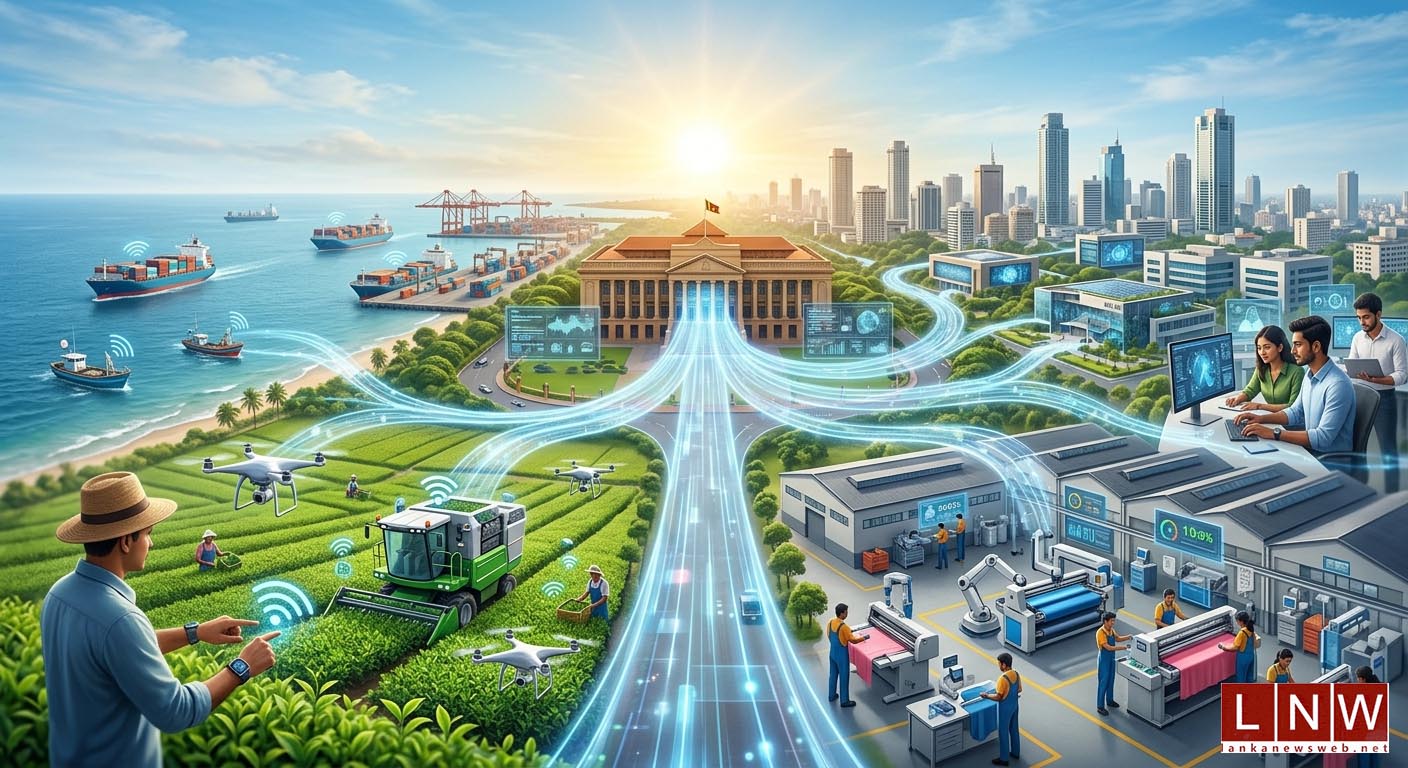
Sri Lanka used the global platform of MWC Shanghai 2026 to introduce itself as an emerging player in artificial intelligence infrastructure rather than merely another consumer of global technology. The message delivered by Deputy Digital Economy Minister Eng. Eranga Weeraratne was ambitious: Sri Lanka intends to leverage its strategic geography, digital connectivity, renewable energy ambitions and skilled workforce to become a trusted regional platform for AI development.
It is a compelling narrative.
However, the document itself reveals a familiar policy dilemma—strong vision accompanied by limited evidence of immediate implementation.
Throughout the presentation, Sri Lanka positions itself as an enabling platform instead of competing directly with technology giants. It highlights its network of international submarine cable systems, its role as South Asia’s first submarine cable depot and its geographical location along major East-West digital routes.
These are long-term structural advantages that few countries possess. Yet infrastructure potential alone cannot establish an AI ecosystem.
The proposal extends well beyond connectivity. Sri Lanka aims to develop integrated computing infrastructure, hyperscale data centres, trusted governance frameworks, cybersecurity capabilities and local-language AI solutions. It also proposes sovereign AI not as technological isolation, but as maintaining control over national data while encouraging international collaboration.
The policy vision is broad and comprehensive.
What remains less clear is how these objectives will be translated into coordinated national programmes.
The presentation outlines what Sri Lanka hopes to become rather than what has already been achieved. Phrases such as “seeks to create”, “believes it can become” and “working towards” dominate the narrative. They reflect policy intent but also underline that much of the agenda remains aspirational.
International investors are being invited to finance advanced computing infrastructure, AI research and cybersecurity partnerships. Governments and development partners are encouraged to join future AI forums and digital economy initiatives hosted by Sri Lanka.
These invitations demonstrate confidence but also highlight a dependence on external collaboration before several core ambitions can materialise.
The renewable energy agenda further illustrates this gap. Sri Lanka’s target of generating 70 percent renewable electricity by 2030 and carbon-neutral electricity by 2050 supports the country’s aspiration to host environmentally sustainable data centres. Yet these goals remain future commitments whose success depends on consistent policy delivery.
Equally significant is the emphasis placed on trusted governance. In the AI era, regulatory certainty, cybersecurity resilience and institutional capacity often matter as much as digital infrastructure itself. The document identifies these priorities but stops short of explaining the implementation architecture required to achieve them.
Sri Lanka’s presentation succeeds in positioning the country within an important global conversation about artificial intelligence and digital infrastructure. It presents a persuasive strategic case built around geography, connectivity and collaboration.
The greater challenge now lies beyond international conferences. Transforming Sri Lanka into the regional AI hub described in Shanghai will require sustained execution, institutional coordination and timely implementation. Until those elements become visible, the country’s AI vision risks remaining an impressive policy narrative searching for practical delivery.