
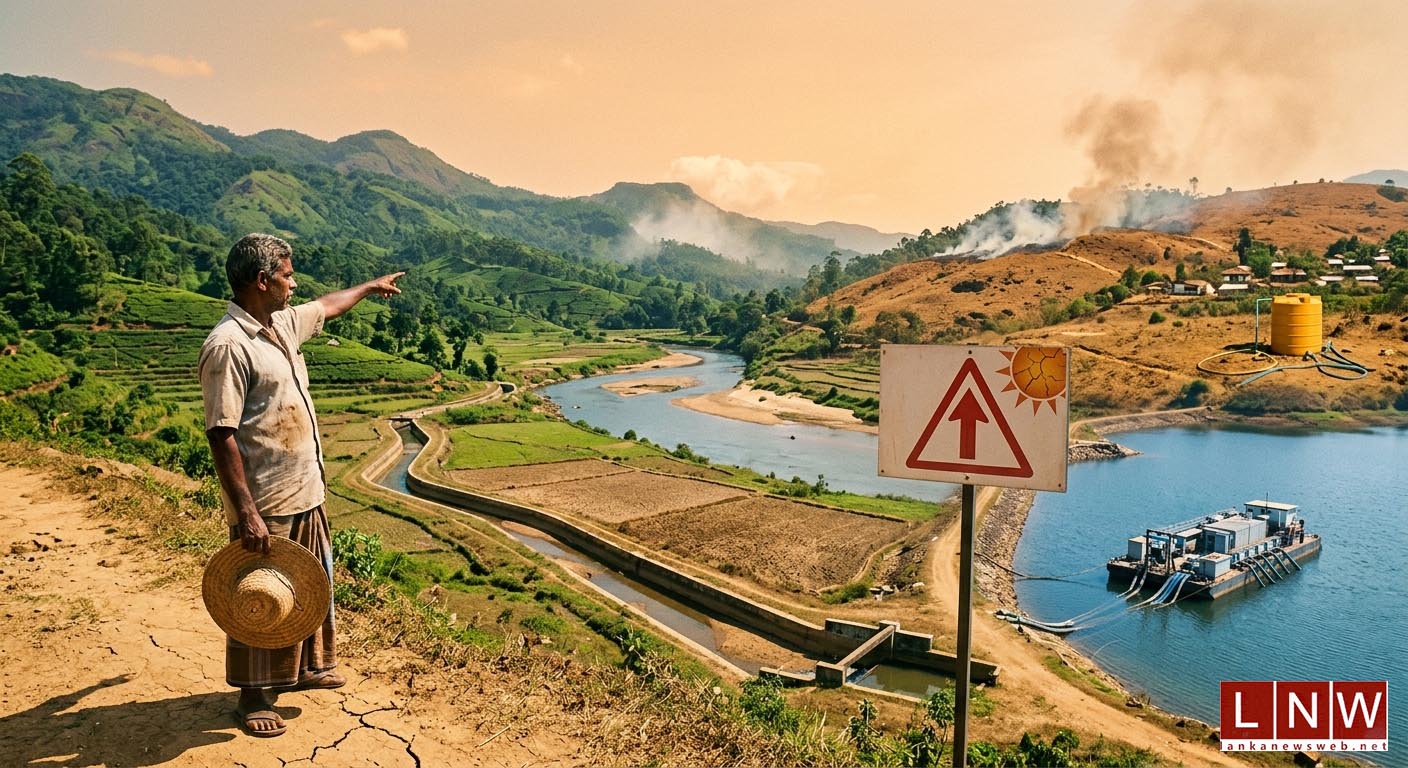
Sri Lanka’s water and energy sectors are preparing for possible climate disruptions as authorities assess the risks posed by a developing El Niño event, while current reservoir levels provide confidence that the country can manage upcoming challenges.
Officials said during a government media briefing that national water storage remains stronger than during previous El Niño periods, allowing the country to maintain agricultural activities while preparing for changing rainfall patterns.
Director General of Irrigation Eng. Dr. Kithsiri Waligepolage said reservoir storage under the Irrigation Department currently stands at around 50 percent capacity. He explained that the expected reduction in rainfall during July and August is unlikely to create serious difficulties because water inflows are usually low during these months.
The main challenge will come during the Maha cultivation season, which begins in October. Authorities expect rainfall during October and November to support farming activities and help maintain national food production.
Waligepolage confirmed that drinking water supplies remain stable, although some reductions have been observed in parts of the Eastern Province.
He explained that irrigation reservoirs serve multiple purposes, including agriculture and drinking water supply, while only limited amounts are allocated for hydropower generation.
Director of the Water Management Secretariat of the Mahaweli Authority of Sri Lanka Eng. Nilantha Dhanapala said national reservoir storage is currently around 65 percent, placing the country in a better position than during the 2015–16 El Niño period.
According to Dhanapala, hydropower reservoirs are at 60 percent capacity, mini-hydropower reservoirs at 68 percent, Mahaweli-managed reservoirs at 71 percent, and Irrigation Department reservoirs at 62 percent.
Regional storage levels also remain comparatively strong. Reservoir systems from Kotmale to Anuradhapura are at approximately 74 percent capacity, while the Victoria–Maduru Oya system stands at 58 percent. Moragahakanda and the Walawe Basin are around 68 percent, while the Kelani Basin, including Castlereigh and Maussakelle reservoirs, remains at about 74 percent.
Based on current storage conditions, officials estimate Sri Lanka can support cultivation of approximately 860,000 hectares during the upcoming Maha season.
Dhanapala highlighted the ability of the Mahaweli system to transfer water from wetter areas to drier regions as a major advantage during periods of rainfall uncertainty. He urged farmers to begin cultivation activities on time in October to gain maximum benefit from anticipated rains.
The energy sector is also being monitored closely. Hydropower currently contributes around 25–30 percent of national electricity generation. Officials said no reduction in power generation releases has been implemented so far.
However, the Water Management Secretariat has requested the Ceylon Electricity Board to reduce unnecessary reservoir releases for electricity generation during the El Niño period.
The request reflects growing concern that water resources must be prioritised for essential needs, particularly agriculture and drinking water supplies.
While scientists continue monitoring the strength and duration of El Niño, Sri Lanka’s officials believe early planning, adequate storage levels and coordinated water management will be critical in protecting the country from possible climate-related pressures in the months ahead.