
By Roger Srivasan
There are occasions when a national institution quietly begins to rediscover its purpose. Its transformation is not heralded by grandiose proclamations or triumphant fanfare, but by the accumulation of countless small improvements that collectively inspire renewed confidence. Such was my overwhelming impression upon travelling recently with SriLankan Airlines.
After years during which the national carrier became synonymous with political interference, questionable decision-making, financial turbulence and the corrosive effects of corruption, it is heartening to witness an organisation that appears to be charting a more encouraging course. While significant challenges remain, the airline no longer conveys the impression of an institution drifting inexorably towards decline. Rather, it seems to be regaining altitude with quiet determination.
The green shoots of recovery are no longer merely discernible; they appear remarkably well nourished, offering cautious but genuine grounds for optimism.
It would be intellectually dishonest to attribute every positive development solely to the present administration. Equally, however, it would be remiss not to acknowledge the wider change in governance that is increasingly evident across the public sector. A stronger emphasis on accountability and fiscal discipline, reflected in record revenue collections by Sri Lanka Customs, points towards a broader culture of improved stewardship of public institutions. It is within that environment that SriLankan Airlines appears to be finding renewed confidence.
No balanced assessment, however, should overlook the airline’s troubled past. For many years, SriLankan Airlines became burdened by substantial financial losses, political interference, questionable procurement decisions and mounting debt. High-profile controversies, including the Airbus procurement scandal, inflicted lasting damage upon its reputation and public confidence. Those difficult chapters should neither be forgotten nor rewritten, for they serve as a reminder of the price a nation pays when transparency and good governance are allowed to falter.
What impressed me most, however, was not found in a balance sheet, but in the cabin itself.
From the moment passengers boarded the aircraft, they were greeted with the warmth, courtesy and effortless professionalism for which Sri Lankan hospitality has long been admired. The cabin crew projected not only competence but genuine pride in representing their country. Their attentive yet unobtrusive service transformed what might otherwise have been an ordinary journey into an experience that reflected the very best of our national character.
The flight itself was efficiently operated, with commendable punctuality and thoughtful scheduling. Practical considerations also matter greatly to travellers, particularly those journeying between Colombo and London. The generous 40-kilogram baggage allowance is a welcome recognition of the realities facing families, students and members of the Sri Lankan diaspora, distinguishing the airline from many of its international competitors.
Perhaps the most striking development was the airline’s unmistakable commitment to inclusivity.
Announcements were delivered with equal respect for Sinhala, Tamil and English. More significantly still, the in-flight entertainment system and flight information were readily accessible in Tamil. I observed numerous Tamil passengers—some far more comfortable in Tamil than English—following films, programmes and flight information with evident ease. It was a seemingly modest change, yet one carrying profound symbolic significance. It conveyed a simple but powerful message: every Sri Lankan passenger belongs.
Such gestures cannot be measured in financial statements, yet they strengthen national cohesion immeasurably. They foster dignity, belonging and mutual respect across all communities.
A national airline is far more than a commercial enterprise. It is, in many respects, the country’s ambassador in the skies. For countless visitors, the first impression of Sri Lanka is formed not upon landing, but from the welcome they receive the moment they step aboard one of its aircraft. On this journey, SriLankan Airlines acquitted itself with distinction. Its renewed emphasis on inclusivity, professionalism and authentic Sri Lankan hospitality is undoubtedly another feather in Sri Lanka’s cap.
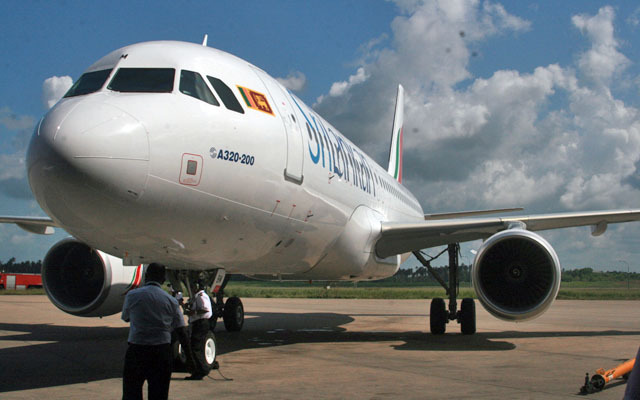
This is not to suggest that the journey is complete. Fleet modernisation remains an urgent strategic imperative. Replacing ageing aircraft with new-generation, fuel-efficient fleets would improve operational reliability, passenger comfort, environmental performance and long-term competitiveness. Investment in modern aircraft is not simply desirable; it is essential if the airline is to compete confidently with the world’s leading carriers.
Nevertheless, optimism today rests upon firmer foundations than it has for many years.
Like the aircraft it operates, SriLankan Airlines appears once again to have lifted from the runway after a prolonged period of turbulence. The climb will undoubtedly require patience, disciplined leadership and sustained investment. Yet the direction of travel appears encouraging.
As Sri Lankans, irrespective of ethnicity, language or faith, we should take pride in supporting our national carrier whenever circumstances permit. Every journey strengthens not merely an airline, but an institution that carries our flag, our identity and our reputation to the wider world.
Every successful flight begins with a committed rotation from the runway. SriLankan Airlines has not yet reached cruising altitude, nor has every cloud disappeared from its horizon. Yet, for the first time in many years, the flight path appears reassuringly upward. If integrity continues to replace patronage, professionalism supplants political interference, and strategic investment accompanies prudent management, the national carrier may once again become not merely an airline, but a source of enduring national pride.