
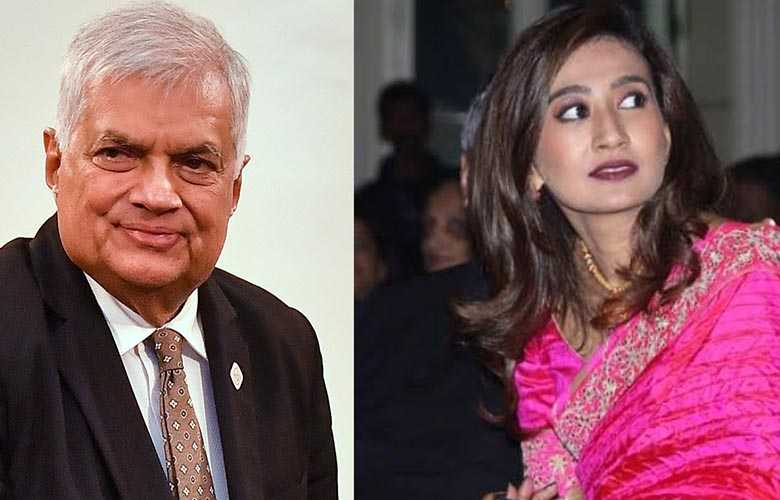
Saroja in deep trouble…
By Adolf
The disclosure in court that the Criminal Investigation Department (CID) has completed its investigation into the London visit and forwarded the file to the Attorney General for advice has brought renewed attention to one aspect of the case—the expenditure on vehicles.
During the proceedings, counsel for the first suspect informed the court that vehicles had allegedly been provided by the British Government for the visit and submitted documents to the complainant in support of that position.
If those documents establish that official transport was provided at no cost to the Sri Lankan Government, they could raise important questions about the expenditure of more than Rs. 8 million reportedly recorded as vehicle-related costs.
Under Sri Lanka’s Government Financial Regulations and the Establishment Code, the Head of Mission at a diplomatic mission overseas—namely the Ambassador or High Commissioner—is generally responsible for the proper authorization and oversight of public expenditure undertaken by that mission. Financial transactions are normally processed through established accounting procedures, supported by documentation, and subject to audit requirements.
Against that backdrop, several questions naturally arise. Who authorized the expenditure? What services were paid for? To whom were the payments made? Were the payments supported by invoices or other documentary evidence? If vehicles were, in fact, provided without charge, how were the reported vehicle expenses incurred?
These are questions that investigators are likely to examine carefully before any conclusions are reached.
At this stage, there has been no judicial finding that any person acted unlawfully. Nevertheless, if investigators were to discover that public funds were paid for services that had already been provided free of charge, they would need to determine whether the discrepancy resulted from an administrative error, a misunderstanding, or potentially more serious financial misconduct. Any decision on whether criminal offences may have been committed would ultimately depend on the evidence and the advice of the Attorney General.
The investigation may also require tracing the approval process for the expenditure. If payments were processed through the Sri Lankan High Commission in London, investigators may seek to identify the officials responsible for authorizing, certifying, and approving the relevant vouchers and financial documentation.
As the Head of Mission at the time, former High Commissioner Saroja Sirisena may be among those from whom investigators seek explanations regarding the financial procedures followed, if the evidence indicates that such inquiries are necessary. That, however, should not be interpreted as a finding of wrongdoing. Responsibility can only be determined following a full examination of the relevant documents and the applicable legal standards.
The defence appears to be advancing the position that former President Ranil Wickremesinghe did not personally receive or control the funds in question and that any payments were processed through official diplomatic channels. If accepted, that argument could shift greater attention towards the administrative processes governing the expenditure rather than the personal receipt of funds.
At the same time, investigators may still consider the broader decision-making process surrounding the visit, including who authorized the expenditure of public funds and under what authority. Those issues are distinct from the mechanics of processing payments and may remain relevant depending on the evidence.
The Attorney General’s advice will likely determine the next stage of the investigation. If further inquiries are considered necessary, they could extend to officials involved in the financial administration of the London mission and others connected with the approval of the expenditure.
Ultimately, the case has implications that extend beyond the individuals involved. It raises broader questions about financial governance, accountability, and oversight within Sri Lanka’s diplomatic missions overseas. Whatever the outcome, the investigation is likely to provide an important test of the systems designed to safeguard public funds and ensure transparency in the management of state resources.
Saroja Sirisena will also have to explain how the company that provided the transport services was selected and whether the procurement and payment processes complied with the applicable financial regulations. Investigators may also examine how then Presidential Secretary Saman Ekanayake dealt with the audit findings relating to the visit.
The defence appears to suggest that former President Ranil Wickremesinghe was not directly involved in the administrative handling of these payments. Whether he was aware of, or involved in, the decisions taken behind the scenes remains a matter for investigators to determine based on the available evidence.