
By: Staff Writer
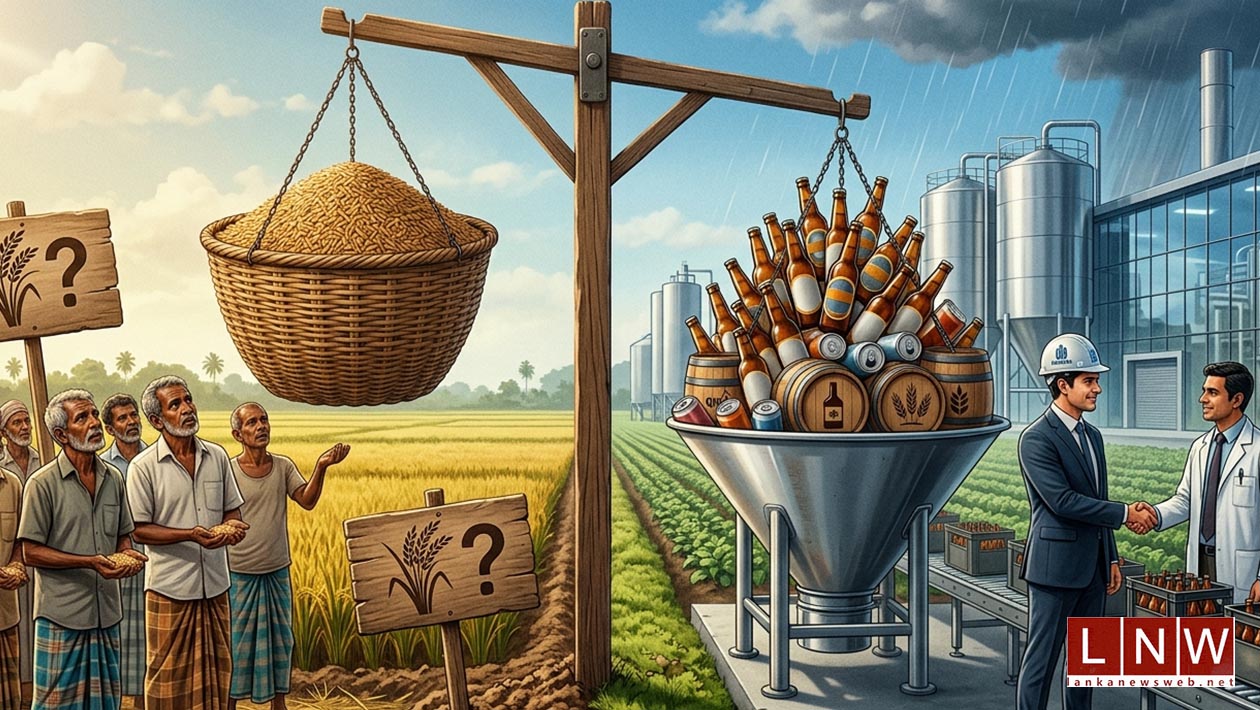
July 13, Colombo (LNW): The Government’s decision to remove legal restrictions on using locally produced rice for beer, liquor, animal feed and other industrial products has been promoted as a bold initiative to protect farmers from falling paddy prices during surplus Yala and Maha harvests. Yet behind the promise of creating a “competitive market” lies a fundamental question: who will be the real winners—the country’s struggling paddy farmers or Sri Lanka’s powerful brewing and distillery companies?
President Anura Kumara Dissanayake announced that the Government had revoked the gazette notification that barred rice from being used for non-food purposes, arguing that expanding industrial demand would reduce the dominance of rice millers and increase competition for paddy. He also noted that research institutions had developed several rice-based products, including biscuits, cakes and beer, which are now expected to be commercialised.
While the objective of giving farmers alternative markets appears reasonable, critics argue that the Government has chosen to highlight beer and alcohol production rather than food processing industries capable of generating greater economic and social value. Rice flour, breakfast cereals, infant foods, confectionery, starch, biodegradable packaging and export-oriented processed foods could potentially create more employment while adding value without encouraging alcohol consumption.
Instead, the policy is likely to hand breweries and distilleries access to a new, locally available raw material that could significantly reduce their production costs. Sri Lanka’s beer industry, which has steadily recovered alongside tourism and improved economic conditions, consumes large quantities of fermentable grains every year. If breweries substitute imported brewing materials with locally produced rice, they stand to reduce import costs, conserve foreign exchange and improve profit margins.
Distilleries could enjoy similar advantages. Rice is an established ingredient in the production of neutral alcohol used in spirits, while by-products generated during the brewing and distillation processes can also be converted into commercial animal feed, allowing manufacturers to earn additional revenue from the same raw material.
However, the Government has yet to explain how farmers will be guaranteed a fair share of these benefits. Without minimum purchase prices, transparent procurement systems or legally binding contracts, there is little assurance that breweries and distilleries will pay significantly more than existing millers. Once industrial demand becomes concentrated among a handful of major companies, critics warn that the bargaining power could simply shift from rice millers to liquor manufacturers.
Another concern is food security. Sri Lanka has repeatedly experienced fluctuations in rice production due to floods, droughts and changing weather patterns. A policy that channels surplus rice into alcohol production during good harvests could become problematic if future harvests decline unexpectedly, forcing the country to balance industrial demand against household food requirements.
The Government insists the measure is designed solely to absorb seasonal surpluses and strengthen farmer incomes. Hitherto until clear safeguards, pricing mechanisms and transparent procurement policies are introduced, sceptics argue that the biggest beneficiaries may not be the cultivators in the paddy fields but the breweries and distilleries that have gained access to an entirely new domestic source of raw material.