
By: Staff Writer
July 13, Colombo (LNW): More than three decades after the Gulf War, Sri Lanka is reopening one of its longest-running financial controversies as Parliament prepares to investigate the management of billions of rupees remaining from compensation awarded to migrant workers repatriated from Kuwait and Iraq.
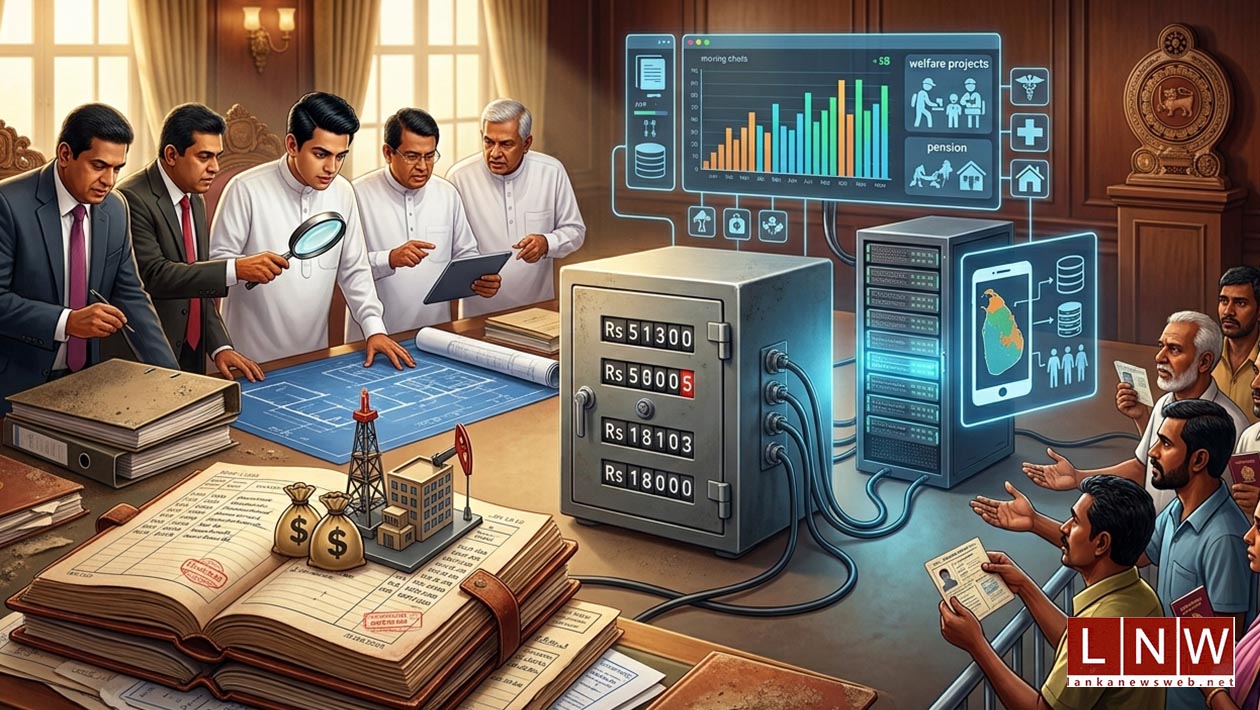
The Committee on Public Enterprises (COPE), together with the Sri Lanka Bureau of Foreign Employment (SLBFE), is expected to appoint a special parliamentary sub-committee to examine the Rs. 5.1 billion Kuwait Compensation Fund alongside nearly Rs. 18 billion held in underutilised SLBFE fixed deposits.
The renewed scrutiny comes as the Government shifts its focus from preserving the dormant compensation fund to financing long-term welfare initiatives, including migrant worker training programmes and a redesigned pension scheme. Officials insist that any future use of the fund will be governed by strict institutional guidelines after allegations that previous administrations diverted more than Rs. 1.25 billion into projects, including the “Glocal Fair”, without Cabinet approval.
The Kuwait Compensation Fund originated after Iraq’s invasion of Kuwait in 1990 forced nearly 90,000 Sri Lankan migrant workers to return home. The United Nations Compensation Commission later awarded Sri Lanka approximately US$320 million, enabling compensation payments of around US$4,000 each to between 87,000 and 93,872 affected workers.
Despite the large-scale payout, hundreds of claims remain unresolved.
Finance Ministry reviews and Auditor General reports indicate that between 212 and 948 eligible workers or their legal heirs could not be traced because of incomplete identity records, missing employment documents and poor record-keeping dating back to the early 1990s.
Auditors have repeatedly criticised the Bureau for failing to establish a structured mechanism to locate outstanding beneficiaries while classifying the remaining money as a capital reserve that continued to generate interest. Audit observations also questioned whether parts of the accumulated funds had effectively supported infrastructure projects and broader institutional investments instead of prioritising unresolved compensation claims.
The Government now hopes technology can help resolve those long-standing deficiencies.
Under the 2026 Budget, authorities are integrating dormant migrant worker records with modern centralised databases before launching another nationwide effort to identify surviving beneficiaries or their legal heirs.
At the same time, Deputy Minister of Foreign Affairs and Foreign Employment Arun Hemachandra has announced plans for a new migrant workers’ pension scheme funded with Rs. 2.1 billion from the Kuwait Compensation Fund. Unlike the existing programme, which has attracted only 307 members despite an overseas workforce of about 1.7 million Sri Lankans, the proposed scheme will allow workers to choose either monthly pensions or lump-sum benefits based on verified remittance records.
A digital application, being developed with the Ministry of Digital Technology, will enable migrant workers to monitor officially recorded remittances while providing a transparent basis for calculating pension eligibility.
As Parliament begins examining decades of financial management, the Government faces the dual challenge of settling unresolved compensation claims while convincing the public that the remaining funds can be redirected responsibly to strengthen the welfare of future generations of Sri Lankan migrant workers.