
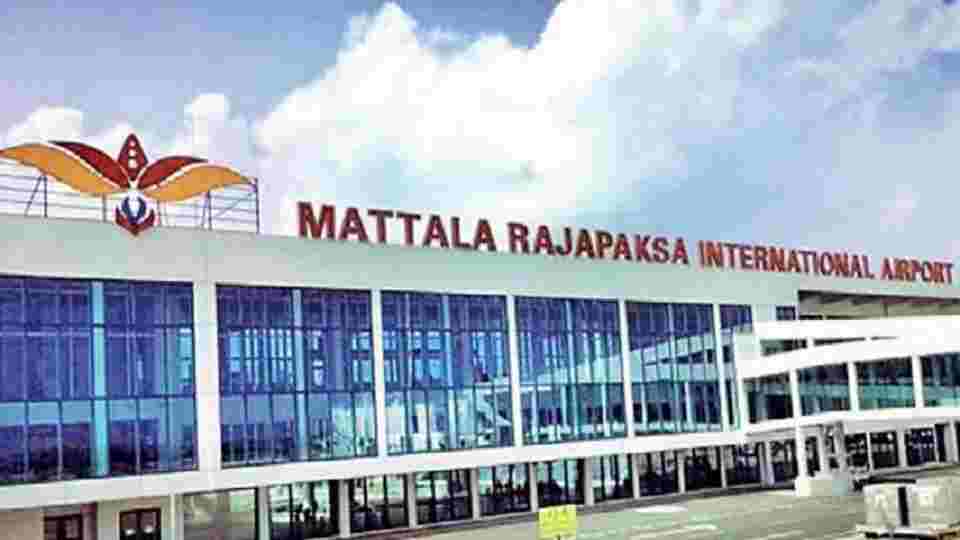
As Sri Lanka moves ahead with an ambitious plan to expand Bandaranaike International Airport (BIA) to handle 24.2 million passengers annually by 2055, another state-owned airport continues to highlight the financial risks of large-scale aviation investments. The government’s own figures reveal that Mattala Rajapaksa International Airport (MRIA) is losing between Rs. 6 million and Rs. 7 million every day, amounting to nearly Rs. 4 billion annually, prompting renewed debate over whether Sri Lanka can avoid repeating costly infrastructure mistakes.
The contrasting fortunes of the country’s two largest international airports have become a central issue as the government prepares its long-term aviation strategy. During a pre-budget meeting chaired by President Anura Kumara Dissanayake, officials reviewed plans to expand BIA while simultaneously searching for investors capable of turning around Mattala Airport’s chronic losses. According to the President’s Media Division, investment proposals have already been invited, with authorities expecting to finalise the process by 2027.
Unlike BIA, which serves as Sri Lanka’s principal international gateway and handles the vast majority of passenger traffic, Mattala has struggled to attract sustained airline operations since opening in 2013. Built at an estimated cost of more than US$200 million, largely financed through foreign borrowing, the airport was promoted as a catalyst for economic development in the Southern Province. However, passenger numbers remained well below projections, several international airlines suspended operations after recording poor demand, and the facility gradually earned international attention as one of the world’s least-utilised airports.
The government’s latest acknowledgement of Mattala’s continuing financial losses underscores the broader challenge of ensuring that major infrastructure projects generate sufficient commercial returns. Aviation analysts note that airports require substantial passenger volumes, airline connectivity, cargo operations and surrounding economic activity to remain financially sustainable. Without those fundamentals, maintenance costs, staffing, security, utilities and debt servicing can quickly outweigh revenue.
These realities inevitably place greater scrutiny on the proposed BIA expansion. Although Colombo’s main international airport operates under very different market conditions and has experienced increasing passenger demand as tourism recovers, experts caution that long-term traffic forecasts extending to 2055 should be supported by rigorous economic analysis, independent demand assessments and realistic growth assumptions.
Questions also remain over how future expansion will be financed. Sri Lanka continues to emerge from its worst economic crisis in decades while implementing fiscal reforms under an International Monetary Fund-supported programme aimed at strengthening public finances and reducing debt vulnerabilities. Large infrastructure investments therefore face increasing expectations of financial transparency, competitive procurement and measurable economic returns.
Government officials argue that the BIA project is fundamentally different from Mattala because it expands an already busy airport that regularly experiences congestion during peak travel periods. Planned upgrades—including terminal expansion, digitalisation of passenger services, additional aircraft parking facilities and improved operational efficiency are expected to strengthen Sri Lanka’s competitiveness as a regional aviation destination.
Still, Mattala’s continuing losses serve as a reminder that infrastructure success depends not only on modern buildings and ambitious master plans but also on sustained passenger demand, sound financial planning and effective management. As Sri Lanka pursues its largest aviation expansion in decades, policymakers face the challenge of ensuring that future investments become engines of economic growth rather than long-term burdens on public finances.