
By: Staff Writer
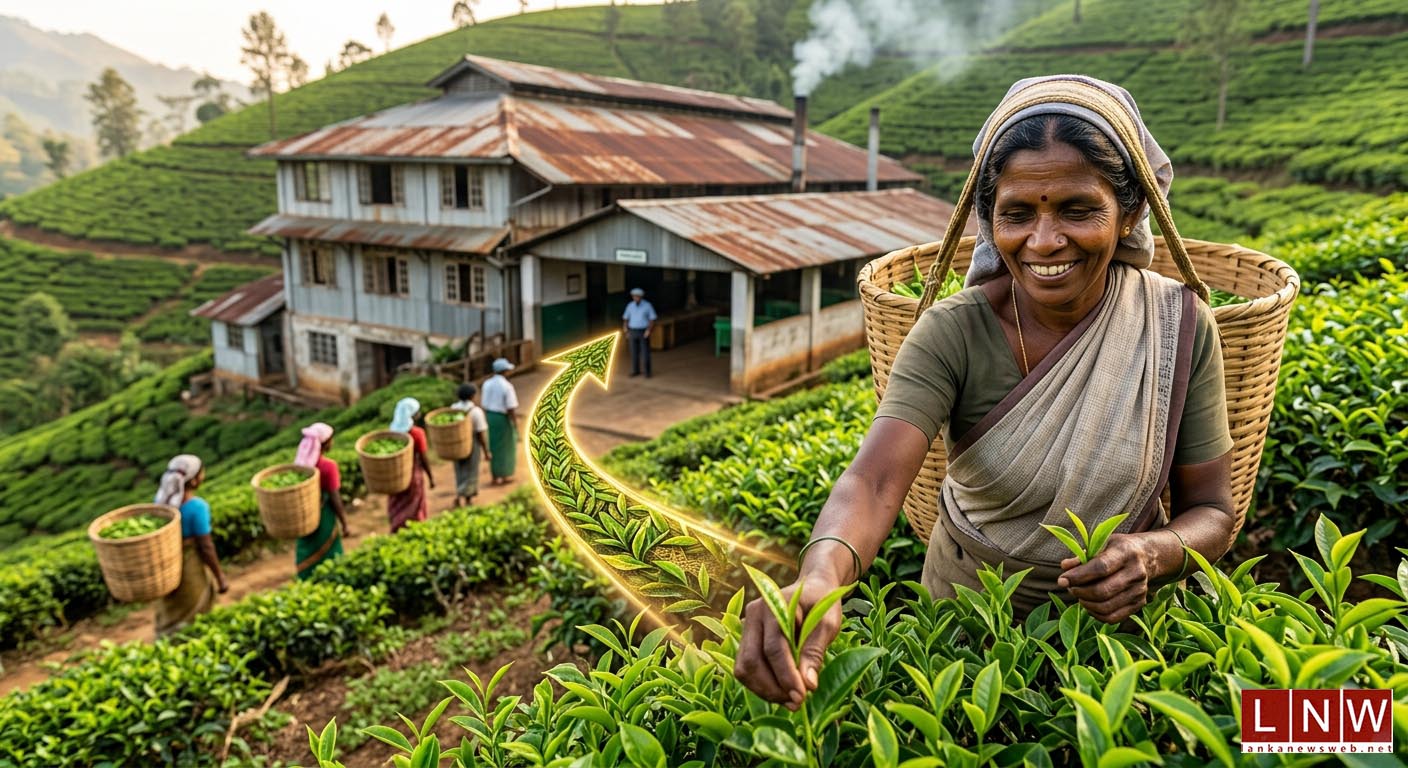
September 15, Colombo (LNW): Sri Lanka’s tea industry possesses the expertise, factories and exporting companies needed to expand production, yet a critical shortage of green leaf continues to constrain its growth. The industry’s central challenge is no longer simply the availability of technical knowledge or processing capacity, but whether the country can mobilise enough smallholder production to keep its existing infrastructure operating at its full potential.
Discussing the future of tea production, Tea Exporters Association (.TEA) Chairman Huzefa Akbarally noted that Sri Lanka already has the necessary expertise, export companies with production capacity and factories capable of processing additional leaf. The missing ingredient, he stressed, is sufficient green leaf to drive the industry forward.
This assessment exposes a structural weakness in one of Sri Lanka’s most important agricultural export sectors. The country has invested in factories, developed international tea brands and maintained a network of experienced exporters. However, without a reliable supply of fresh green leaf, these assets cannot generate their maximum economic value.
The problem also raises questions about the relationship between tea factories and smallholder families. If factories are capable of handling more production, the expansion of the industry depends directly on whether smallholders can increase cultivation, improve productivity and supply more leaf consistently. The potential exists, but the economic conditions required to unlock it remain crucial.
Tea Exporters Association (.TEA) Chairman Huzefa Akbarally estimated that each smallholder family could potentially earn approximately Rs. 94,000 per month, describing this as roughly a fourfold increase in income. If realised, such an increase would have implications far beyond tea production. It could strengthen rural household finances, improve living standards and reduce the economic vulnerability of farming communities.
Hitherto the projected income increase should not be treated as an automatic outcome. It depends on the availability of additional green leaf, the productivity of individual holdings, the cost of cultivation and the prices received by growers. The gap between potential earnings and actual household income must therefore be examined carefully.
The proposal also highlights the importance of treating smallholders as the foundation of the tea industry rather than merely as suppliers of raw material. Their ability to produce more leaf determines whether factories can operate efficiently and whether exporters can expand their businesses.
Sri Lanka’s tea revival, therefore, requires more than maintaining existing production systems. It demands a coordinated effort to increase smallholder output while ensuring that the benefits of expansion reach farming families. Without that connection, factory capacity and export expertise may remain underutilised.
The industry’s message is clear: the machinery for growth already exists. The unresolved question is whether Sri Lanka can create the conditions necessary for smallholders to supply the green leaf that will turn unused capacity into higher production, stronger exports and improved rural incomes.
