
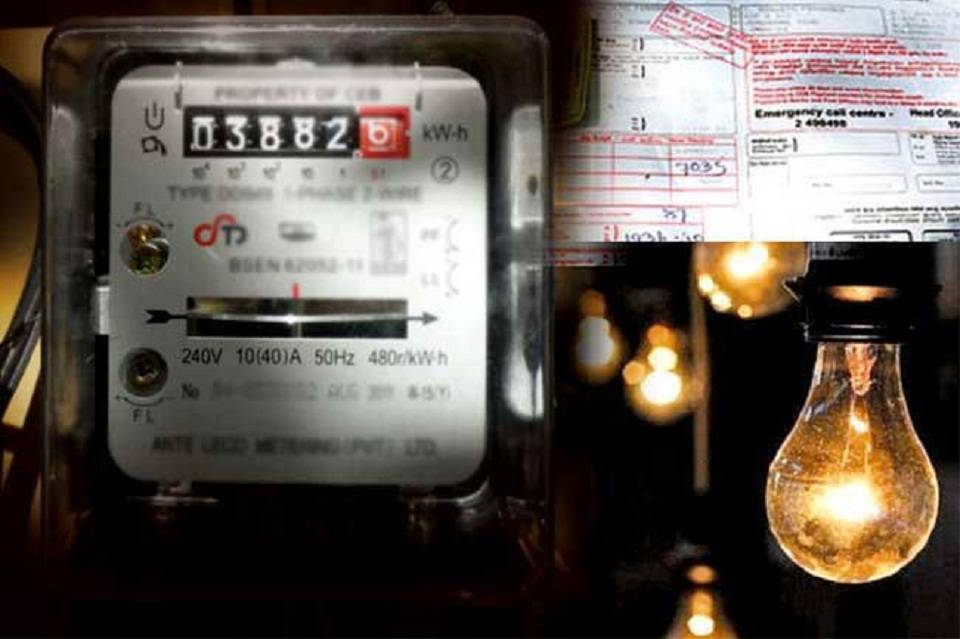
Capacity payments, questionable expenditure and conflicting forecasts expose weaknesses in electricity sector planning.
Sri Lanka’s latest electricity tariff controversy has exposed a deeper problem within the country’s power sector: consumers may be paying not only for electricity they consume but also for expensive generation capacity arrangements whose economic justification requires closer examination.
The Public Utilities Commission of Sri Lanka (PUCSL), addressing a public consultation at the BMICH on November 5, raised serious objections to including generation capacity costs in the proposed fourth-quarter 2026 tariff revision, declaring that such costs were “basically unacceptable” and should not be transferred to electricity consumers.
The regulator’s intervention has brought renewed attention to the financial structure of electricity procurement and the extent to which consumers are expected to subsidise contractual commitments entered into by power-sector institutions.
The figures presented during the consultation are particularly revealing. Generation energy costs alone amount to Rs.101.343 billion, while generation capacity costs add another Rs.19.946 billion. Together, these two components account for approximately 93.3% of the Rs.129.933 billion expenditure breakdown presented by the Commission.
In other words, capacity payments alone represent a substantial financial commitment, raising questions about whether Sri Lanka is receiving adequate value for the money collected from electricity users.
Capacity payments are not necessarily illegitimate. Power producers may require compensation for maintaining plants and ensuring that electricity can be supplied when demand rises or renewable generation declines.
However, the critical issue is whether the contracted capacity is genuinely necessary, whether procurement prices are competitive and whether the agreements deliver measurable benefits to the national electricity system.
The PUCSL has attempted to establish a regulatory boundary by distinguishing existing PPAs from future agreements. While existing contracts may oblige the electricity sector to continue capacity payments until their expiry, the Commission has indicated that new capacity costs should not be allowed.
This raises several important questions concerning the institutions responsible for negotiating power purchase agreements. Were generation requirements accurately forecast? Were alternative energy sources adequately evaluated? Did procurement decisions prioritise the least-cost option? And were contractual obligations assessed against their long-term impact on electricity tariffs?
These questions become more pressing as Sri Lanka seeks to expand renewable energy and battery storage while reducing dependence on costly thermal generation.
Another concern is the difference between the NSO’s assessment and the PUCSL’s preliminary tariff calculations.
The NSO reportedly argued that no tariff increase was necessary for the October-December quarter, pointing to favourable reservoir conditions and expectations of above-average rainfall linked to El Niño.
Nevertheless, its initial submission projected a Rs.4.4 billion revenue shortfall. The PUCSL estimated electricity supply costs at Rs.157.3 billion against expected revenue of Rs.154 billion and reduced the proposed tariff increase from 2.88% to 1.46%.
The regulator also reviewed capacity costs submitted by Electricity Generation Lanka and expenditure arising from the use of substandard coal during the second quarter.
The coal-related expenditure deserves particular scrutiny because consumers should not automatically be expected to absorb the financial consequences of procurement failures, quality-control weaknesses or operational inefficiencies.
Furthermore, the proposed Rs.703 million in battery energy storage capacity charges raises questions about how new investments will be evaluated to ensure that emerging technologies do not create another layer of expensive contractual commitments.
Sri Lanka’s electricity reforms must therefore go beyond periodic tariff adjustments. Transparent procurement, competitive bidding, independent contract audits and public disclosure of capacity-payment obligations are essential.
The final PUCSL decision should establish a clear principle: electricity consumers must pay for a reliable and efficiently managed supply, not become the automatic financial safety net for questionable procurement decisions and avoidable institutional expenditure