
November 19, Colombo (LNW): Sri Lanka and Bangladesh have agreed to fast-track the creation of formal institutional arrangements to expand bilateral trade and investment, signalling renewed efforts by the two countries to strengthen economic cooperation and explore untapped business opportunities.
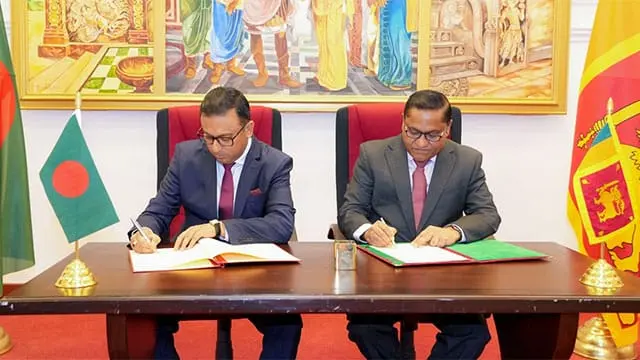
The understanding emerged from high-level discussions held in Colombo yesterday (18), between Sri Lankan Foreign Affairs, Foreign Employment and Tourism Minister Vijitha Herath and Bangladesh State Minister for Foreign Affairs Humaiun Kobir, who is undertaking an official visit to Sri Lanka.
According to a statement issued by the Ministry of Foreign Affairs, Foreign Employment and Tourism, the two Ministers recognised the importance of building stronger economic links and agreed to accelerate work on establishing appropriate institutional frameworks to facilitate greater commercial engagement, trade and cross-border investment.
During the discussions, Minister Herath encouraged Bangladeshi businesses to consider investing in Sri Lanka, particularly in emerging sectors offering new opportunities for international investors. He also invited Bangladeshi investors and business representatives to participate in Sri Lanka EXPO 2027, which is scheduled to take place in Colombo in January next year.
The talks extended beyond economic cooperation, with both delegations examining avenues to strengthen collaboration in several areas of mutual interest, including defence, fisheries, education and renewable energy. Particular attention was given to Technical and Vocational Education and Training (TVET), an area considered important for developing a skilled workforce and addressing changing labour market requirements.
Tourism was another significant component of the discussions. Both countries agreed to explore ways of increasing visitor movements between the two destinations, while also considering greater cooperation in hospitality training and professional exchanges. The possibility of extending Sri Lanka’s free tourist visa facility to Bangladeshi nationals was also raised during the meeting.
The Ministers further highlighted the need to expand professional interactions between the diplomatic services of the two countries, recognising the value of closer institutional contacts in advancing bilateral relations.
A key outcome of the discussions was the signing of an agreement to establish the Sri Lanka-Bangladesh Joint Consultative Commission for Comprehensive Cooperation. The proposed mechanism is expected to provide a structured platform for regular consultations, allowing both governments to review existing areas of collaboration, identify new priorities and coordinate initiatives aimed at strengthening their overall relationship.
Beyond his engagement with Minister Herath, State Minister Kobir also held discussions with President Anura Kumara Dissanayake at the Presidential Secretariat.
During the meeting, Kobir conveyed an invitation from Bangladesh Prime Minister Tarique Rahman for President Dissanayake to undertake a State Visit to Bangladesh in 2027, an initiative that could provide further impetus to political and economic relations between the two countries.
The visiting State Minister also met Prime Minister Dr Harini Amarasuriya at Parliament, where discussions centred on the need to better harness the potential of young people within both economies and ensure that national education systems remain responsive to emerging social and economic demands.
Kobir reportedly expressed appreciation for several initiatives introduced by the Sri Lankan Government, particularly the ‘Clean Sri Lanka’ and ‘Praja Shakthi’ programmes. He drew comparisons between these initiatives and Bangladesh’s ‘Farmers Card’ and ‘Family Card’ schemes, which are aimed at addressing poverty, improving environmental protection and supporting the development of renewable energy.
The discussions reflect a broader effort by Colombo and Dhaka to move their longstanding bilateral relationship towards more practical economic cooperation, with institutional coordination, investment facilitation, skills development and tourism emerging as key areas for future engagement.