
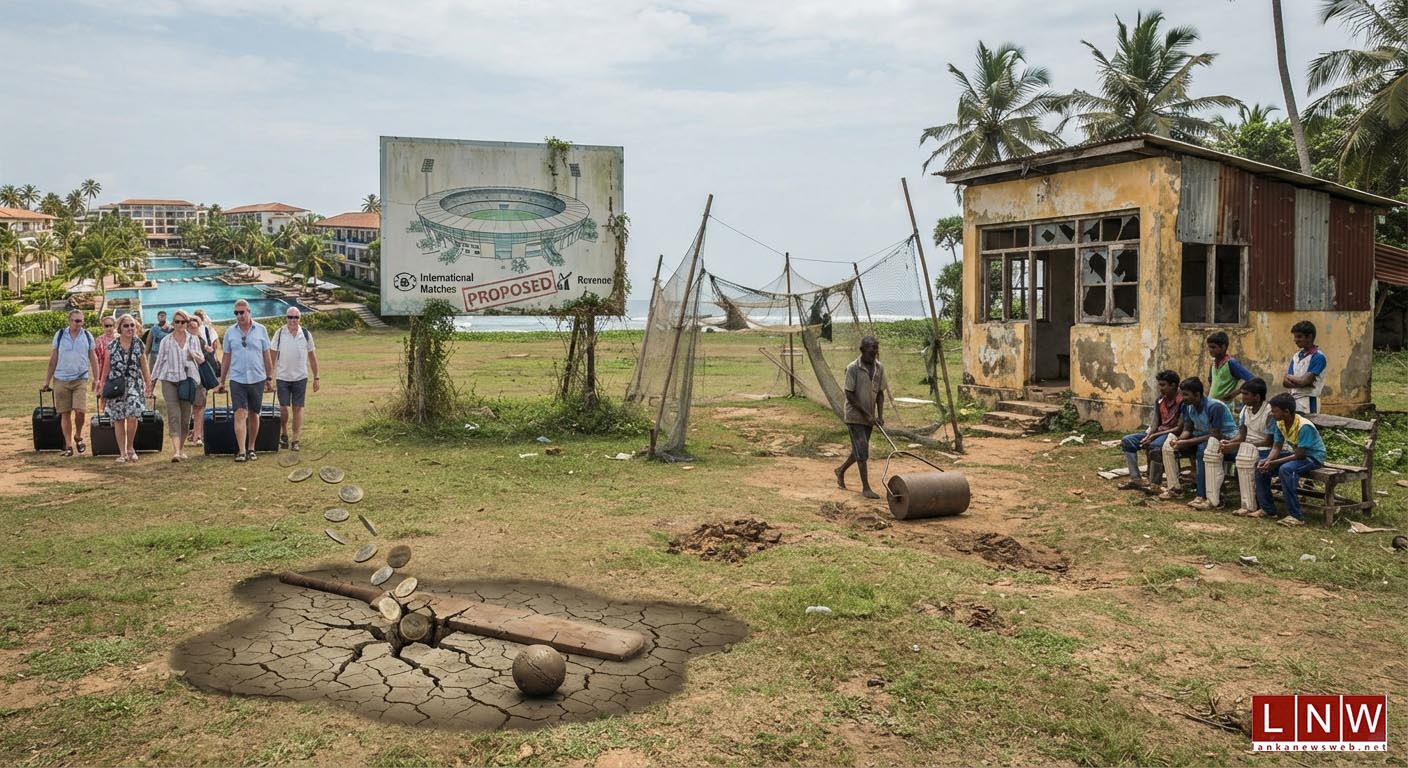
November 22, Colombo (LNW): Sri Lanka is missing out on a potentially lucrative source of foreign exchange by failing to develop its sports tourism sector, with inadequate sporting venues and supporting infrastructure limiting the country’s ability to attract international teams, tournaments and training camps, tourism expert Chandana Amaradasa has cautioned.
Despite its favourable geographical position, tropical climate, established hospitality industry and diverse tourism attractions, the country has yet to establish itself as a competitive destination for international sporting activities. Amaradasa argues that the absence of suitable facilities is preventing Sri Lanka from converting these natural advantages into significant economic opportunities.
He noted that the country was ideally positioned to attract sporting groups from Europe, the United Kingdom, the Middle East and other Asian markets. However, the shortage of quality venues and essential facilities continues to undermine its appeal.
Amaradasa also highlighted Sri Lanka’s limited presence on the international sporting calendar, particularly in disciplines such as tennis, golf and football. While cricket remains the country’s most established international sporting attraction, he pointed out that Sri Lanka has no confirmed hosting commitments for an ICC men’s tournament during the coming decade.
According to him, sports tourism could provide a valuable additional stream of foreign exchange at a time when the country is seeking to strengthen its external earnings. International sporting groups increasingly favour destinations where they can combine competitive activities with leisure, sightseeing and other tourism experiences.
Sri Lanka, however, is struggling to accommodate this market, particularly during the main tourist season from November to April and the additional peak period in July and August.
The limitations are especially evident in cricket, where the availability of suitable grounds has become a major obstacle to securing overseas tours. Countries such as India and the United Arab Emirates are increasingly benefiting from opportunities that Sri Lanka could potentially attract if it had sufficient facilities.
Amaradasa observed that demand for cricket tours remained substantial, but the country’s capacity to accommodate visiting teams was restricted by the limited number of suitable venues. He also identified the extensive domestic cricket calendar as another factor making grounds difficult to secure for international visitors.
He called for immediate improvements to existing school and club grounds, particularly in Colombo, Kandy and Galle, which he identified as important locations for attracting overseas sporting groups.
Rather than depending exclusively on expensive, large-scale construction projects, Amaradasa believes Sri Lanka should first maximise the use of its existing sporting infrastructure through targeted investment and rehabilitation.
Improvements such as properly maintained playing surfaces, clean and functional pavilions, adequate changing rooms, sanitary facilities and quality practice areas could significantly enhance the suitability of existing grounds for international teams.
He stressed that Government intervention would be necessary to support schools and sports clubs in upgrading their facilities, adding that relatively modest investments could help make more venues available for international sporting tours.
The infrastructure deficit, however, is not confined to cricket. Amaradasa pointed out that Sri Lanka also lacks sufficient quality football grounds, indoor sporting complexes and high-performance training centres capable of accommodating international competitions and professional training programmes.
He maintained that the country already possesses many of the non-sporting advantages sought by international visitors, including welcoming communities, hotels, transport services and an established tourism and hospitality sector. The failure to provide suitable sporting facilities is therefore preventing these strengths from being fully exploited.
Amaradasa called for a coordinated national approach involving the Government, Ministry of Sports, tourism authorities and relevant sporting associations to develop a comprehensive strategy for the sector.
Such a strategy, he suggested, should focus not only on attracting major international competitions but also on securing overseas training camps, club tours, sporting exchanges and other events that could generate visitor arrivals throughout the year.
He warned that continuing to overlook sports tourism would mean surrendering valuable foreign exchange opportunities to competing destinations, particularly when Sri Lanka is in need of new avenues to diversify its tourism earnings and strengthen the economy.
Developing sports tourism, therefore, would require more than promotional campaigns. Without reliable venues, supporting services and coordination between the public and private sectors, Sri Lanka risks remaining a destination with considerable sporting potential but limited capacity to turn that potential into economic returns.