
By: Staff Writer
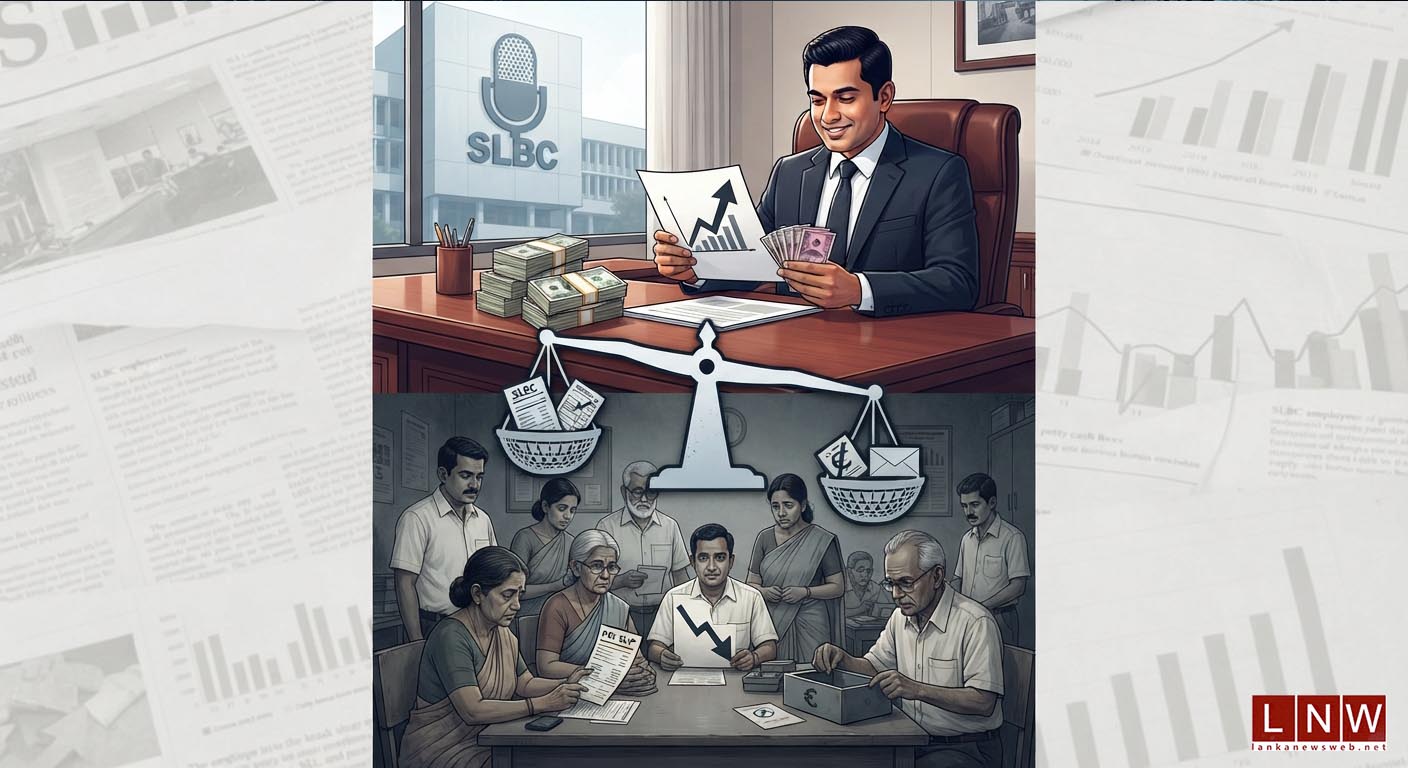
November 22, Colombo (LNW): The financial crisis engulfing the Sri Lanka Broadcasting Corporation has exposed a growing controversy over executive remuneration, institutional priorities and the treatment of ordinary employees, with Parliament questioning how a loss-making public institution can sustain senior management compensation while cutting staff benefits.
During a parliamentary committee hearing in November 2026, Samagi Jana Balawegaya MP Dayasiri Jayasekara challenged SLBC Chairman Professor Uditha Gayashan Gunasekara over his monthly remuneration package, which was disclosed as costing the corporation Rs. 668,000.
The Chairman reportedly explained that his net monthly take-home salary, based on the university academic salary structure, was Rs. 444,000. When allowances and tax-related components were included, the total institutional cost rose to Rs. 668,000 a month.
Jayasekara questioned the justification for such expenditure at a corporation suffering severe revenue shortages and accumulated losses, comparing the package with approximately Rs. 100,000 reportedly paid to previous chairmen.
The comparison raised a fundamental issue of public-sector governance: should the leadership of a financially distressed state institution receive compensation at such a level when the organisation is unable to maintain its workforce benefits and operational commitments?
The MP also cited an exceptionally low revenue balance of approximately Rs. 1.23 million, questioning the affordability of an executive package exceeding half a million rupees a month.
The corporation’s financial difficulties have meanwhile led to reductions in employee bonuses, the elimination of a Rs. 1,250 attendance allowance, restrictions on overtime and consideration of cutting broadcasting operations.
The contrast between executive remuneration and employee austerity has intensified concerns about whether financial discipline is being applied equally throughout the organisation.
SLBC’s losses are not new. It recorded losses of Rs. 176 million in 2024 and Rs. 203 million in 2025, while another Rs. 68 million pre-tax loss was reported for the first half of 2026.
The broader issue is not simply whether the Chairman’s salary is legally authorised or based on an established academic pay scale. It is whether the remuneration structure is appropriate for an institution operating under severe financial distress.
If the Government considers university-scale salaries necessary to attract qualified leadership into state broadcasting, the Treasury should clearly establish how such compensation is funded and whether it is linked to measurable institutional performance.
The absence of transparent performance targets, turnaround strategies and accountability mechanisms risks creating a situation in which senior management remuneration remains protected while employees and taxpayers absorb the consequences of financial mismanagement.
A state institution cannot credibly demand sacrifices from its workforce while failing to demonstrate that its leadership, operational structure and spending priorities are subject to equally rigorous scrutiny.
The SLBC controversy therefore extends beyond one salary package. It raises questions about the wider culture of public-sector management, where financial distress often triggers employee cuts before comprehensive reviews of executive expenditure, institutional inefficiencies and governance practices are undertaken.