
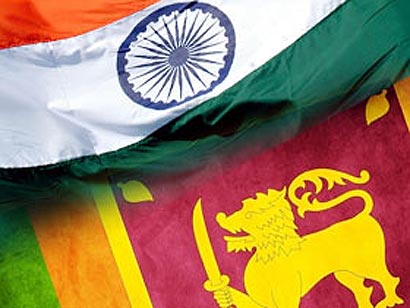
Sri Lanka’s growing defence partnership with India is unfolding against a much larger geopolitical and economic contest in the Indian Ocean, where security cooperation, port development and maritime influence are increasingly interconnected. While Colombo presents its expanding relationship with New Delhi as a necessary component of regional stability, the emerging arrangement raises an uncomfortable question: could Sri Lanka strengthen India’s strategic position while simultaneously weakening its own maritime economic competitiveness?
The transformation has accelerated since the five-year umbrella defence Memorandum of Understanding signed during Indian Prime Minister Narendra Modi’s April 2025 visit. Subsequent arrangements, including those associated with Indian Defence Minister Rajnath Singh’s September 2026 visit, have expanded cooperation into military training, naval operations, surveillance and defence infrastructure.
Indian External Affairs Minister S. Jaishankar’s description of defence cooperation as an integral component of India’s neighbourhood engagement reinforces the strategic importance New Delhi attaches to this relationship.
The latest demonstration is Exercise MITRA SHAKTI 2026, conducted at Maduru Oya with approximately 170 Indian military personnel participating alongside Sri Lankan forces. At the same time, the Colombo Security Conclave, involving India, Sri Lanka, the Maldives, Mauritius, Bangladesh and Seychelles, is emerging as an important regional security mechanism.
However, the economic implications of this security alignment deserve much greater attention.
One of the most significant challenges comes from India’s ambitious transshipment port development at Galathea Bay in Great Nicobar Island. The project is intended to establish a major international transshipment hub capable of competing with established regional ports.
Sri Lanka’s Port of Colombo has developed its strategic importance partly because of its location along major international shipping routes and its role in handling cargo destined for and originating from India.
The proposed Great Nicobar development could therefore create substantial competitive pressure. Projections suggesting that it could capture up to 45% of India-linked transshipment volumes currently handled by Colombo should be treated as a serious warning rather than a certainty.
If realised, the consequences could extend beyond port revenues to employment, logistics services, shipping-related businesses and foreign exchange earnings.
This creates a strategic contradiction. While India is strengthening its security relationship with Sri Lanka, its infrastructure ambitions could simultaneously challenge one of the island’s most important economic advantages.
Another unresolved issue is Indian bottom-trawling in the Palk Strait. Sri Lankan fishing communities have repeatedly raised concerns about destructive fishing practices, damage to marine resources and the livelihoods of northern coastal communities.
The continuing difficulty of resolving this dispute illustrates the limitations of diplomatic goodwill when economic interests diverge.
Meanwhile, China’s position adds another dimension to Colombo’s dilemma.
Beijing has avoided direct confrontation with India’s expanding regional security arrangements, preferring to preserve its influence through economic investments and institutional relationships. Its major financial commitments, including the proposed $3.7 billion refinery near Hambantota, demonstrate that Chinese economic interests remain deeply embedded in Sri Lanka’s development plans.
Consequently, Colombo is becoming increasingly dependent on two powerful neighbours whose interests do not necessarily coincide.
India offers immediate geographical advantages, security cooperation and assistance without necessarily requiring additional sovereign borrowing. China retains substantial economic influence through investment and infrastructure commitments.
But neither relationship should be allowed to determine Sri Lanka’s independent economic priorities.
The government must therefore develop a comprehensive maritime strategy that connects defence cooperation with port competitiveness, fisheries protection, shipping policy and investment safeguards.
Parliament must also examine whether the defence agreements contain provisions affecting maritime infrastructure, military access, surveillance arrangements or long-term operational commitments.
The absence of transparent parliamentary scrutiny makes it difficult to assess whether Sri Lanka is receiving reciprocal economic and strategic benefits.
Ultimately, security partnerships should protect national interests, not create new vulnerabilities. Sri Lanka cannot afford to become a strategically important security partner while gradually losing its competitive position as an Indian Ocean maritime hub.
The real test of the NPP administration will be whether it can secure India’s cooperation without sacrificing its economic independence or surrendering the diplomatic flexibility essential to a small island nation.