
By: Staff Writer
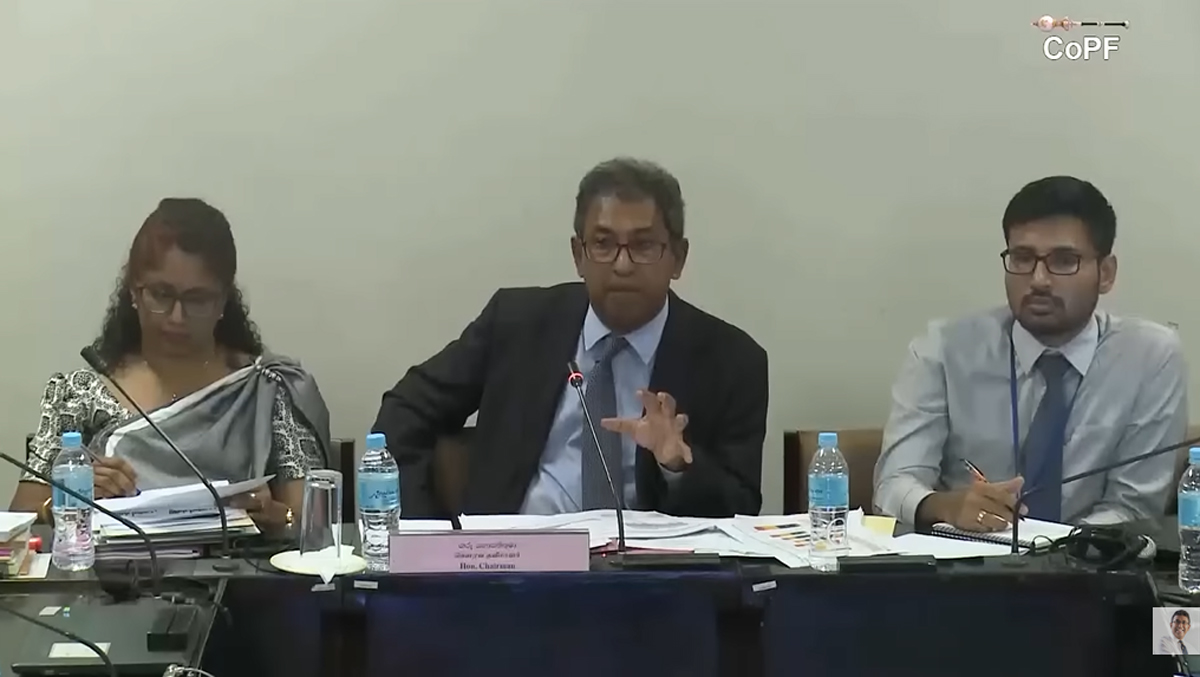
December 08, Colombo (LNW): Sri Lanka’s Parliament Committee on Public Finance (COPF) has sharply criticised the Central Bank of Sri Lanka (CBSL) over its rapidly expanding domestic foreign exchange swaps, warning that the practice resembles a “hot money operation” and risks distorting the country’s true reserve strength as it attempts to rebuild credibility ahead of 2025.
The issue came under intense scrutiny when COPF discovered that domestic FX swaps short-term dollar borrowing from local banks—are not deducted from Sri Lanka’s official Net International Reserves (NIR) calculation.
COPF Chairman Dr. Harsha de Silva called the omission “deeply problematic,” saying it provides an incomplete and potentially misleading picture of the nation’s reserve buffer.
What the COPF Found Explained Simply
The Central Bank’s NIR figure is calculated by subtracting foreign liabilities—such as IMF loans, the Reserve Bank of India swap, and the People’s Bank of China (PBoC) swapfrom gross reserves.
CBSL Director of Economic Research Sujatha Jegajeevan told COPF that with gross reserves at US$ 6.2 billion, the Bank deducts:
US$ 1.36 billion PBoC swap
US$ 880 million RBI swap
US$ 580 million IMF liability
This results in an NIR of US$ 3.4 billion.
However, domestic swaps with private banks such as HSBC or Standard Chartered are excluded, despite being foreign currency liabilities that must eventually be settled in dollars.
“But these are still forex obligations, aren’t they?” Dr. de Silva pressed.Jegajeevan responded: “They are domestic liabilities… only external liabilities are taken out.”
De Silva countered that “a domestic liability in forex still requires forex to settle,” raising concerns that leaving them out artificially boosts the NIR.
“Hot Money Operation” Accusations
COPF member MP Ravi Karunanayake went further, calling the swaps “a hot money type of operation.”
De Silva agreed, saying such swaps had previously been used to “window dress reserves” under earlier administrations.
Governor Dr. Nandalal Weerasinghe, however, defended the practice, saying the swaps are short-term (less than one year) and are primarily used to provide temporary rupee liquidity to banks.
“This is an instrument banks use for short-term liquidity. If there is an opportunity, we should use it,” he said, adding that swaps help boost gross reserves temporarily while genuine inflows are accumulated.
Why Analysts Are Concerned
Independent analysts warn that buy–sell swaps inject fresh rupee liquidity, increasing credit and imports. This can:
Reduce CBSL’s ability to purchase dollars later.
Force the Bank to sell reserves to defend the rupee.
Trigger forex losses regardless of whether swap dollars are officially labelled as “liabilities.”
The central bank recorded a Rs. 788 billion forex loss in 2022 on reserve-related debt, illustrating the high risk of such operations.
If banks use newly created liquidity for import payments, dollars flow out, weakening the rupee. CBSL must then buy back liquidity or sell its reserves a cycle that can repeat until interest rates rise sharply.
Deeper Structural Issue
The founding Governor John Exter warned that purchasing dollars by printing rupees “monetizing the balance of payments surplus” is inherently inflationary unless sterilised.
COPF members argue that domestic swaps worsen this risk by:creating artificial reserve build-ups,masking short-term liabilities,increasing import-driven pressure, and placing future burdens on taxpayers when losses materialise.
A Call for Transparency
Dr. de Silva urged CBSL to disclose all swap-related obligations—external and domestic separately and clearly, arguing that only transparent reserve accounting will protect Sri Lanka from repeating past crises.
“Stable, long-term reserves must be distinguishable from temporary swaps,” he warned.
Karunanayake added: “If these are hot money flows that is even worse.”
With Sri Lanka attempting to rebuild its reserve credibility after the 2022 collapse, the COPF’s intervention highlights the urgent need to prevent temporary liquidity manoeuvres from being mistaken for permanent financial strength.