
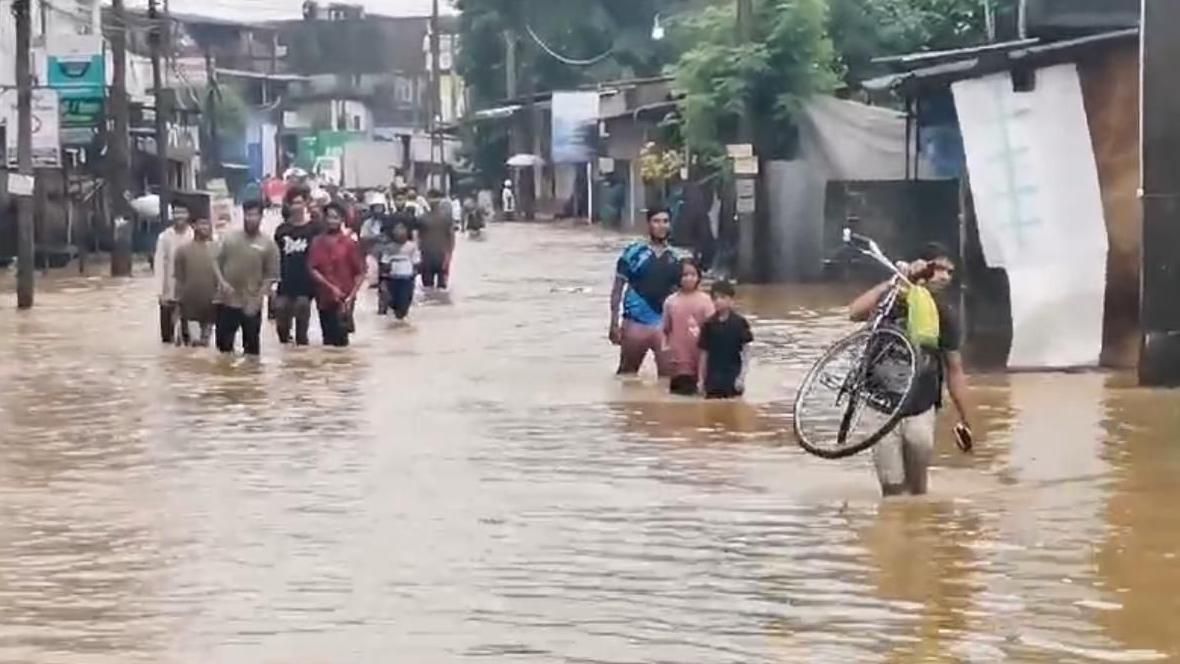
Sri Lanka’s newly established Rebuilding Sri Lanka Fund created to channel donations and reconstruction financing in the aftermath of nationwide devastation has become embroiled in a governance and ethics controversy within days of its formation.
Civil society organisations, including the Law and Society Trust, say the 11-member Management Committee raises serious questions about inclusivity, transparency, legality, oversight structures and potential conflicts of interest.
The committee is entirely male, dominated by leading figures from Sri Lanka’s top blue-chip companies, alongside a handful of government officials.
Four of the six non-corporate seats are direct presidential appointments, prompting accusations that the process lacked transparency and violated the administration’s own pledge of gender balance, citizen involvement and political diversity.
Critics argue the appointment structure effectively outsources national reconstruction to a Colombo-centred corporate elite at a moment when the country requires broad community consultation, technical expertise and humanitarian representation.
With no women, no regional voices and no disaster-response specialists at the table, activists warn that the Fund’s direction risks being shaped by commercial interests rather than national priorities.
Concerns intensify when examining the Fund’s powers and governance model. The Management Committee is authorised not just to mobilise donations, but to prioritise projects, allocate money, and disburse funds for relief and long-term reconstruction.
This broad mandate places billions of rupees in the hands of business leaders who simultaneously head for-profit entities likely to compete for reconstruction contracts. No legal safeguards or conflict-of-interest declarations have been publicly disclosed.
The government has not clarified whether the Fund is established under a dedicated Act, Gazette, trust deed or emergency regulation leaving the legal structure and accountability mechanisms opaque. Nor has it released financial projections, though senior officials have indicated the Fund is expected to reach tens of billions of rupees in donations and foreign contributions.
Oversight responsibilities rest nominally with the National Disaster Management Council, but its supervisory power remains undefined. There is no publicly-available framework outlining reporting requirements, procurement rules, auditing procedures or parliamentary oversight. Civil society groups warn that without such checks and balances, awarding tenders to companies represented on the committee becomes a real risk.
This controversy comes on the heels of several recent all-male task force appointments, including the Clean Sri Lanka Presidential Task Force and the Archaeological Advisory Committee, raising broader fears of institutional regression at a time when public trust is fragile.
Analysts note that disaster-reconstruction governance is “deeply political,” requiring gender balance, minority representation, humanitarian experience and environmental expertise. By contrast, critics say the current committee risks steering reconstruction towards the interests of “Sri Lanka Inc.” rather than the affected communities.
Civil society groups are now calling on the government to reconstitute the committee, create a legally-grounded mandate, and establish strong transparency measures to ensure recovery spending is fair, equitable, and free from political or corporate interference.