
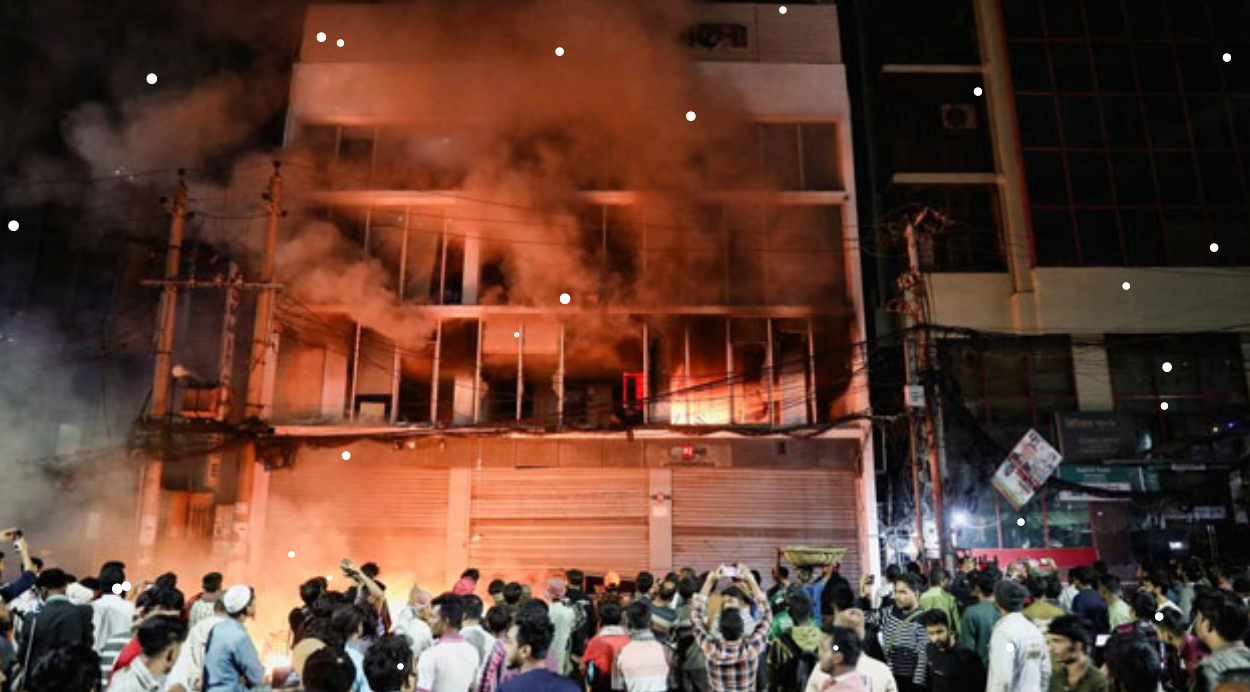
Relations between Bangladesh and India have entered a deeper crisis following the killing of a minority community member during violent protests in Bangladesh, intensifying mutual accusations and diplomatic tensions between the two neighbours.
Dipu Chandra Das, a 27-year-old garment factory worker belonging to a minority community, was beaten to death by a mob in Mymensingh last week after being accused of blasphemy. Graphic videos of the killing, in which his body was later set on fire, circulated widely on social media, triggering outrage in both countries.
The killing occurred amid widespread unrest following the murder of student leader Sharif Osman Hadi in Dhaka. Supporters of Hadi alleged that a suspect linked to the Awami League had fled to India, fuelling anti-India sentiment in Bangladesh, though police said there was no confirmation of this claim.
Tensions quickly spilled over into diplomatic and public spheres. Both countries suspended visa services in several cities, summoned each other’s envoys, and accused one another of failing to ensure the safety of diplomatic missions. Protests erupted in India, while Bangladeshi authorities had to prevent demonstrators from marching toward the Indian High Commission in Dhaka. An Indian diplomatic facility in Chittagong was also attacked with stones.
Bangladesh’s interim government, led by Nobel laureate Muhammad Yunus, condemned the violence and promised justice, stating there was “no place for such brutality in the new Bangladesh.” Police have arrested 12 suspects in connection with Das’s killing.
Analysts warn that the incident highlights growing insecurity for minorities and civil society in Bangladesh, with radical groups becoming more assertive since the fall of former Prime Minister Sheikh Hasina. Attacks on media institutions and cultural spaces accused of being “pro-India” have further raised alarm.
Experts on both sides caution that escalating street anger and political rhetoric could further damage bilateral ties, stressing that stability in Bangladesh is crucial for regional security. With national elections scheduled for February, observers say restoring law and order and rebuilding trust with India will be critical challenges for Bangladesh’s interim administration.