
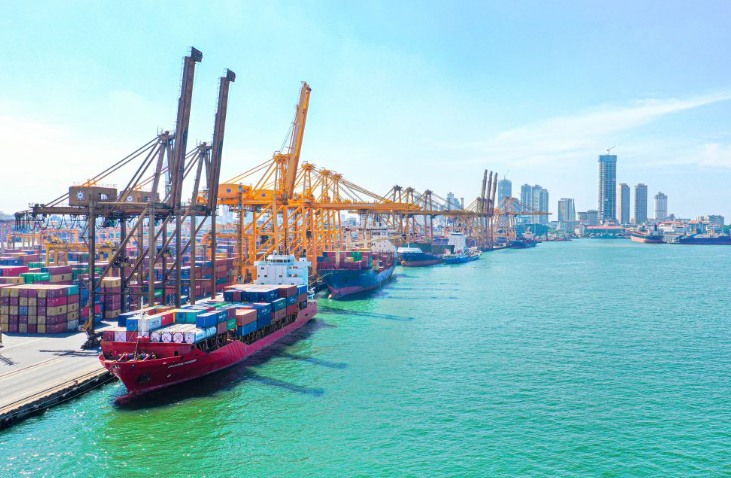
Sri Lanka’s Colombo Port delivered its strongest performance on record in 2025, underlining its role as the country’s most critical maritime and logistics gateway while raising important questions about sustainability, workforce pressures, and the government’s long-term port development strategy.
According to official figures, the port handled 829,000 containers in 2025, a 6 percent increase from the 770,000 containers processed in 2024. This growth came despite regional competition from emerging South Asian ports and ongoing global shipping uncertainties, marking a significant operational achievement for Sri Lanka’s maritime sector.
Industry analysts note that the performance was not driven by a single terminal but by the combined output of all container facilities at the port. These include the Sri Lanka Ports Authority (SLPA)-managed Jaya Container Terminal (JCT) and Eastern Container Terminal (ECT), alongside foreign-operated terminals such as South Asia Gateway Terminals (SAGT) and the Colombo International Container Terminal (CICT).
Together, these terminals form a complex public–private operational model that has become central to Colombo’s competitiveness as a transshipment hub.
Behind the numbers lies one of the largest port workforces in the region, with thousands of SLPA employees and private terminal workers sustaining round-the-clock operations. Union representatives and port economists point out that high labor availability has been both a strength and a challenge boosting operational resilience while increasing pressure on productivity, wage structures, and automation policies.
The government has framed the 2025 milestone as evidence that its port development policy focused on strategic foreign partnerships, state ownership of key assets, and phased capacity expansion is delivering results.
Speaking at a ceremony held at the Eastern Container Terminal, Ports and Civil Aviation Minister Anura Karunathilaka emphasized the port’s contribution to national revenue and acknowledged the role of port workers, management, and terminal operators in achieving the record throughput.
However, officials privately acknowledge that maintaining growth will depend on structural upgrades rather than labor intensity alone. The completion of the ECT and the SLPA-owned Western Container Terminal (WCT), scheduled for 2026, is expected to significantly expand capacity and improve vessel turnaround times. These developments are central to Colombo’s ambition to defend its position against rapidly expanding ports in India and Southeast Asia.
Global shipping lines have responded positively to Colombo’s operational performance, with several carriers reportedly planning to increase calls or commence new services. Yet analysts warn that long-term success will hinge on logistics integration, digitalization, and policy consistency areas where delays could erode recent gains.
As Sri Lanka looks toward 2026, the Colombo Port stands at a crossroads. Its record-breaking year demonstrates potential, but the next phase will test whether government policy, infrastructure investment, and workforce management can align to secure Colombo’s future as a premier regional maritime hub.