
By: Roger Srivasan
I have never pretended to admire the swagger of great powers, nor have I been instinctively sympathetic to leaders whose rhetoric unsettles minorities and coarsens public discourse. Moral discomfort, however, is a poor substitute for strategic clarity. The world we inhabit is not governed by ethical symmetry but by power, interest, and consequence. To deny this is not virtue; it is self-deception.
From a Sri Lankan standpoint—particularly from the perspective of a minority community long acquainted with fragility—the luxury of moral purity is precisely that: a luxury. For nations struggling to recover, survive, and stabilise, realism must sometimes take precedence over righteous posturing.
This is not cynicism. It is confessional realism: the courage to admit uncomfortable truths without apology or illusion.
Venezuela and the Anatomy of Collapse
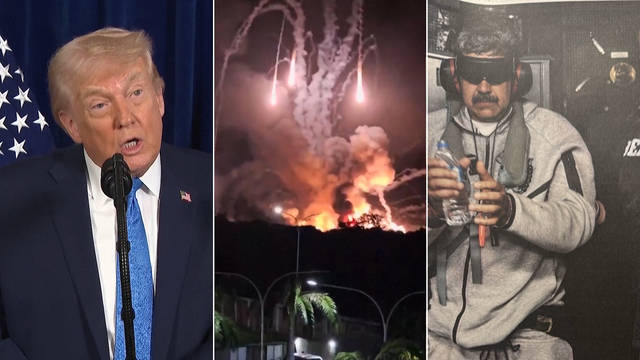
Venezuela stands as a sobering case study in how a nation can implode without a single foreign soldier crossing its borders. Blessed with the largest proven crude oil reserves in the world—approximately 303 billion barrels—it should have been an energy superpower and a regional anchor of prosperity. Instead, it became a cautionary tale.
To place this in perspective, Venezuela’s reserves exceed those of Saudi Arabia (approximately 267 billion barrels) and Iran (around 206–207 billion barrels), while the United States itself holds a comparatively modest 46–48 billion barrels of proven crude reserves.
In its heyday during the 1970s and 1980s, Venezuela produced close to three million barrels of crude oil per day. Today, production languishes at a fraction of that figure. The oil did not vanish. Capacity did. Ageing infrastructure, obsolete machinery, chronic under-maintenance, capital flight, corruption, sanctions, and the exodus of skilled professionals hollowed out the industry from within.
This collapse was not imposed by external force. It was self-inflicted decay, accelerated by ideological rigidity and administrative failure.
Power, Intervention, and the Unspoken Logic
International interventions are rarely driven by altruism alone. Official narratives speak of democracy, humanitarian concern, and regional stability—and these considerations are not trivial. Yet beneath them lies a harder, unspoken reality: energy security remains one of the principal currencies of global power.
Reviving a collapsed oil state is not a sentimental exercise. It demands colossal investment: modern drilling technology, refinery rehabilitation, pipeline replacement, environmental remediation, and the repatriation of human capital. Such undertakings run into tens, if not hundreds, of billions of dollars. No superpower commits resources on that scale without confidence in long-term strategic influence.
This is not moral failure; it is geopolitical arithmetic.
The Sri Lankan Predicament
For Sri Lanka, these realities are not academic. We are a small nation emerging from compounded adversity—economic collapse, social strain, and most recently, cyclones and floods of near-biblical proportions. Recovery is not a rhetorical exercise; it is a matter of survival.
When national survival is at stake, Sri Lanka must be prepared, if circumstances so demand, to dance with the devil—not out of moral surrender, but to preserve its integrity and future—as the nation struggles to claw its way back from the death and devastation wrought by natural catastrophe and economic exhaustion.
This is where moral absolutism becomes dangerous. Aligning reflexively with ideologically rigid or heavily sanctioned states may satisfy emotional impulses, but it carries tangible costs: constrained trade, restricted access to capital, diplomatic isolation, and strategic marginalisation. Small nations do not prosper by defiance for its own sake; they endure by reading power accurately.
A Minority’s Truth
There is an uncomfortable truth rarely articulated in polite discourse: when states collapse, minorities suffer first. Power vacuums are not filled by philosophers but by warlords, traffickers, and extremists. In such environments, order—even imperfect, externally reinforced order—can offer protection where chaos guarantees predation.
This is not an endorsement of domination. It is a recognition that the absence of authority is often more lethal than its flawed presence.
The Hard Conclusion
Sri Lanka must, at times, come forward with both arms raised—not in surrender, but in candour—acknowledging that moral purity is a privilege reserved for stable nations. For those clawing their way back from adversity, survival is not a choice but a prerogative. In such moments, criticism must yield to pragmatism, for a nation fighting to endure cannot afford the comfort of righteous exhibitionism.
The world is not fair. Power is unevenly distributed. Until a more just international order emerges, the choice confronting vulnerable nations is rarely between good and evil, but between imperfect order and unrestrained disorder.
To recognise this is not to abandon principle. It is to practise confessional realism—honesty without illusion, courage without theatre, and survival without apology.