
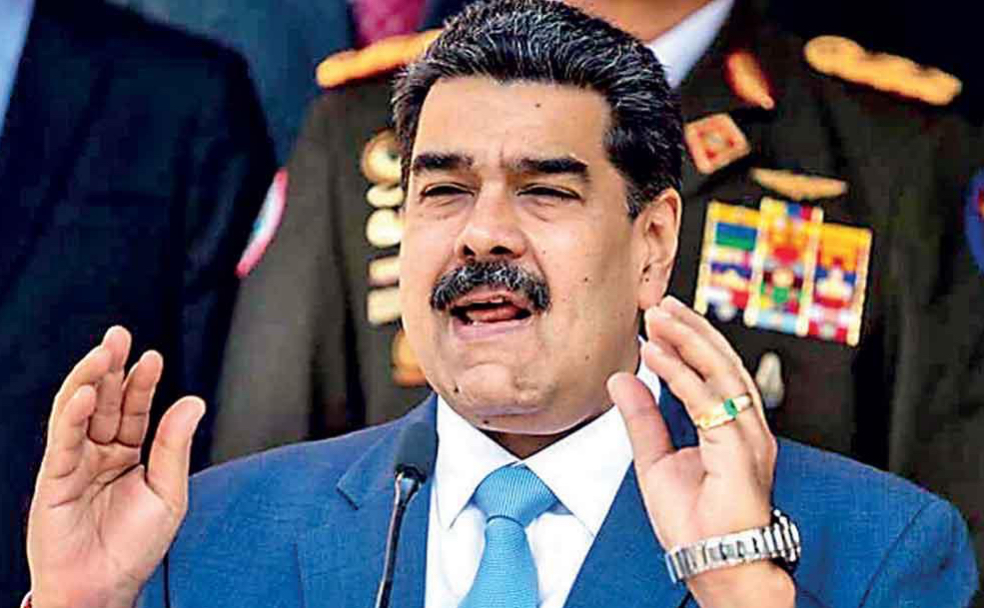
The arrest of Venezuelan President Nicolás Maduro by U.S. forces in early 2026 has done more than just decapitate a regime; it has acted as the definitive catalyst for a seismic shift in global geopolitics. As we move further into this decade, the post-World War II “liberal international order” defined by global institutions, universal rules, and American policing of every corner of the globe is visibly crumbling. In its place, a “New World Order” is emerging, defined not by international law, but by a return to 19th-century-style spheres of influence.
This transformation suggests that the 21st century will be multipolar, transactional, and divided among three dominant “hegemons”: the United States, Russia, and China.
The “Don-roe Doctrine” and the Venezuelan Pivot
The recent U.S. military operation in Caracas represents a “Major Pivot” in American foreign policy under the second Trump administration. Critics and supporters alike have dubbed this the “Donroe Doctrine” a modern, aggressive revival of the 1823 Monroe Doctrine. By forcibly removing Maduro and signaling an intent to “run” Venezuela to extract its vast oil reserves, the U.S. is sending a clear message: The Western Hemisphere is American territory.
This move is driven by two existential pressures:
Economic Survival: With China’s economy projected to surpass the U.S. in scale and technological self-sufficiency within this decade, Washington is desperate to secure tangible resources. Control over Venezuela’s oil, the largest proven reserves on Earth, provides a strategic hedge against China’s dominance in green energy and manufacturing.
Domestic Distraction: As noted by various political analysts, when domestic popularity wanes or economic collapses loom, leaders often seek “foreign adventures” to galvanize public support. The arrest of Maduro, framed as a strike against “narco-terrorism,” serves as a powerful narrative for a populist administration facing internal pressures.
The Silent Pact: A Tripartite Accommodation?
The most startling aspect of the 2026 Venezuela crisis is the lack of meaningful interference from Moscow or Beijing. While both nations issued formal condemnations at the UN, their actions or lack thereof suggest a deeper, more cynical understanding between the “Big Three.”
War experts argue that we are witnessing a grand bargain. In this “New World Order,” the superpowers have tacitly agreed to respect each other’s “backyards”:
 The Americas for the U.S.: Russia and China have essentially traded their support for Maduro in exchange for U.S. non-interference in their respective regional ambitions.
Ukraine and Eastern Europe for Russia: As the U.S. diverts military resources and political capital to the Caribbean and South America, its appetite for the Ukraine-Russia conflict has evaporated. This paves the way for a settlement where Russia maintains control over its captured territories and asserts a “security sphere” over Eastern Europe.
The South China Sea and Taiwan for China: With the U.S. focused on its own hemisphere, the “unbreakable intention” of Beijing to bring Taiwan under its control becomes a regional matter rather than a global flashpoint.
The Abandonment of Europe and the Death of Universalism
The biggest loser in this emerging order is the European Union. For decades, Europe relied on the U.S. security umbrella and a rules-based system. Now, Europe finds itself “on its own.” The U.S. shift toward unilateralism and regional dominance signals that it no longer views itself as the “guardian of democracy” in Europe.
This creates a vacuum. As the U.S. withdraws from the Ukraine conflict to secure Venezuelan oil, Europe is left with a massive security bill and a resurgent Russia on its doorstep. The era of “Global Britain” or a “United Europe” is being crushed between the tectonic plates of the U.S., Russia, and China.
A Multipolar Century
History teaches us that world orders change roughly every century. The 19th century was British; the 20th was American. The 21st century is shaping up to be a Multipolar Era where sovereignty is only for the strong.
The arrest of Maduro is not an isolated event; it is the “Nethniyahu Theory” applied on a global scale using regional conflict to maintain domestic power while carving out a piece of the world for one’s own. As the U.S. secures the West, China secures the East, and Russia secures the North, the “International Community” is being replaced by three distinct fortresses. This may prevent a World War III by keeping the giants from stepping on each other’s toes, but it does so at the cost of the freedom and sovereignty of smaller nations.
In a “New World Order” defined by the rigid spheres of influence discussed above, Sri Lanka’s unique geography, once its greatest asset, becomes a precarious liability. As the U.S., Russia, and China carve up the globe, Sri Lanka finds itself at the epicenter of the Indo-Pacific “seam,” where these spheres of influence overlap and collide.
1. Economic Impact: The Energy Pivot and Debt Diplomacy
The U.S. seizure of Venezuelan oil has immediate, localized consequences for Sri Lanka. While global prices might stabilize under U.S. control, the “petrodollar” becomes a tool of geopolitical compliance.
Energy Costs and the Dollar Peg: If the U.S. uses its new Venezuelan oil dominance to reward allies, Sri Lanka—already struggling with foreign exchange reserves—could face a “loyalty tax” on fuel imports. If Colombo drifts too close to the China sphere, it may find itself cut off from affordable U.S.-controlled crude, forcing a costly transition to Russian or Middle Eastern supplies.
Trade Fragmentation: As the WTO weakens, Sri Lanka’s garment and tea exports face a world of regional “fortress” tariffs. The U.S. and EU (moving toward protectionism) may restrict access unless Sri Lanka aligns with Western security goals. Conversely, China’s “Belt and Road” projects in the island will demand deeper integration into the yuan-based trade block.
2. Political Impact: The End of “Non-Alignment”
For decades, Sri Lanka practiced a policy of “friendship with all, enmity with none.” In this new century, that middle ground is disappearing.
Pressure to Choose: As Russia secures Eastern Europe and China dominates the South China Sea, both will demand that Sri Lanka provides “dual-use” facilities (ports that can serve both trade and military needs). The U.S., desperate to maintain its waning influence in Asia, will counter this with intense diplomatic pressure, potentially using IMF debt restructuring as a “carrot or stick.”
Democratic vs. Autocratic Influence: The “Netanyahu Theory” of domestic survival via foreign conflict may embolden local populist movements. If global hegemons prioritize “stability and spheres” over “human rights and democracy,” Sri Lanka’s domestic governance may shift toward a more authoritarian, security-first model, modeled after the very leaders currently reshaping the world.
3. Military Impact: A Permanent Maritime Frontier
Militarily, the island becomes a “stationary aircraft carrier” in the contest for the Indian Ocean.
Naval Encroachment: If the U.S. is “distracted” by its Western Hemisphere focus, India acting as a regional deputy will likely increase its military footprint in Sri Lanka to block Chinese naval expansion. This places the Sri Lankan military in a difficult position: conducting joint exercises with the U.S./India while hosting Chinese-built infrastructure at Hambantota.
Intelligence and Surveillance: The island’s strategic value for underwater cable monitoring and satellite tracking will make it a target for “hybrid warfare.” Cyber-interference and the installation of advanced radar systems by foreign powers will compromise Sri Lanka’s military sovereignty.
Conclusion: The Fortress or the Bridge?
Sri Lanka’s survival in this new world order depends on whether it can remain a “bridge” between these three fortresses or if it is swallowed by one of them. The 2026 Venezuela crisis proves that the U.S. is willing to act unilaterally when its interests are at stake; Sri Lanka must now prepare for a world where “might is right” and regional proximity to a hegemon is the only law.
(The writer is an Infantry Officer who served the Sri Lanka Army for over 36 years, dedicating 20 of those to active combat. In addition to his military service, Dr. Perera is a respected International Researcher and Writer, having authored more than 200 research articles and 16 books. He holds a PhD in economics and is an entrepreneur and International Analyst specialising in National Security, economics and politics. He can be reached at [email protected])