
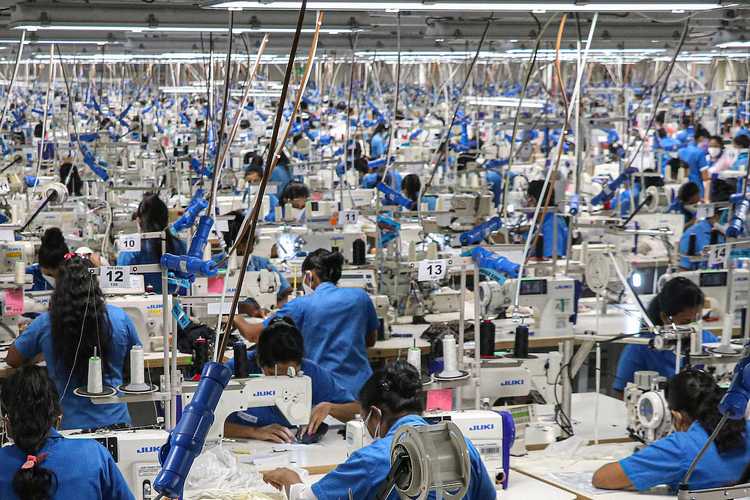
A technical change in trade rules rarely makes headlines. But the UK’s overhaul of its Developing Countries Trading Scheme may prove to be a turning point for Sri Lanka’s export-driven economy particularly its powerful garment sector.
At the centre of the reform is a simple but transformative shift: Sri Lankan garment manufacturers can now import all their inputs from any country and still export finished products to the UK tariff-free. This removes long-standing constraints that limited sourcing options and inflated production costs.
For years, Sri Lanka’s apparel sector despite its reputation for ethical manufacturing and quality has been squeezed by stricter origin rules than many regional competitors. Manufacturers often paid more for fabric or delayed production to comply with sourcing requirements. The new rules effectively dismantle those barriers.
Industry leaders say the timing is critical. Global apparel markets are under pressure from rising costs, volatile demand, and geopolitical disruptions. The ability to pivot quickly between suppliers could mean the difference between securing orders and losing them.
The reforms extend beyond clothing. The creation of an 18-country Asia Regional Cumulation Group opens new possibilities for exporters in food processing, rubber products, and light manufacturing. Inputs sourced from regional partners will now qualify for preferential access to the UK, potentially lowering costs across multiple sectors.
Council for Business with Britain President Mark Surgenor described the changes as an opportunity that extends well beyond apparel. While garments stand to gain the most immediately, he emphasised the importance of wider uptake, noting that many eligible exporters still fail to utilise zero-tariff access due to lack of awareness or administrative complexity.
Government lobbying played a role in securing the reforms. The changes respond to sustained requests from Sri Lanka and industry bodies such as the Joint Apparel Association Forum, which has long argued that restrictive origin rules undermined competitiveness rather than encouraging local value addition.
Still, the benefits are not automatic. Exporters must understand the revised compliance framework, restructure contracts, and reassure buyers that quality and sustainability standards will remain intact. There is also concern that over-reliance on imported inputs could weaken domestic backward linkages if not managed carefully.
However for an economy seeking export-led recovery, the opportunity is significant. With the UK market now more accessible than at any point in recent history, Sri Lanka’s ability to convert regulatory reform into real growth will be closely watched—by competitors, investors, and workers alike.