
By: A Special Correspondent
January 11, Colombo (LNW): Public opinion in Sri Lanka is currently divided over controversial content in a Grade 6 English language module. Investigations into the material are already underway, and it did not take long for the matter to turn into a broader political debate.
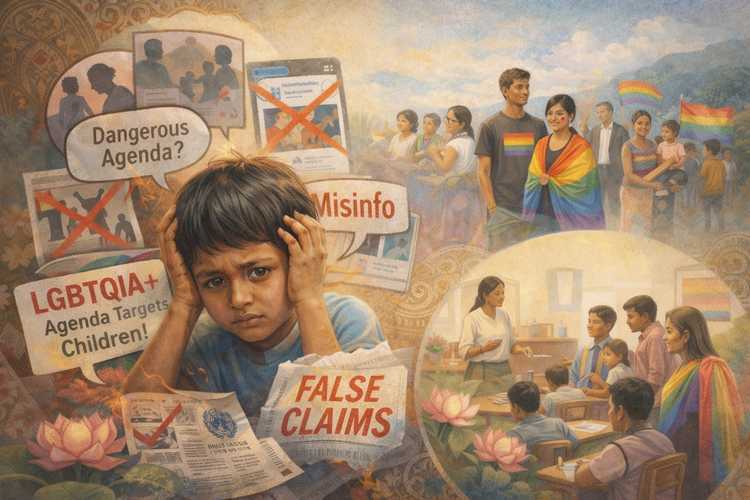
Alongside the textbook controversy, critics have highlighted a growing negative portrayal of homosexuality and the rights of individuals in Sri Lanka with diverse sexual identities. This has triggered scrutiny of the government’s existing policies on child protection and education.
Within this climate, an organisation calling itself the “Mothers Movement” has launched a campaign claiming that providing comprehensive sexuality education to children ultimately results in children being taken away from their parents. The campaign also calls on mothers to unite to eradicate homosexuality and other diverse sexual identities from Sri Lanka. These actions have drawn strong criticism from Dr. Tushara Wickramanayake, a leading advocate for children’s rights in the country.
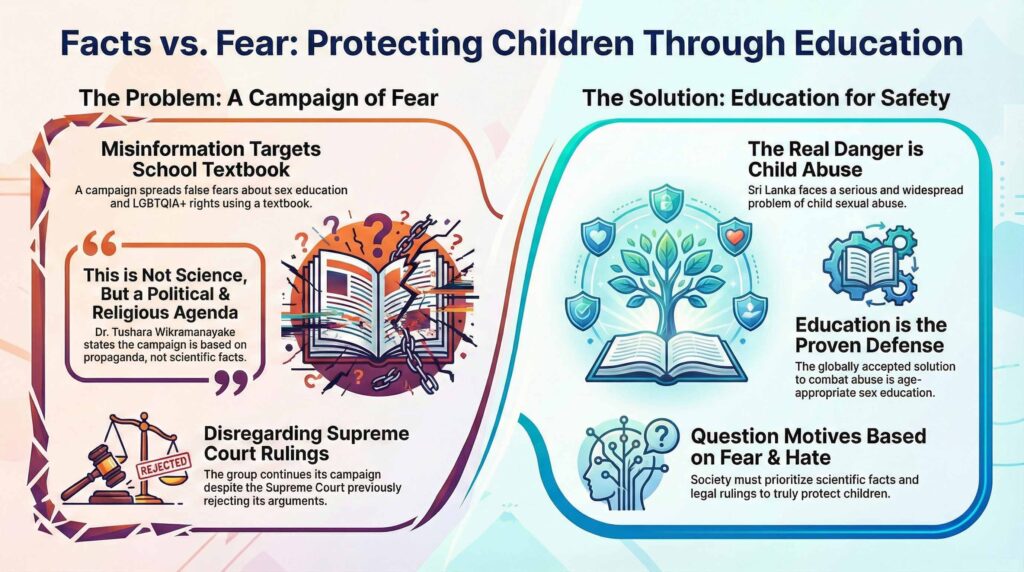
In a social media post, Dr. Wickramanayake stated that the “Mothers Movement” is spreading unfounded fear among the public about children’s rights. She also highlighted that, under the guise of protecting children, the organisation is presenting misleading information and pursuing a political agenda.
Dr. Wickramanayake further noted that Shanuka Ilangasekara, the chairperson of the movement, maintains links with international Christian organisations and serves as a pastor in Agape Ministries, an international Christian organisation. She urged the public to remain vigilant regarding how the organisation receives funding and whether it genuinely advocates for the causes it claims to support.
According to Dr. Wickramanayake, the founders of the “Mothers Movement” are Jehan Hameed and Shenali Waduge, both affiliated with the Sri Lanka Podujana Peramuna (SLPP). Based on their political affiliations, she said it is possible to identify the political agenda driving the campaign.
She also recalled that this group previously challenged, before the Supreme Court, a Private Member’s Bill in 2022 introduced by then SLPP Member of Parliament Premnath Dolawatte to decriminalise consensual same-sex relations, arguing without evidence that “homosexuals increase child sexual abuse.” The Fundamental Rights petition was dismissed by the Honourable Supreme Court, which determined that none of the claims presented had any factual basis.
Accusing the organisation of attempting to transform Sri Lanka into a haven for child abuse under the pretext of opposing educational reforms, Dr. Wickramanayake acknowledged that some aspects of educational reform require improvement.
However, she emphasised that a child in Sri Lanka is sexually abused every two hours, that child sexual abuse ranks as the third most common crime in the country, and that 40,000 complaints remain unresolved. In this context, she underlined that age-appropriate sexuality education is globally recognised as the only effective measure to prevent sexual crimes.
Dr. Wickramanayake also extended an open invitation to Shanuka Ilangasekara and the “Mothers Movement” to participate in a discussion on children’s rights.
Who is Shanuka Ilangasekara?
Shanuka Ilangasekara, chairperson of the “Mothers Movement,” also leads the Israel Sri Lanka Solidarity Movement (ISSOM), an organisation created to strengthen relations between Israel and Sri Lanka. She is a vocal advocate for recognising Israel as a separate state in the context of the ongoing Israel–Palestine conflict.
The contradiction here is that Israel is the only state in the Gulf region that not only fully recognises same-sex relationships but also legally allows same-sex couples to raise children. While supporting such a state internationally, Ilangasekara has simultaneously advocated for the eradication of same-sex individuals living in Sri Lanka.
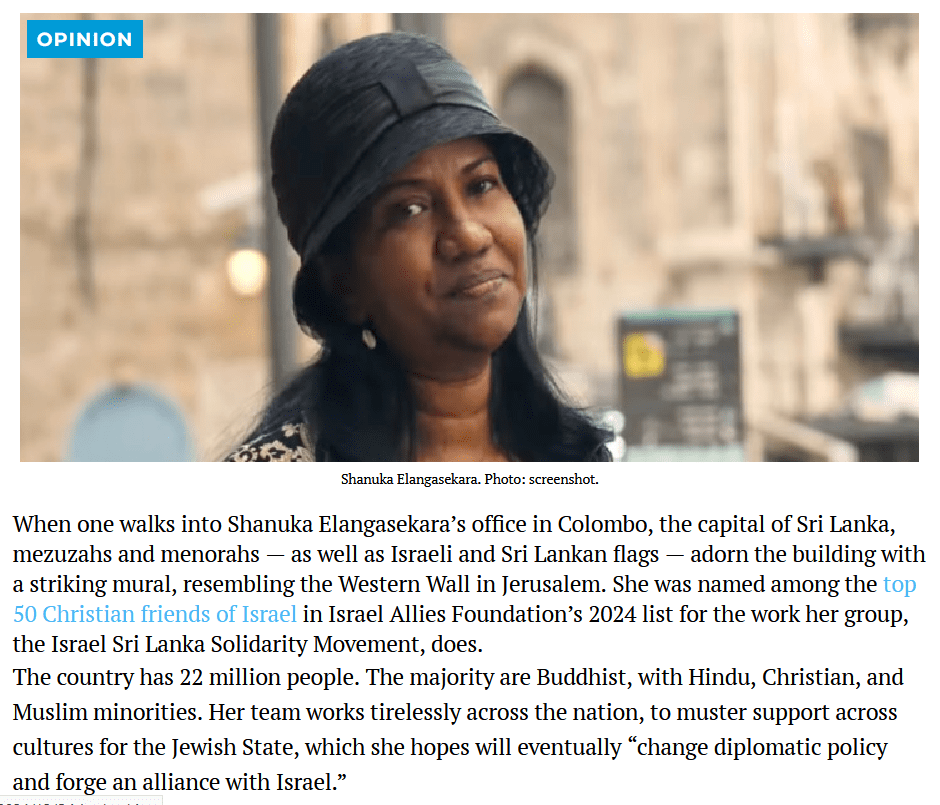
She has also told an international media outlet that she is working to change Sri Lanka’s “diplomatic position” on Israel, which is currently engaged in a highly visible war amounting to genocide, and that she is seeking to unite “all cultures” in Sri Lanka toward this goal. Observers argue that this stance amounts to an indirect endorsement of the Palestinian genocide and represents a serious threat to religious harmony in Sri Lanka through the promotion of her religious ideologies.
Within a democratic framework, citizens have the right to engage in political discourse on marginalised communities, whether to support or oppose them. Individuals also have the right to accept or reject scientific explanations regarding sexuality and sexual diversity based on their religious or cultural beliefs. Respecting differing views and agreeing to disagree is a hallmark of a civilised society.
However, when a group challenges the position of the country’s highest court on sensitive social issues and mobilises public opinion around an opposing narrative,it becomes crucial to question the forces and motivations driving that movement.