
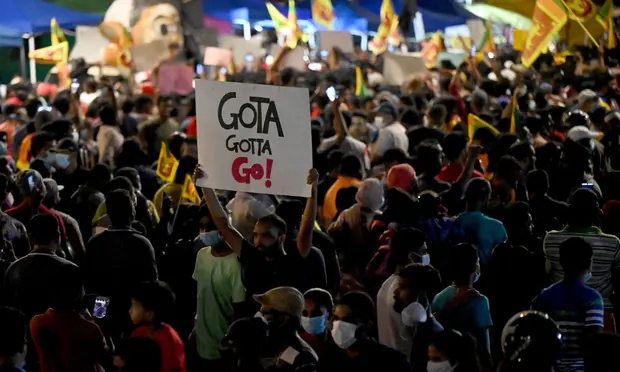
President Rajapaksa fled Sri Lanka last week after witnessing the storming of his official residence
Even in the context of a turbulent year in Sri Lanka’s economic crisis, the past two weeks have been extraordinary. Thousands of protesters stormed the palace of President Gotabaya Rajapaksa and, finding it empty, swam in his pool and looked upon the riches inside with shock at the lifestyle he was maintaining with so many of his citizens thrust into poverty. Days later Rajapaksa and much of his ruling clan had fled into exile, abandoning his country.
The Guardian’s south Asia correspondent, Hannah Ellis-Petersen, tells Michael Safi that getting rid of Rajapaksa is by no means the end of this story. In his place has come the interim president, Ranil Wickremesinghe, who is seen by many of the protesters as barely any better than the man they have just evicted. And as he faces a vote in parliament today to allow him to take on the role properly, protesters are preparing to mount a new wave of demonstrations.
Sri Lanka faces a long road back to prosperity: any new government formed this week will probably have an IMF bailout deal to strike as its first priority. But there is hope to be found in the the protest movement that has brought together all the ethnic and religious groups. For now, at least, democracy is surviving in Sri Lanka.
TheGuardian