
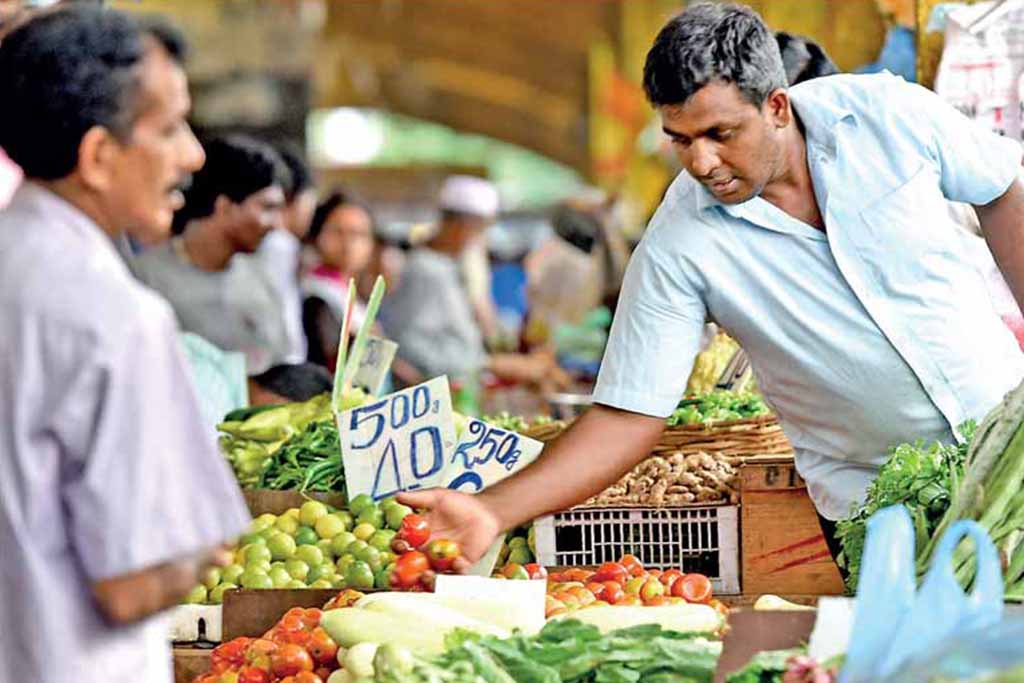
January 22, Colombo (LNW): Consumer prices recorded a slight increase in December 2025, with the National Consumer Price Index climbing to 210.5, reflecting a 1.57 per cent rise compared to the previous month, according to figures released by the Department of Census and Statistics.
The latest data indicate that the cost of an average household basket of goods and services rose by approximately Rs. 1,654 over the month, largely driven by higher food prices. Food inflation accounted for nearly the entire increase, rising by 1.55 per cent, while non-food items showed only a negligible uptick of 0.02 per cent.
Vegetables, green chillies, fresh fish and large onions were the main contributors to the upward movement in food prices. Moderate increases were also observed in eggs, chicken, potatoes, dried chillies, coconut oil, dried fish, chilli powder, coconuts and rice flour. These gains were partly offset by marginal price reductions in limes, fresh fruit, sugar, ginger and green gram.
Price pressures outside the food category remained muted. Restaurants and hotels, along with healthcare services, recorded minimal increases, while most other non-food segments such as housing, education, communication and recreation remained broadly stable. Slight declines were noted in furnishings and alcoholic beverages.
On an annual basis, headline inflation rose to 2.9 per cent in December, up from 2.4 per cent in November. Food inflation showed a sharper year-on-year increase, accelerating to 4.4 per cent from 3.6 per cent, underscoring continued pressure on essential items. Non-food inflation edged up modestly to 1.6 per cent.
Food items contributed around two percentage points to annual inflation, while non-food components added just under one percentage point. Within the non-food category, housing and utilities, education, health services, and restaurants and hotels were the most significant contributors. Declines in transport and recreation-related costs helped moderate the overall increase.
Although inflation remains relatively subdued, the persistent rise in food prices points to ongoing vulnerabilities in essential commodity supply. At the same time, the broader stability in consumer prices suggests there remains some flexibility for policymakers as they balance monetary and fiscal priorities.