
By Roger Srivasan
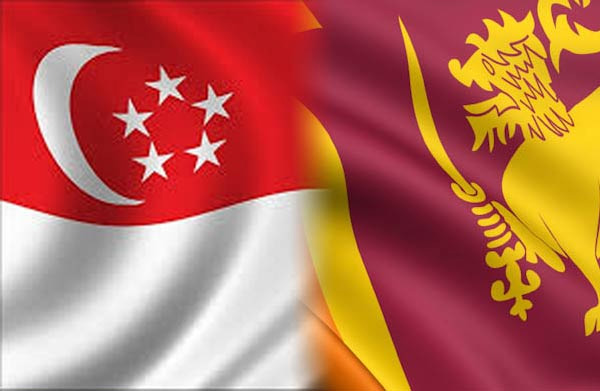
Discipline, merit, and the courage to enforce standards turned a vulnerable island into a global benchmark. Sri Lanka now faces a similar test.
When Singapore separated from Malaysia in 1965, few expected it to survive, let alone succeed. It was a small, anxious island with no natural resources, no hinterland, and no margin for error. Jobs were scarce, housing was inadequate, and social tensions ran high. Many assumed it would stumble along for a generation before quietly fading into irrelevance.
What followed instead was one of the most deliberate national transformations of the modern era.
Singapore did not rise because it was lucky.
It rose because it chose to work — methodically, relentlessly, and without excuses.
That choice, more than geography or fortune, is what separates Singapore from so many nations that had far more and achieved far less.
Order Before Comfort
Under Lee Kuan Yew, Singapore made an early and deeply unpopular decision: order before populism, competence before comfort.
The government did not promise instant prosperity. It promised something far less glamorous but far more powerful — a state that functioned. Roads were built properly. Laws were enforced consistently. Institutions were designed to outlast individuals.
Corruption, often excused elsewhere as cultural or inevitable, was treated as an existential threat. The message was stark: if dishonesty takes root, everything else collapses.
Singapore did not begin with wealth.
It began with discipline.
When Corruption Meets Consequence
Singapore’s intolerance of corruption is not rhetorical — it is enforced.
When S. Iswaran, a senior cabinet minister, was investigated and jailed for accepting inducements, there was no hedging, no tribal defence, and no political theatre. The system moved, and the system held.
For ordinary citizens, that moment reinforced something priceless: trust. People knew the queue would move, not be jumped. A bribe was no longer a shortcut — it was a risk.
For the world, the signal was unmistakable: rules apply upward, not selectively.
Many countries condemn corruption. Few punish it without fear or favour.
Merit Before Noise
One of Singapore’s quiet revolutions was its refusal to confuse loudness with leadership.
From schools to the civil service, the principle was simple: merit first. Not connections. Not surnames. Not slogans.
This did not produce perfection, but it produced predictability. Effort had meaning. Competence had a pathway. Parents began to believe their children could succeed without knowing the “right person.”
Predictability, more than rhetoric, became the oxygen of progress.
Power Without Dynasty
When Lee Kuan Yew stepped down after decades in office, he did not treat the state as an inheritance. Power was not handed down like family silver. Institutions remained intact; leadership evolved.
Even when his son, Lee Hsien Loong, later became Prime Minister, it followed a long political apprenticeship — not an automatic coronation.
The symbolism mattered. The message was unmistakable: the state does not belong to a family.
Nations rise when institutions outlive personalities.
Paying for Integrity — and Demanding It
Singapore made a controversial but pragmatic choice: it paid its top public officials very well.
The logic was unsentimental. Attract capable people who could earn more elsewhere. Remove financial temptation as an excuse. Make corruption both immoral and irrational.
But the second half of the bargain was unforgiving. High pay came with ruthless accountability. Betrayal was punished severely.
Cheap virtue was replaced with expensive integrity.
Learning Without Ego
Singapore wanted world-class ports and logistics, it looked outward rather than inward. At the time, Norway was widely regarded as possessing the world’s most advanced maritime logistics and port systems. Singapore dispatched teams of its own professionals to study Norway’s methods, absorb its discipline, and adapt what worked at home. There was no national shame in learning — only urgency.
Today, Singapore has not only matched that standard but, in many respects, surpassed it, emerging as the world’s premier maritime and logistics hub.
What This Means for Sri Lanka
Sri Lanka does not need to become Singapore to transform itself. It needs something far more achievable: Singaporean seriousness.
Seriousness about enforcing laws upward, not selectively.
Seriousness about appointing people for ability, not loyalty.
Seriousness about learning from others without wounded pride.
Seriousness about building institutions that outlive elections.
History does not repeat itself neatly, nor does it anoint replicas. Yet moments arise when a nation encounters a leader whose instincts align with institutional repair rather than political indulgence. In that sense, Anura Kumara Dissanayake may represent Sri Lanka’s closest equivalent to a Lee Kuan Yew–style moment — not a replication of a man, but the emergence of a governing ethic.
This is not a coronation.
It is a test.
The Real Lesson of Singapore
Singapore’s success was not a miracle of wealth.
It was a triumph of choices.
Choices made early.
Choices enforced consistently.
Choices protected from sentimentality.
The island worked because it refused to pretend.
And that is the most hopeful lesson of all — because if success depends not on destiny, but on discipline, then Sri Lanka’s story is not finished.