
By: Staff Writer
January 25, Colombo (LNW): Sri Lanka’s tea industry recorded a notable improvement in export earnings in 2025, but beneath the positive headline figures lies a sector under growing strain. As the JVP-led National People’s Power (NPP) government moves to increase payments to workers in state plantation companies, industry stakeholders warn that policy decisions, while socially driven, could further tighten already thin margins across the tea value chain.
Export earnings rose 6% year-on-year to $1.51 billion, supported mainly by higher volumes rather than stronger prices. Total exports reached 257.44 million kilograms, reflecting an 11.65 million kilogram increase from 2024. However, average Free On Board prices remained largely stagnant, underscoring the industry’s vulnerability to cost escalations.
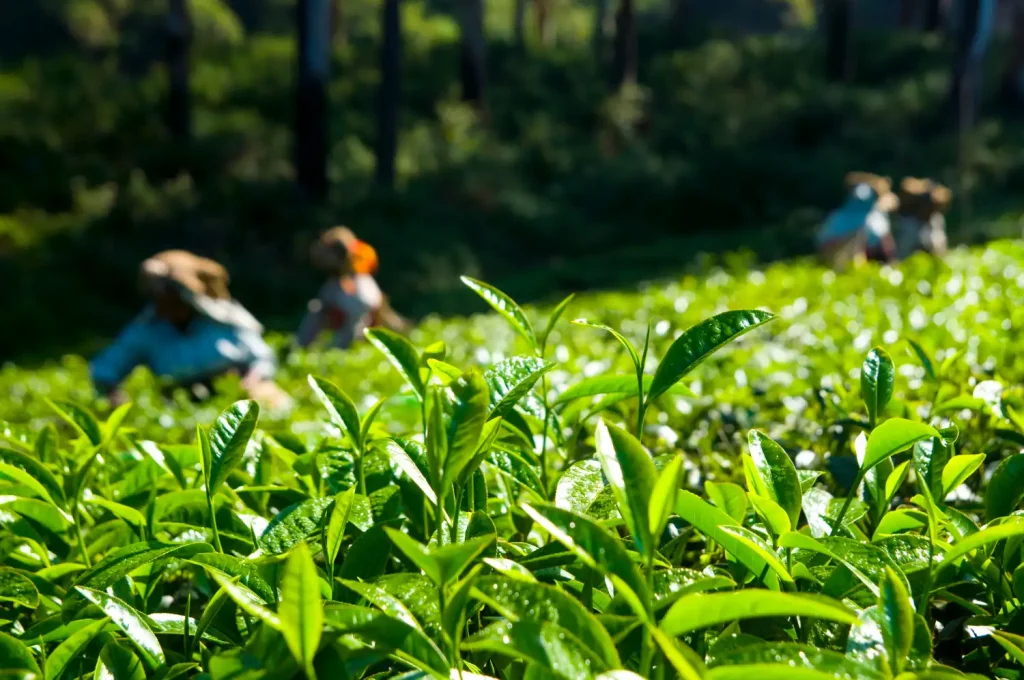
The government’s decision to enhance wages in state-owned plantations has been welcomed by trade unions and worker collectives long burdened by rising living costs. Yet tea producers argue that the timing is challenging. Plantation companies are grappling with declining bulk tea exports, subdued global prices, and increasing competition from lower-cost producers such as Kenya and Vietnam.
Bulk tea, which still accounts for over 40% of total exports, contracted by 4.27 million kilograms in 2025. This segment delivers the lowest margins and is most exposed to rising labour costs. With wages forming a substantial portion of plantation expenses, companies fear that higher mandated payments without corresponding productivity gains could erode profitability further.
The export growth narrative is largely driven by value-added segments such as packeted tea, tea bags, instant tea, and green tea. Packeted tea volumes surged to 116.25 million kilograms, accounting for nearly half of total exports. However, these segments require greater investment in branding, marketing, and compliance areas where state plantation companies remain structurally weaker than private exporters.
December 2025 figures reveal additional warning signs. Export volumes fell sharply year-on-year, highlighting ongoing volatility in demand. While prices improved temporarily during the month, analysts caution that price recoveries remain fragile and insufficient to absorb rising cost pressures.
Under the NPP government’s broader economic agenda, the wage increase is positioned as a corrective measure to decades of worker deprivation. However, industry analysts argue that wage reform must be accompanied by estate modernisation, mechanisation, and productivity-linked incentives. Without such measures, higher labour costs may push some plantations deeper into losses, reducing reinvestment capacity and long-term sustainability.
The challenge for policymakers is balancing social justice with commercial viability. While Sri Lanka’s tea exports remain resilient, the sector’s future will depend on whether policy reforms strengthen competitiveness or inadvertently accelerate decline.