
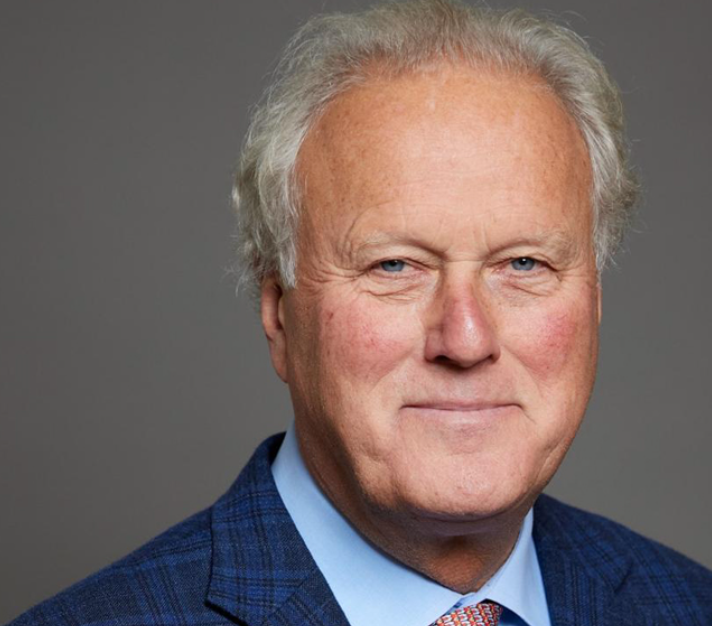
The arrival of Lord Marland of Odstock in Colombo this February is more than a routine diplomatic courtesy it is a carefully timed intervention by the Commonwealth’s business establishment at a moment of political and ideological transition in Sri Lanka.
Lord Marland, Chairman of the Commonwealth Enterprise and Investment Council (CWEIC), represents the commercial arm of the 56-nation Commonwealth, mandated directly by Heads of Government to promote trade, investment, and capital flows across member states. A former British Minister for Energy and Climate Change and a long-standing Conservative Party figure, Marland has built a reputation as a dealmaker linking governments with global investors, particularly in frontier and post-crisis economies.
His visit comes at a sensitive juncture. Sri Lanka is now governed by a Marxist-rooted JVP-led National People’s Power (NPP) administration, whose rise was fuelled by public anger over corruption, austerity, and elite-driven economic governance. While the new Government has pledged transparency and social justice, it also faces the inescapable reality of a fragile post-bankruptcy economy still dependent on foreign capital, debt restructuring, and export-led recovery.
Against this backdrop, Lord Marland’s scheduled meeting with President Anura Kumara Dissanayake is politically symbolic. It signals that despite ideological differences, the NPP Government is engaging with established global economic networks rather than retreating into isolation. For the Commonwealth, the objective appears equally pragmatic: ensuring Sri Lanka remains open to private investment and aligned with global trade norms during a period of policy recalibration.
CWEIC’s recent decision to establish a hub in Sri Lanka further underscores this intent. The hub positions Colombo as a regional gateway for Commonwealth-linked investment, particularly in infrastructure, energy transition, logistics, and services. For local private-sector partners, it offers access to international capital and political risk mitigation through Commonwealth backing.
However, critics within progressive circles argue that CWEIC represents the very model of elite-driven capitalism that the NPP rose to challenge. They question whether engagement with Commonwealth business institutions could dilute promises of economic sovereignty and worker-centred reform.
Supporters counter that Lord Marland’s visit reflects a recognition that ideological purity cannot substitute for capital, technology, and market access. They argue that engagement does not equal submission, and that Sri Lanka’s challenge lies in renegotiating its place within global systems on fairer terms.
Ultimately, Lord Marland’s presence in Colombo is a test case—for both sides. For the Commonwealth, it is about maintaining relevance in a country experimenting with left-led governance. For the NPP Government, it is about proving it can balance ideological commitments with the hard arithmetic of economic recovery.