
LISTEN TO STORY
WATCH STORY
By: A Special Correspondent
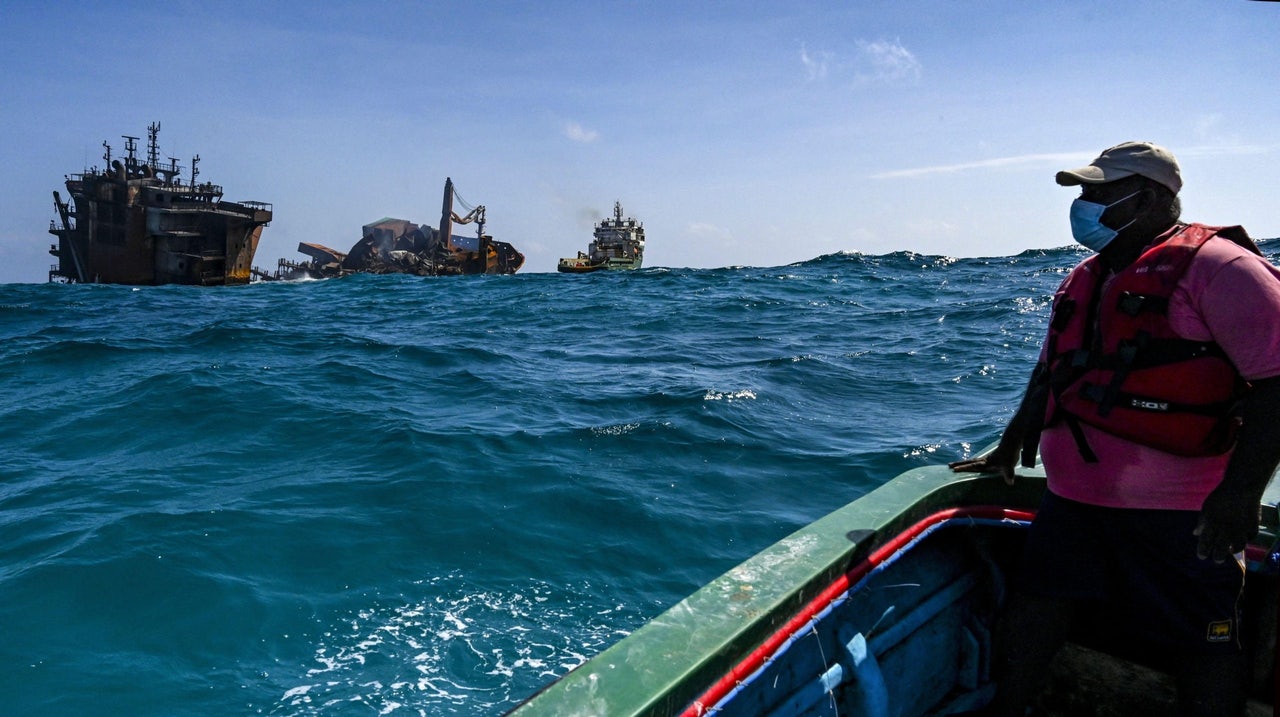
February 05, Colombo (LNW): Several marine scientists who were closely involved in assessing the environmental damage caused by the MV X-Press Pearl disaster have been excluded from a major government workshop intended to strengthen Sri Lanka’s Marine Environment Protection Authority (MEPA).
The decision has raised growing concerns about transparency, accountability, and the handling of scientific evidence in the aftermath of the country’s worst maritime environmental incident.
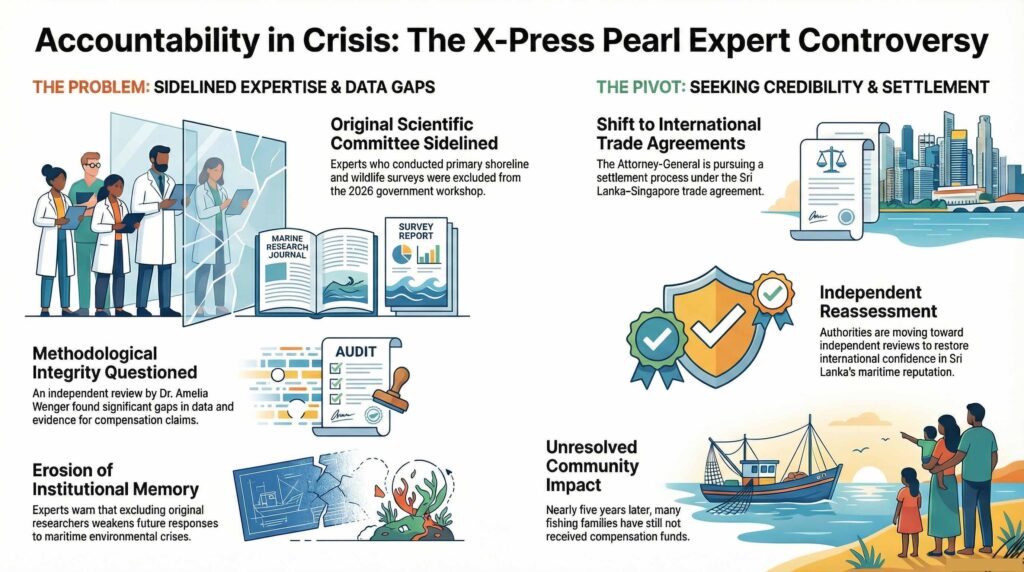
The omission comes shortly after an independent review by marine ecologist Dr Amelia Wenger highlighted serious shortcomings in MEPA’s second interim damage assessment. Her report questioned the robustness of the methodology, the availability of supporting data, and the strength of evidence used to justify significant compensation claims.
Members of the original expert committee, many of whom carried out shoreline surveys, wildlife examinations, and fisheries assessments following the 2021 disaster, say they were not invited to the January 2026 workshop.
Given their direct involvement and specialist knowledge, several have described the exclusion as perplexing. They argue that sidelining professionals with first-hand experience undermines efforts to improve technical capacity and institutional learning.
Dr Wenger’s review did not challenge the competence of Sri Lankan scientists. Instead, it acknowledged that their work was conducted under extreme pressure, including tight deadlines and restrictions imposed by the Covid-19 pandemic. These conditions, she noted, limited opportunities for long-term monitoring and comprehensive data collection. However, her findings have prompted renewed scrutiny of how environmental damage estimates were prepared and presented before the Supreme Court.
To date, government authorities have not provided a public explanation for the absence of the original experts from the workshop. Nor have they clarified whether the recent critical review influenced participation decisions. This silence has fuelled speculation that institutional sensitivities, rather than purely scientific considerations, may be shaping post-disaster governance.
Affected experts warn that excluding those who were involved from the outset risks eroding institutional memory and weakening future responses to environmental crises. At the same time, some observers suggest that the move may signal a shift towards a more independent reassessment of the original damage analysis, a process long advocated by the ship’s operators.
The controversy also reflects wider concerns about delays in delivering justice to affected communities. Parliamentary oversight committees have repeatedly criticised government agencies for failing to distribute compensation funds received from the shipping company. Nearly five years after the disaster, many fishing families and coastal residents continue to express deep frustration over the lack of tangible support.
Recent developments in the Supreme Court may point towards a new phase in the case. The court has approved the Attorney-General’s request to pursue a settlement process under the Sri Lanka–Singapore trade agreement, following an invitation from the ship’s operators. This has opened the possibility of a formal review involving independent experts.
As Colombo faces increasing competition in its role as a regional transshipment hub, questions remain about the long-term impact of disputed scientific findings on Sri Lanka’s international reputation. Some in the maritime community believe that conclusions defended for years, despite evident weaknesses, may now be quietly reconsidered in the interest of restoring credibility and confidence.
Related Stories: