
LISTEN TO STORY
WATCH STORY
By: Isuru Parakrama
February 08, Colombo (LNW): Sri Lanka is increasingly coming into focus as Russia turns to South Asia to address one of the most severe labour shortages it has faced in decades, driven by demographic decline and the prolonged war in Ukraine.
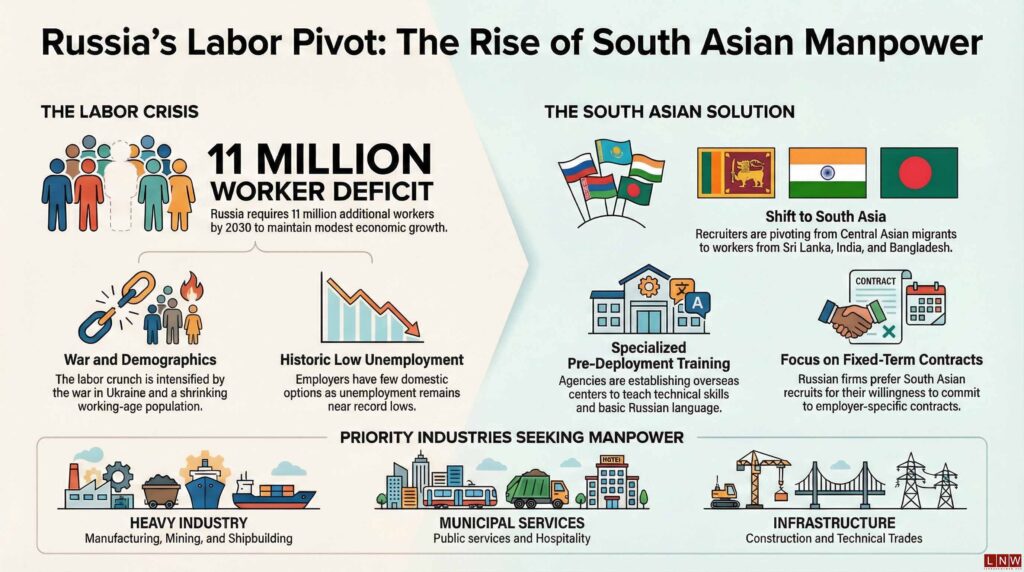
For years, Russia depended largely on migrant workers from Central Asia to sustain its workforce. That model is now shifting as the country grapples with a shrinking working-age population and rising demand for labour across key sectors. Russian officials estimate that the economy will require as many as 11 million additional workers by the end of the decade to maintain even modest growth.
As a result, recruiters are expanding their search well beyond traditional source countries. South Asia has emerged as a priority region, with Sri Lanka now being viewed alongside India and Bangladesh as a potential supplier of much-needed manpower.
Recruitment agencies report growing interest in Sri Lankan workers for roles ranging from construction and manufacturing to hospitality and municipal services.
This change reflects a broader recalibration of Russia’s labour policies. During President Vladimir Putin’s visit to New Delhi late last year, Moscow signed agreements aimed at easing procedures for temporary labour migration.
Even before those arrangements, work permits issued to Indian nationals had risen sharply, while overall permits for foreign workers reached their highest level in years in 2025.
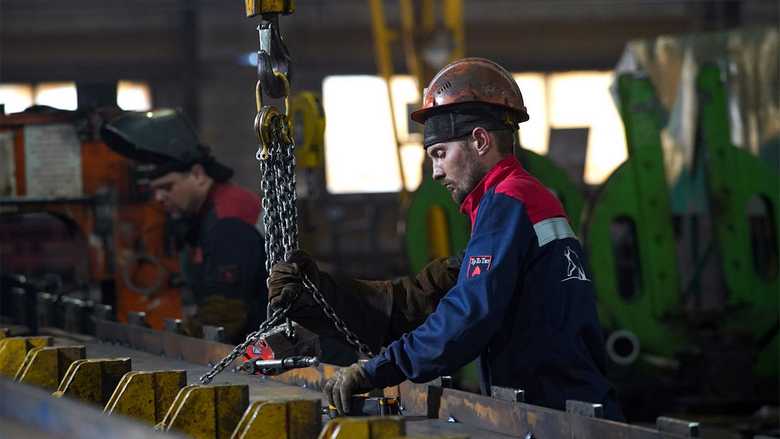
Although Central Asian states such as Turkmenistan continue to send workers, a significant share of new arrivals now comes from farther afield. In major Russian cities, South Asian workers have begun appearing in public services, construction sites and restaurants, highlighting what recruiters describe as a structural transformation of the labour market.
Recruitment firms are also adapting. Some have begun scouting actively in Sri Lanka and Southeast Asia, seeking workers willing to commit to fixed-term contracts tied to specific employers. According to industry sources, this approach is preferred by Russian companies, as workers from visa-free countries are more likely to switch jobs frequently.
Training initiatives are also expanding. Agencies have set up overseas centres to prepare recruits in technical skills and basic Russian language proficiency before deployment. For certain industries, bilingual supervisors act as intermediaries on job sites, reducing communication barriers.
Russia’s labour crunch has been intensified by the war in Ukraine. Hundreds of thousands of working-age Russians have either been absorbed into the defence sector or have left the country altogether, while tighter migration rules introduced after security concerns in 2024 further reduced the inflow of foreign workers. At the same time, unemployment remains near historic lows, leaving employers with few domestic options.
Major Russian companies are already feeling the strain. Mining, shipbuilding and heavy industry firms have publicly acknowledged staff shortfalls running into the thousands, forcing some operations to scale back production despite offering comparatively high wages.
Cost considerations are also shaping recruitment. Employers often find that hiring from South Asia, including Sri Lanka, is more affordable, particularly for skilled trades, without compromising productivity.
Based on comments by analysts, Russia’s labour shortage is unlikely to ease anytime soon. With an ageing population and declining birth rates, the reliance on foreign workers is expected to become a long-term feature of the economy. For Sri Lanka, this shift could open new overseas employment opportunities, provided recruitment is managed responsibly and worker protections are ensured.