
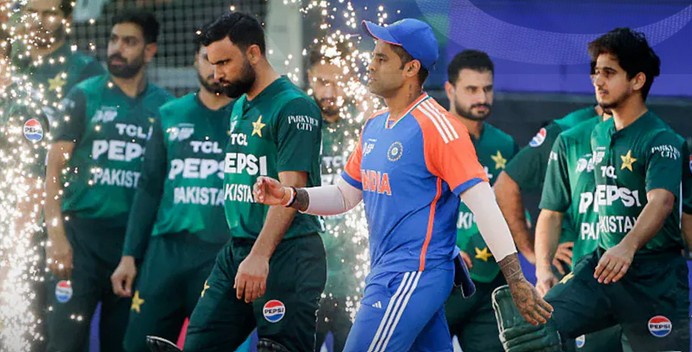
February 10, Colombo (LNW): Islamabad has confirmed that Pakistan will take part in its scheduled T20 World Cup fixture against India, ending days of uncertainty around the high-profile encounter set for February 15 in Colombo.
The decision was signed off on Monday after Prime Minister Shehbaz Sharif was briefed on a series of discussions involving the Pakistan Cricket Board, the International Cricket Council and regional cricket authorities. According to officials, several friendly nations had quietly pressed Pakistan to help defuse the situation and prevent disruption to the tournament.
Government sources said the prime minister reviewed formal representations from Bangladesh, alongside messages of support from Sri Lanka, the United Arab Emirates and other cricketing members, all urging Islamabad to play a constructive role in keeping the competition on track. The leadership, it was added, viewed the appeals as a reflection of trust in Pakistan’s standing within the cricketing world.
Earlier in the day, President Anura Kumara Dissanayake of Sri Lanka held a telephone conversation with Mr Sharif, during which both leaders recalled the long history of cooperation between their countries, particularly during periods of crisis. The Sri Lankan president reportedly asked Pakistan to consider a conciliatory path to avoid further strain on the event, a request that was received warmly in Islamabad.
Following what the government described as productive multilateral engagement, Pakistan formally instructed its national men’s team to honour the February fixture. Officials said the move was guided by a desire to uphold the spirit of the sport and safeguard the continuity of international cricket across participating nations.
Messages of encouragement were also extended to the squad, with the government expressing confidence that the team would represent the country with professionalism, sportsmanship and pride on the global stage.
The breakthrough came against a backdrop of intense regional lobbying. Bangladesh Cricket Board president Aminul Islam had publicly appealed to Pakistan to play the match, praising the Pakistan Cricket Board and its supporters for what he called solidarity during a difficult period for Bangladeshi cricket. After a brief visit to Pakistan, he urged Islamabad to take the field “for the good of the wider cricket ecosystem”.
In parallel, the ICC sought to calm tensions by clarifying that Bangladesh would face no sanctions for its decision to withdraw from the tournament earlier. The governing body said it had held frank and constructive talks with both the PCB and BCB, stressing that Bangladesh remained a valued full member with a vital role in the future of the game.
The ICC confirmed that no financial or sporting penalties would be imposed and revealed plans for Bangladesh to host an ICC event ahead of the 2031 Men’s Cricket World Cup, subject to standard procedures. The move was framed as a vote of confidence in the country’s ability to stage major events and as part of a broader commitment to developing cricket in South Asia.
ICC chief executive Sanjog Gupta acknowledged that Bangladesh’s absence from the current tournament was disappointing but said it did not diminish the board’s long-term importance. He emphasised that the ICC’s priority remained sustained growth, investment and opportunity for players and supporters alike.
Pakistan’s stance marks a shift from its earlier position, when the government had approved participation in the 2026 T20 World Cup but stopped short of allowing the match against India. That hesitation followed Bangladesh’s withdrawal over security concerns linked to deteriorating political relations in the region, a move that led to Scotland being drafted into the competition.
Sri Lanka Cricket had subsequently warned that a Pakistan boycott would carry financial consequences and risk undermining the island nation’s fragile tourism recovery. With diplomatic pressure mounting and assurances offered, Islamabad ultimately chose engagement over absence.
While Pakistan and India have not contested a bilateral series for more than ten years, their clashes in multinational tournaments remain among the most watched events in world sport. February’s encounter in Colombo will now go ahead, restoring one of cricket’s most intense rivalries to the World Cup stage.