
By: Staff Writer
February 10, Colombo (LNW): Colombo’s expanding suburbs are becoming a frontline in the struggle between urban growth and environmental protection, as real estate development increasingly targets nature-rich landscapes. A new report by the Centre for a Smart Future finds that weak governance, fragmented planning and rising land values are placing wetlands and paddy fields under unprecedented strain.
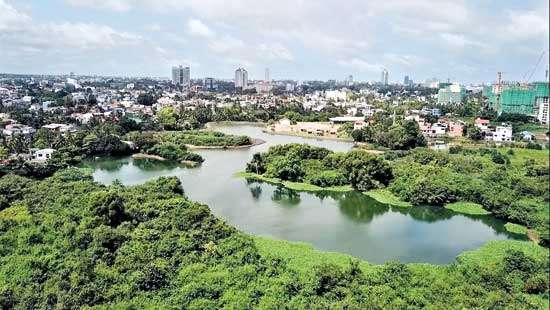
The study focuses on Thalangama Lake and nearby communities, where improved infrastructure and lifestyle-driven demand have made proximity to nature a lucrative selling point. Land prices in these areas have reportedly climbed by 30 to 40 percent each year, transforming once-rural landscapes into prime development zones.
As land in central Colombo becomes scarce and expensive, developers have shifted toward suburban belts, promoting projects that promise tranquillity, greenery and scenic views. The report notes that while such developments appeal to affluent buyers, they often accelerate horizontal sprawl and ecological fragmentation, creating a patchwork of condominiums, gated housing schemes and isolated green remnants.
Governance failures emerge as a central concern. Multiple urban plans including the Western Region Megapolis Master Plan and various Urban Development Authority proposals offer competing visions for Colombo’s growth. According to the study, these plans pay limited attention to liveability or integrated green space management, leaving environmentally sensitive areas vulnerable to ad hoc decision-making.
Zoning regulations are described as ambiguous and easily overridden, particularly for infrastructure projects. Legal provisions allowing the conversion of so-called abandoned or low-yield paddy lands have further enabled reclamation, even in flood-prone zones. Within the Thalangama Environmental Protection Area alone, responsibility is divided among eight government agencies, resulting in weak enforcement and regulatory gaps.
Environmental safeguards are also falling short. Environmental Impact Assessments are required only for large-scale or prescribed projects, allowing many high-density developments to proceed without rigorous scrutiny. The cumulative effects of multiple smaller projects on flooding, biodiversity and water quality are rarely assessed, while limited public access to land-use data restricts community oversight.
For local residents, the consequences are tangible. Communities report worsening traffic congestion, increased noise and waste, declining air quality and heightened flood risks. Rising land prices have displaced long-standing farming families, reshaping the social fabric of these neighbourhoods. Yet the report also documents a growing wave of community-led environmental activism, with residents mobilising to oppose projects they see as environmentally destructive.
Despite differing perspectives among developers, regulators and residents, the study finds consensus on one point: the need for clearer zoning, stronger protection of suburban ecosystems and more coherent urban governance. Without reform, the report warns, Colombo’s current development path threatens to undermine the natural systems essential to the city’s long-term resilience and liveability.