
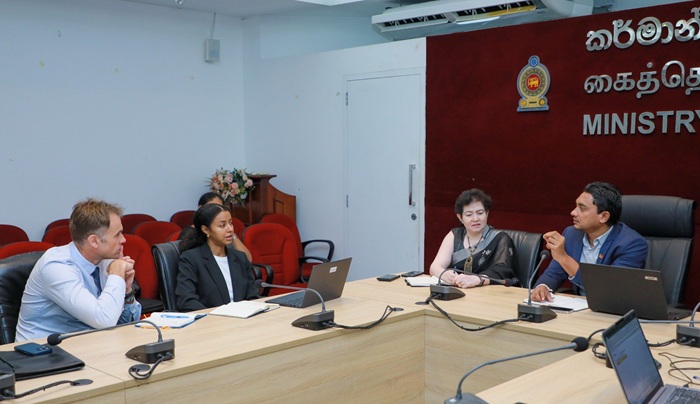
February 10, Colombo (LNW): Sri Lanka’s Ministry of Industry hosted the third round of consultations on Monday with World Bank experts Richard Walker and Anna Twum, focusing on the nation’s planned overhaul of its import tariff system.
Deputy Minister of Industries and Entrepreneurship Development, Chathuranga Abeysinghe, said the 2026 policy will mark a major shift in the country’s economic framework by removing para-tariffs such as Cess and PAL, while introducing a simplified four-tier tariff structure for imports.
Speaking on social media, the Deputy Minister described the reform as “the most significant step in Sri Lanka’s economic transformation in recent years,” aimed at better aligning the economy with global value chains. He added that the new structure is designed to ensure a more transparent, efficient, and internationally compatible trade regime.
Abeysinghe noted that discussions with the World Bank delegation, which is providing technical guidance for the reform, emphasised several key priorities: strong institutional oversight during implementation, phased execution according to a clear timeline, establishing robust national standards for imported goods, and curbing the entry of under-invoiced or substandard products.
According to the Deputy Minister, the revamped tariff system is crucial not only for enhancing Sri Lanka’s export competitiveness but also for paving the way for the country to engage more fully in international trade agreements, strengthening its position in global markets.