
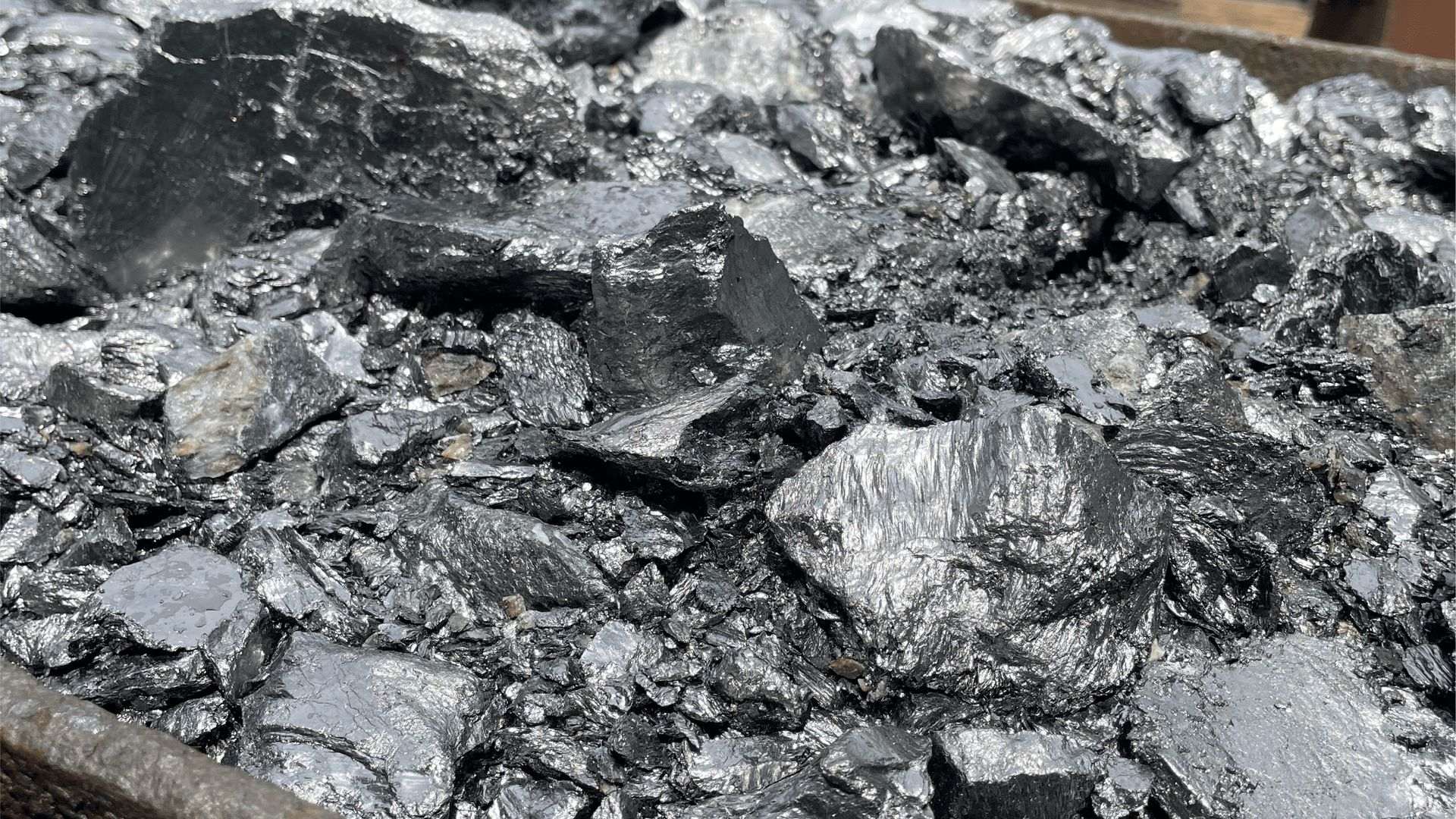
Sri Lanka’s long-dormant graphite industry may be on the brink of transformation following a high-level visit by a U.S. delegation under the Montana State Partnership Program (SPP). The team — including Lieutenant Colonel Chris Cory, Mr. James Mooney of Mooney Group LLC, Ms. Mary Mooney, and Mr. Chris Dorrington met Ambassador Mahinda Samarasinghe to explore investment prospects in Sri Lanka’s critical mineral sector.
The discussions centered on graphite, a mineral increasingly viewed as strategic due to its role in semiconductors, electric vehicle batteries, and defense systems. Sri Lanka is one of the few countries producing high-grade vein graphite, with carbon purity levels often exceeding 95%, placing it in a niche category globally. However, despite this geological advantage, the industry remains underdeveloped.
Primitive Industry, Untapped Potential
As of February 2026, Sri Lanka’s graphite production is estimated at approximately 7,000–8,000 metric tons annually modest compared to global leader China, which accounts for over 60% of world output exceeding 1 million metric tons per year. Sri Lanka’s mining operations are primarily small- to medium-scale, with limited mechanization and minimal downstream processing. Much of the output is exported in raw or semi-processed form, forfeiting higher margins available through value-added refinement.
Key mining sites remain concentrated in areas such as Kahatagaha and Bogala, both historically significant but constrained by aging infrastructure and limited technological modernization. The sector contributes less than 0.2% to national GDP and employs fewer than 3,000 workers directly, underscoring its primitive stage of development.
Strategic U.S. Involvement
The Mooney Group’s interest signals potential change. The firm specializes in developing critical minerals for advanced manufacturing sectors in the United States, aligning with Washington’s broader strategy to diversify supply chains away from overreliance on dominant producers. For Sri Lanka, U.S. participation could introduce advanced extraction technologies, environmental safeguards, and internationally compliant safety standards.
Ambassador Samarasinghe emphasized Sri Lanka’s commitment to facilitating Foreign Direct Investment and expanding value-added production. A partnership with American investors could accelerate the development of purified spherical graphite a key input for lithium-ion batteries and possibly establish local processing plants. If realized, this could multiply export revenues three- to fourfold over the next five years.
Economic and Geopolitical Implications
The timing is significant. As global competition intensifies for critical minerals, Sri Lanka’s strategic location along major Indian Ocean trade routes enhances its appeal. Collaboration under the Montana SPP framework also deepens bilateral ties beyond traditional defense cooperation.
However, risks remain. Environmental oversight, community engagement, and transparent licensing processes will be critical to avoid the pitfalls seen in extractive industries elsewhere. Regulatory modernization and infrastructure upgrades will require coordinated policy support.
Still, the prospective U.S.–Sri Lanka graphite initiative represents more than a commercial venture. It reflects a broader shift in the geopolitics of minerals and offers Sri Lanka a rare opportunity to move from raw material exporter to value-added participant in the global critical minerals supply chain.