
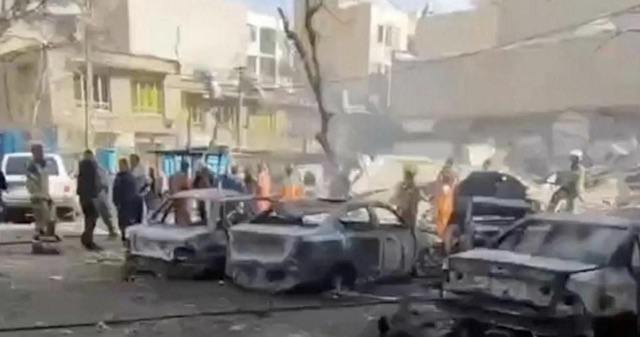
A major escalation in Middle East tensions unfolded on 28 February 2026 as the United States and Israel launched coordinated military strikes targeting multiple locations across Iran, including sites tied to the country’s leadership and military infrastructure. Iran has responded with widespread retaliatory attacks that have spread across the region.
The joint offensive involved airborne and missile strikes on cities including Tehran, Isfahan, Qom, Karaj and Kermanshah. Key targets reportedly included compounds linked to senior leadership figures and command centres, though Iranian officials stated that the Supreme Leader was not present at the time of the attack.
Smoke and explosions were reported across Tehran and other urban areas, with communications disrupted in several districts of the capital. Authorities have not yet released full details regarding damage or casualties.
In response, Iran’s military launched a wave of ballistic missiles and drones toward US and Israeli targets across the Middle East. Sirens sounded in Israel as air defence systems were activated. Several Gulf states that host US military facilities, including Bahrain, Qatar, Kuwait and the United Arab Emirates, reported incoming projectiles and activated defensive measures.
Reports also indicated damage near US military installations in the region. Officials are still assessing the extent of impact and possible casualties.
Leaders on both sides have defended their actions. US and Israeli officials described the strikes as necessary for national security, while Iranian authorities said their retaliation was a legitimate response and warned that further action could follow.
The widening conflict has prompted several governments to issue travel advisories and restrict airspace, with airlines suspending or rerouting flights across parts of the Middle East.
Casualty figures remain unclear as the situation continues to develop. International leaders have urged restraint and called for diplomatic efforts to prevent further escalation.