
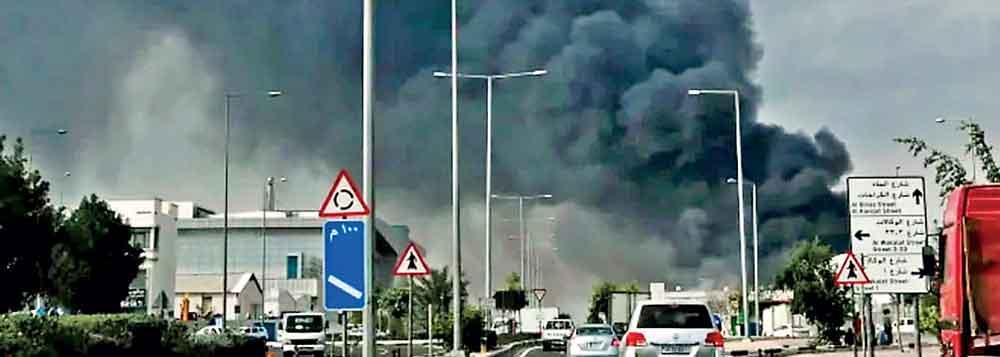
Middle East faces a period of unprecedented tension and instability
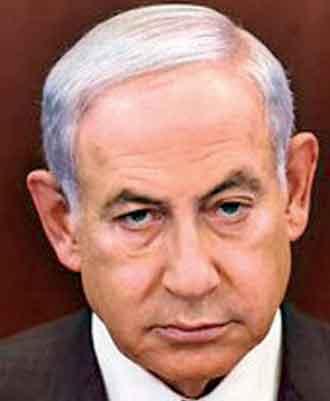
Israeli PM Benjamin Netanyahu
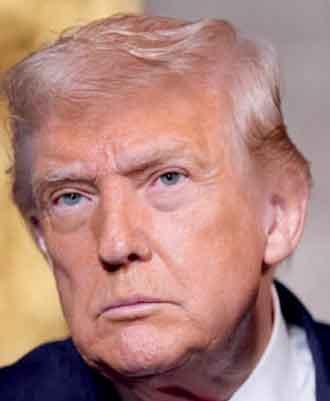
US President Donald Trump
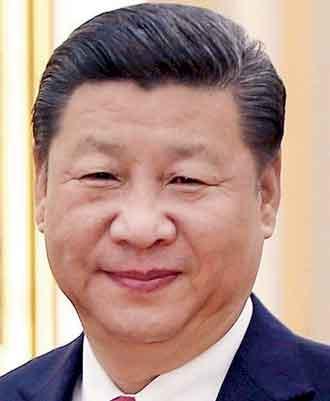
Chinese President Xi Jinping
The 2026 strikes were timed to exploit a moment of perceived Iranian domestic vulnerability, following the massive January 2026 protests
Iranian crude was the lifeblood of China’s economic resilience against Western sanctions and a key component of its long-term strategic planning

In the current geopolitical landscape of 2026, the Trump administration’s maneuvers against Iran and Venezuela appear less as isolated regional disputes and more as a coordinated campaign to preserve American hegemony by strangling the energy lifelines of its primary rival, China
The following article examines how the targeting of Tehran and Caracas serves as a mechanism to disrupt the ‘Beijing-Tehran-Moscow’ axis and maintain the US status as the world’s sole superpower.
The shift from non-proliferation to economic containment
For decades, the US policy towards Iran was framed through the lens of nuclear non-proliferation. However, the re-escalation under the second Trump term suggests a shift in priorities. By moving beyond the Joint Comprehensive Plan Of Action (JCPOA), the US has targeted Iran’s most vital export, oil.
China is currently the world’s largest importer of crude oil, and its economic growth is inextricably linked to energy security. By placing Iran under a “maximum pressure” campaign characterised by the 2026 executive orders imposing 25% tariffs on Iran’s trading partners the US is not just targeting a regime; it is imposing a ‘tax’ on Chinese industrial production.
The energy squeeze: Trump’s strategy to contain China and preserve hegemony
In the early twenty-first century, the international system has transitioned from a post-Cold War unipolarity to a state of intense ‘Great Power Competition.’ Central to this competition is the rivalry between the United States and the People’s Republic of China.
This article argues that the second administration of Donald Trump has moved beyond traditional trade and technological containment, adopting a systemic ‘Energy Squeeze Doctrine.’ By targeting the energy infrastructures and export capabilities of Iran and Venezuela, China’s primary sources of discounted, non-dollar crude the United States aims to stifle Chinese industrial expansion and military modernisation. Simultaneously, this strategy provides a geopolitical shield for Israel to pursue its own regional hegemony and for Prime Minister Benjamin Netanyahu to maintain domestic political survival.
This article justifies these observations through an analysis of energy flow data, currency hegemony, and regional security dynamics.
The geopolitical context: US hegemony and the Chinese challenge
The transition of global power in the early twenty-first century has been characterised by a profound and multifaceted competition between the United States and the People’s Republic of China. This ‘Great Power Competition’ is often analysed through the lens of trade wars, technological rivalry, and territorial disputes in the South China Sea. However, a more systemic and sophisticated strategy has emerged from the second administration of Donald Trump, which we can define as the ‘Energy Squeeze Doctrine.’ This doctrine identifies energy security as the fundamental vulnerability of Chinese global ascension. Rather than engaging in a direct and potentially catastrophic military confrontation with Beijing, the Trump administration has opted for a strategic indirect approach: the systematic dismantling and control of the energy supply lines that fuel the Chinese industrial machine. By targeting Iran and Venezuela two of China’s most vital, non-aligned energy partners the United States aims to reassert its global hegemony and prevent the displacement of the dollar-denominated international order.
This approach represents a shift from traditional non-proliferation objectives toward a more aggressive economic containment strategy designed to preserve American unipolarity at any cost. The rationale behind targeting Tehran and Caracas is not merely a localised desire for regime change or nuclear non-proliferation. Instead, it represents a calculated maneuver to manage the transition of power in the international system.
Historically, the United States has maintained its status as the ‘World Number One’ through its control over global financial institutions and its role as the ultimate guarantor of maritime security. However, China’s rapid economic expansion and its ‘Belt and Road Initiative’ (BRI) threatened to create a parallel, independent economic ecosystem. Central to this ecosystem was the secure flow of discounted, sanctioned crude oil from Iran and Venezuela, often traded outside the American-led banking system. By disrupting these flows, Washington seeks to impose an ‘energy tax’ on Chinese growth, forcing Beijing back into the US-dominated energy market and preserving the status quo of American leadership.
This article explores the mechanics of this strategy, the role of regional allies like Israel, and the profound implications for global peace in this defining decade.
The Venezuelan precedent: Testing the energy blockade
The execution of the ‘Energy Squeeze’ began in earnest with the 2026 operations in Venezuela. For years, the Maduro administration served as a vital node in China’s energy security architecture, providing millions of barrels of crude in exchange for debt relief and infrastructure investment. These transactions were frequently conducted through ‘shadow fleets’ and opaque financial channels designed to bypass the Office of Foreign Assets Control (OFAC) sanctions.
The January 2026 operation, which resulted in the detention of Nicolás Maduro and the installation of a transitional government aligned with Washington, was a watershed moment in the restoration of the Monroe Doctrine. It was not merely an exercise in promoting democracy; it was a strategic seizure of the world’s largest proven oil reserves to prevent their use by a global rival.
Following the ouster of Maduro, the Trump administration immediately moved to redirect Venezuelan oil flows. President Trump’s rhetoric on board Air Force One in late January 2026 stating that China was ‘welcome’ to buy Venezuelan oil but only under ‘legitimate and authorised channels’ revealed the true objective of the operation. By forcing China to purchase Venezuelan oil in US dollars and through approved companies, the United States effectively reclaimed the power to monitor, tax, and restrict Beijing’s energy intake. The ‘discount era’ for Chinese ‘teapot’ refineries, which relied on cheap, sanctioned Orinoco crude, came to an abrupt end. This move hit the Chinese economy where it hurts most; its industrial profit margins. The loss of cheap Venezuelan energy forced Chinese state-owned enterprises to look toward more expensive alternatives, thereby slowing the capital accumulation necessary for their military and technological modernisation programmes. Venezuela, under the new ‘Donroe Doctrine’ framework, was transformed from a Chinese energy outpost into a lever for American economic diplomacy. This successful operation provided the strategic blueprint for the subsequent, and more dangerous, escalation against the Islamic Republic of Iran, ensuring that the Western hemisphere’s energy resources remained under American oversight.
The Iranian campaign: Cutting the dragon’s lifeline
The focus then shifted to Iran, the most defiant pillar of the Beijing-Tehran-Moscow axis. While the mainstream media and international observers focused on the breakdown of nuclear negotiations and the subsequent ‘Operation Epic Fury’ in February 2026, the underlying strategic logic remained consistent with the Venezuelan precedent. Iran’s nuclear programme, while a significant security concern, served as the primary casus belli for a broader campaign to sever China’s most significant energy lifeline in the Middle East. As of early 2026, China was importing one million barrels of oil per day from Iran, representing a critical portion of its total energy requirements. This Iranian crude was the lifeblood of China’s economic resilience against Western sanctions and a key component of its long-term strategic planning.
Trump’s strategy toward Iran moved beyond the ‘Maximum Pressure’ of his first term into a phase of ‘Maximum Interruption.’ By targeting not just the Iranian leadership but the very infrastructure that enabled the export of oil to the East such as the Kharg Island terminal and the IRGC-controlled shadow fleet operations the United States aimed to create a strategic energy vacuum.
The logic was clear: An Iran, that cannot export oil is an Iran that cannot support China’s rise. Furthermore, the 2026 strikes were timed to exploit a moment of perceived Iranian domestic vulnerability, following the massive January 2026 protests. By degrading Iran’s naval and missile capabilities, the US ensured that Tehran could not effectively retaliate by closing the Strait of Hormuz, a move that would have triggered a global energy crisis detrimental to the U.S. as well. Instead, the US aimed for a ‘controlled strangulation’ where Iranian oil was removed from the Chinese market while American shale production and Saudi output were ramped up to keep global prices stable for Western consumers.
This maneuver forced China into a precarious position. Without the one million-plus barrels of Iranian oil, Beijing faced a choice either deplete its strategic petroleum reserves or accept a significant slowdown in economic growth. The ‘Iranian Squeeze’ also had a secondary effect on China’s military objectives. The People’s Liberation Army (PLA) requires massive quantities of refined fuel for its expanding blue-water navy and air force operations. By increasing the cost and decreasing the reliability of energy supplies, the United States effectively placed a logistical ceiling on China’s ability to project power in the Indo-Pacific.
The targeting of Iran was, therefore, a preemptive economic strike in a long-term war for global primacy, aimed at ensuring that China’s military ambitions remained resource-constrained.
Currency hegemony and the ‘petrodollar’ status quo
The defence of the US dollar’s status as the world’s primary reserve currency is the invisible thread connecting the operations in Iran and Venezuela. For decades, the ‘petrodollar’ system has allowed the United States to run large deficits and maintain an outsized military presence globally, as the world’s need for dollars to buy energy ensures a constant demand for the currency. China’s attempts to promote the ‘petroyuan’ and conduct oil trades with Iran and Russia in local currencies posed an existential threat to this hegemony. By disrupting these non-dollar energy corridors, the Trump administration sought to reinforce the necessity of the dollar in global trade.When President Trump spoke of ‘making a deal’ with China for Venezuelan or (potentially) post-regime Iranian oil, he was asserting that energy must be traded within the American financial architecture. This is why the control of energy supply lines is more effective than direct military conflict.
A war with China would be mutually assured destruction, but an ‘energy blockade’ conducted through the proxy of sanctioning and striking energy suppliers allows the US to degrade Chinese power without firing a single shot at a Chinese vessel. This economic warfare ensures that the United States remains the ‘World Number One’ by default, as no other power can sustain its economy if the US controls the valves of global energy. The world peace is currently in a ‘crucial moment’ because this strategy pushes China into a corner where it must either submit to the American-led order or take desperate measures to secure its energy needs, potentially through territorial expansion in the South China Sea or Central Asia. The hesitation of the American leadership to give up the status quo has led to a high-stakes game of geopolitical brinkmanship where energy is the ultimate prize and the ultimate weapon in the battle for 21st-century supremacy.
Israel’s strategic convergence: The quest for regional dominance
Concurrent with the American global strategy is the regional ambition of Israel, led by Prime Minister Benjamin Netanyahu. In the context of the 2026 strikes on Iran, Israel’s objectives are both domestic and strategic. Domestically, Netanyahu has long utilised the Iranian threat as a unifying force to maintain his coalition and remain in power amidst various legal and political challenges. By positioning himself as the only leader capable of securing Israel against an existential threat, he has effectively sidelined his opposition. However, beneath the rhetoric of national survival lies a broader strategic goal: the establishment of Israel as the undisputed Middle East superpower and the realization of a ‘Greater Israel’ not necessarily in terms of physical borders alone, but in terms of absolute regional hegemony.
Israel has skillfully leveraged the Trump administration’s anti-China energy strategy to achieve its own ends. By taking cover behind the American campaign to weaken Iran, Israel has been able to conduct sustained military operations targeting the ‘Shiite Crescent’ across Syria, Lebanon, and Iran with minimal international pushback. The degradation of Iran’s proxy network, including Hezbollah and the Houthis, serves both US interests (by securing Red Sea energy routes) and Israeli interests (by removing regional rivals). The concept of ‘Greater Israel’ in the 21st century involves a region where Israel’s military and technological superiority allows it to dictate terms to its neighbours, ensuring that no regional power can challenge its dominance.
The total neutralisation of the Iranian regime is the final piece of this puzzle. With Iran weakened and its energy supply lines to the East severed, the regional balance of power shifts irrevocably in Israel’s favour. This synergy between Washington’s desire for global hegemony and Jerusalem’s quest for regional supremacy creates a powerful, if volatile, alliance that shapes the current geopolitical epoch, prioritising the preservation of power over the search for a sustainable regional peace and potentially locking the Middle East into a cycle of perpetual conflict.
Conclusion: Implications for world peace
In conclusion, the targeting of Iran and Venezuela under the Trump administration is a sophisticated manifestation of the ‘Energy Squeeze Doctrine.’ By controlling the lifelines of the Chinese economy, the United States seeks to prolong its global hegemony and prevent the rise of a peer competitor. This strategy, while avoiding direct war with China, creates a high-pressure environment that threatens global stability. Simultaneously, Israel utilises this geopolitical shift to consolidate its own regional power and secure Netanyahu’s political future. The current era represents a defining moment where the pursuit of ‘Number One’ status quo by the US and the regional ambitions of Israel converge, leaving the prospects for world peace hanging in a delicate balance. The struggle for energy is, in reality, a struggle for the future of the international order, and the actions taken today will echo through the remainder of the century as the world grapples with the fallout of this energy-centric power play. This dynamic underscores the deeply integrated nature of modern geopolitics where economics and security are no longer distinct spheres of action. The Iranian regime finding itself isolated must now rely on a dwindling set of allies as the global hegemon tightens the noose around its energy exports. The strategic implications for the Beijing-Tehran partnership are dire, as the lack of reliable crude imports stifles the very industrial capacity that China requires to contest maritime dominance. Moreover, the Israeli position in this conflict is not merely reactive but proactive, shaping the theater to ensure long-term survivability against asymmetric threats. The preservation of the current order demands a level of strategic discipline that shuns the idealism of past decades in favour of a hard-nosed realism. As we move forward, the interplay between energy markets and military readiness will continue to be the decisive factor in determining which power emerges victorious in the struggle for global leadership. The future of peace depends on it. The United States has long utilised a strategy of ‘energy strangulation’ to impede China’s economic ascent, primarily by leveraging sanctions to sever Beijing’s access to discounted petroleum from Venezuela and Iran. However, the current escalation in the Middle East threatens to transform this containment policy into a strategic boomerang. If the Iranian conflict results in a protracted regional war, the ensuing global energy shock and the potential collapse of Western-aligned security architectures may inflict more damage on the American-led order than on the Chinese economy. History serves as a grim reminder that conflict is inherently non-linear; the ‘perfect plan’ to contain a rival often becomes the very catalyst for one’s own overextension.
(The writer is a battle hardened Infantry Officer who served the Sri Lanka Army for over 36 years, dedicating 20 of those to active combat. In addition to his military service, Dr. Perera is an international researcher and a writer, having authored more than 200 research articles and 16 books. He holds a PhD in economics and is an entrepreneur and international analyst specialised in national security, economics and politics. He can be reached at [email protected])