
An Op-Ed
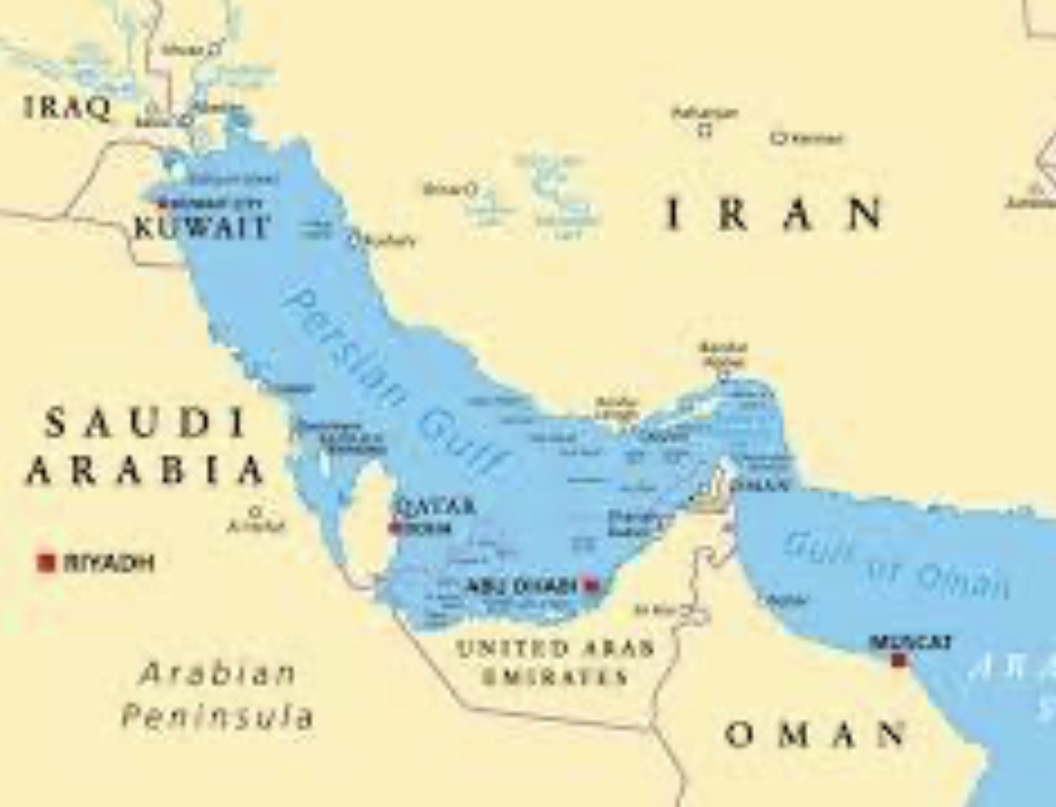
The Strait of Hormuz
Every time tensions rise in the Gulf, a familiar warning returns: Iran could close the Strait of Hormuz and choke the global economy.
It is one of the most repeated assumptions in geopolitics. The narrow waterway between Iran and the Arabian Peninsula carries roughly a fifth of the world’s oil supply. On paper, the threat appears obvious — if Iran blocks the strait, global energy markets would panic.
But this popular narrative misses a far more important reality.
Iran does not actually have the power to close the Strait of Hormuz in the way many imagine. In fact, the most effective shutdown mechanism does not come from missiles or naval forces at all. It comes from the global insurance system.
And that system sits largely in London.
In modern shipping, a vessel does not sail without insurance. Oil tankers can be worth $100 million to $150 million, while the cargo they carry can be worth even more. Banks, port authorities, charterers and ship owners all require insurance coverage before a vessel enters high-risk waters.
Remove that coverage — and the ships simply stop moving.
The global maritime insurance system is surprisingly concentrated. Roughly 90 percent of the world’s ocean-going vessels are insured by a small group of maritime protection and indemnity clubs. These insurers themselves depend heavily on reinsurance markets, many of which are centred around London and institutions such as Lloyd’s of London.
When geopolitical tensions escalate and the probability of conflict rises, reinsurers reassess the risks. If the calculations no longer make sense, war-risk coverage is either withdrawn or priced so high that shipping becomes uneconomical.
At that point the effect is immediate.
No insurance.
No ship movement.
No trade.
In other words, the Strait of Hormuz can be effectively “closed” without a single missile being fired.
This reality changes the way we should think about the geopolitical leverage surrounding the waterway.
Ironically, the country most harmed by any prolonged disruption would be Iran itself. Iranian oil exports rely almost entirely on the strait. If insurers judge the route too dangerous, tankers carrying Iranian crude face the same obstacles as any other ship. Iran’s ability to generate export revenue would shrink quickly.
In that sense, the oil weapon cuts both ways.
The second major player affected would be China. China is the world’s largest energy importer and one of the most exposed economies to instability in Hormuz. A significant share of its crude imports passes through the strait, and Chinese refineries are among the primary buyers of Iranian oil.
Liquefied natural gas shipments from Gulf producers to China also rely on this route. If traffic slows or insurers withdraw coverage, China’s energy supply chain immediately becomes more fragile. That explains why Beijing consistently urges restraint whenever tensions rise in the region.
The third group facing immediate consequences would be the Gulf exporters themselves — including Saudi Arabia, the UAE, Qatar, Kuwait and Iraq. Collectively they ship nearly 20 million barrels of oil per day through the strait.
While a few alternative pipelines exist, none can replace the scale of maritime exports through Hormuz. Any prolonged disruption would reverberate across global energy markets.
And that is precisely why insurance markets matter so much.
For centuries, London has been the centre of global maritime insurance. Through a combination of underwriting expertise, reinsurance capacity and financial infrastructure, it quietly holds enormous influence over whether ships move through high-risk waters.
When London’s risk models conclude that the probability of conflict is too high, global shipping slows dramatically.
No naval blockade required.
There are also broader geopolitical ripple effects. If Gulf exports decline, oil prices typically rise. In the short term, that benefits exporters such as Russia, whose crude becomes more attractive when global supply tightens.
For large importers like India, however, the consequences are less comfortable. India imports roughly 85 percent of its oil needs, much of it from the Middle East. Higher shipping premiums and supply uncertainty would quickly translate into inflationary pressure.
Yet the deeper lesson goes beyond energy markets.
Most people view geopolitics through the lens of military power — fleets, missiles, and troop deployments. But in today’s interconnected global economy, financial systems often hold more immediate influence than military forces.
Insurance markets, banking networks and risk models determine whether ships sail, whether trade flows and whether supply chains function.
Missiles may dominate the headlines.