LISTEN TO STORY
WATCH STORY
By: Isuru Parakrama
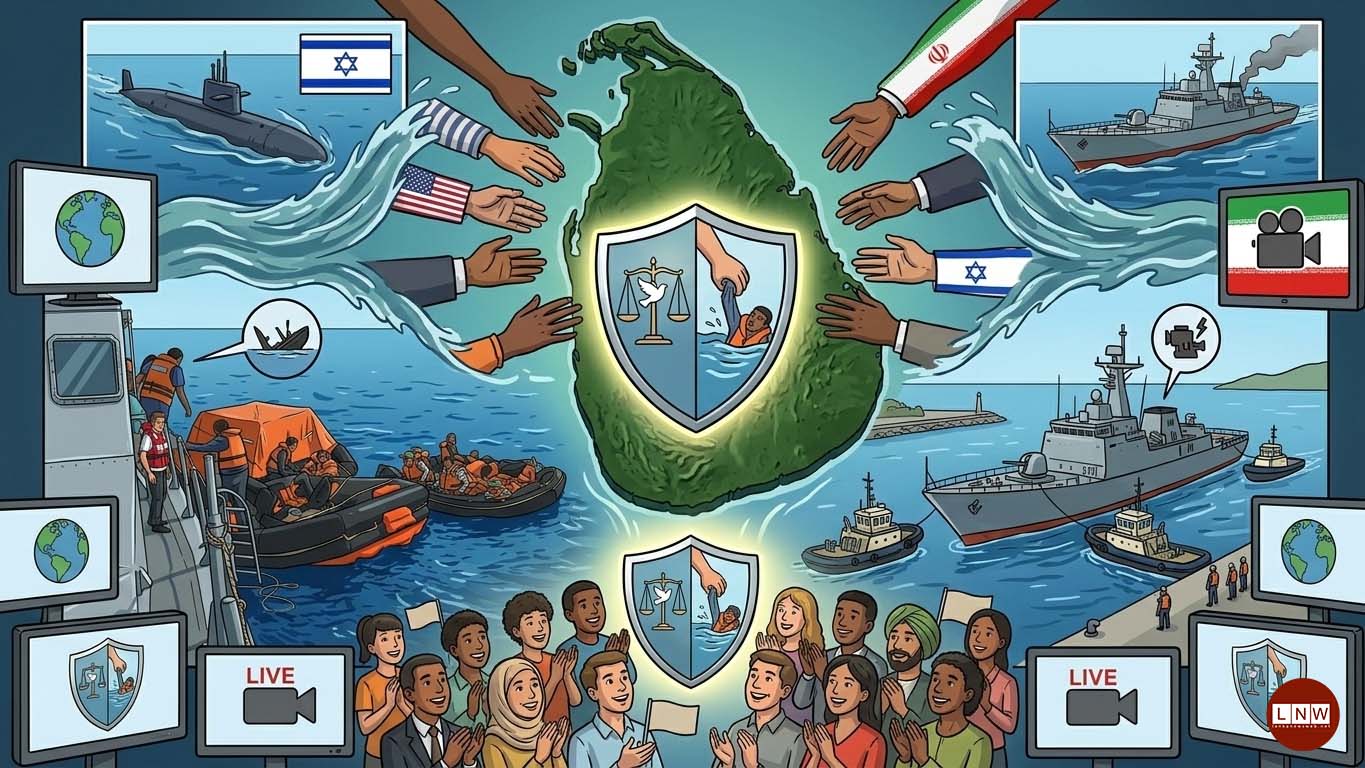
March 08, Colombo (LNW): In early March 2026, a dramatic series of events in the Indian Ocean unexpectedly propelled Sri Lanka into the centre of global attention. What began as a maritime security incident soon evolved into a moment of international significance, as the island nation’s leadership demonstrated a carefully balanced policy of neutrality and humanitarian action amidst the escalating conflict involving the United States, Israel, and Iran.
The firm response of President Anura Kumara Dissanayake quickly transformed Sri Lanka into a subject of global discussion, with many observers portraying the country as a principled actor in a volatile geopolitical environment.
A Crisis Unfolds Near Sri Lanka’s Shores
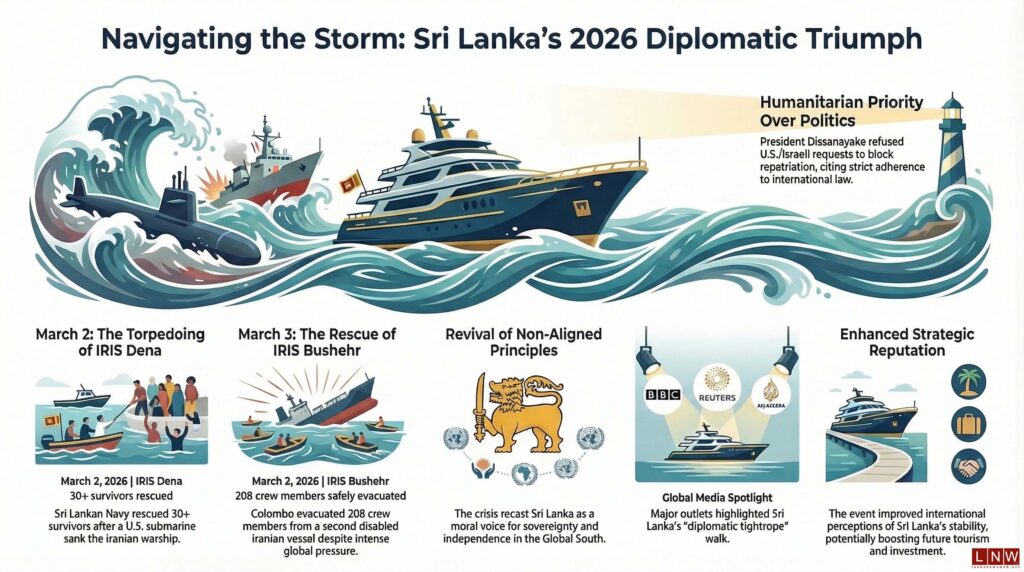
The turning point came on 2 March 2026 when the Iranian warship IRIS Dena was torpedoed by a United States submarine near Sri Lanka’s southern coast. The attack reportedly killed dozens of crew members and left survivors stranded at sea. Responding swiftly, the Sri Lankan Navy launched rescue operations and managed to save more than 30 survivors from the sinking vessel.
The following day brought another test. A second Iranian naval vessel, IRIS Bushehr, carrying 208 crew members, reported engine failure near Sri Lankan waters and requested assistance. Despite intense international scrutiny and pressure, Colombo authorised humanitarian assistance and evacuated the crew to safety. The government emphasised that its actions were guided purely by international law and humanitarian obligations, rather than geopolitical alignment.
President Dissanayake made clear that Sri Lanka would not side with either the United States–Israel bloc or Iran. Instead, the country would remain neutral, acting strictly under internationally recognised maritime and humanitarian principles.
A Firm Diplomatic Stand
Sri Lanka’s response went beyond rescue operations. The government publicly reaffirmed its non-aligned foreign policy, declaring that its territory would not be used for any military activity that favoured one side in the conflict. At the same time, Colombo emphasised that humanitarian considerations would always take precedence over political calculations.
This position quickly placed Sri Lanka at the centre of a diplomatic tug-of-war. Diplomatic communications from Washington reportedly urged Sri Lanka not to repatriate the rescued Iranian sailors, warning that their return could strengthen Iranian propaganda. Israeli officials also made inquiries regarding the possibility of crew defections. However, Colombo rejected these pressures, insisting that all decisions would be taken strictly in accordance with international law and humanitarian principles.
At the same time, Sri Lanka strengthened cooperation with regional partners. Engagement with India intensified through discussions on Indian Ocean security, enabling Colombo to maintain strategic balance among competing global powers without abandoning its neutral stance.
Global Media Turns Its Spotlight on Colombo
Sri Lanka’s measured response quickly captured the attention of international media. Major outlets such as Reuters, BBC, Al Jazeera, NDTV, and The Guardian reported extensively on the events, highlighting Colombo’s attempt to walk a “diplomatic tightrope” while prioritising humanitarian obligations during a dangerous regional escalation.
Social media amplified the story even further. Viral posts described Sri Lanka as the “real guardian of the Indian Ocean,” while many commentators praised the country’s rescue efforts as a rare example of humanitarian leadership in a tense geopolitical environment.
Iranian officials also publicly thanked Sri Lanka for safeguarding the lives of their sailors and maintaining diplomatic respect despite the surrounding conflict. Such acknowledgements reinforced Colombo’s image as a country committed to humanity and neutrality.
International Praise and a Revival of Non-Aligned Principles
Geopolitical analysts widely commended President Dissanayake’s approach, describing it as a “gutsy” display of leadership. Many observers contrasted Sri Lanka’s clear stance with the relative silence or ambiguity of other states caught between competing global powers.
A statement by the President on the social media platform X emphasising non-alignment, peace, and respect for international law quickly gained traction online. The message was widely shared and discussed, reinforcing Sri Lanka’s reputation as a moral voice advocating restraint during a period of escalating conflict.
For many in the Global South, Sri Lanka’s actions echoed the traditions of the Non-Aligned Movement—an approach that emphasises sovereignty, independence from major-power blocs, and adherence to international law.
A Boost to Sri Lanka’s Global Standing
The episode has significantly elevated Sri Lanka’s international profile. Prior to the incident, the country’s global narrative was largely dominated by discussions of economic recovery following the 2022 financial crisis. The events of March 2026, however, have recast Sri Lanka as a humanitarian actor and principled diplomatic player in the Indian Ocean.
This transformation carries potential long-term benefits. Increased international visibility could strengthen diplomatic relationships, improve perceptions among tourists, and boost investor confidence by highlighting Sri Lanka’s stability and commitment to lawful governance.
While the situation also carries risks—particularly the possibility of friction with major powers—Sri Lanka’s carefully managed neutrality appears to have minimised those dangers while enhancing its global reputation.
In the span of just a few days, the island nation shifted from relative geopolitical obscurity to becoming a widely discussed example of principled diplomacy. By prioritising humanity over politics and law over power, Sri Lanka has unexpectedly emerged as a symbol of balanced leadership in a deeply divided world.