
By: Adolf
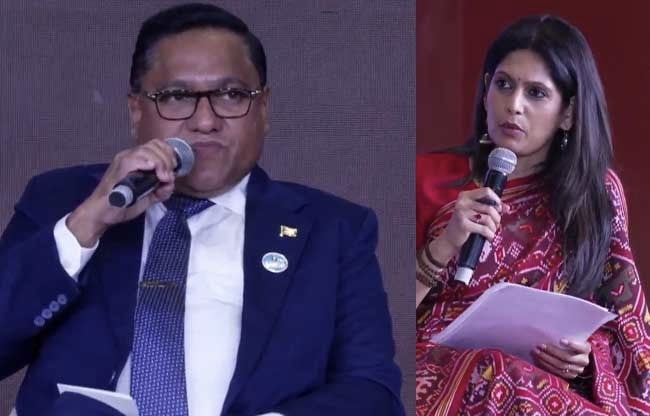
March 08, LNW (Colombo): Foreign Minister Vijitha Herath recently participated in a panel discussion on The Future of the Indian Ocean. What should have been an opportunity to present Sri Lanka’s position to an influential global audience unfortunately ended with the minister becoming the subject of awkward amusement in the room.
A Likeable Minister
To be clear, Vijitha Herath is not an unpopular figure within the current administration. On the contrary, he is widely regarded as one of the most likeable ministers in government. He appears personable, approachable, and generally avoids unnecessary confrontation.
In many ways, this temperament stands in contrast to President Anura Kumara Dissanayake, who is often perceived as combative and controversial in his political style and has forgotten his past. Herath, by comparison, has retained a sense of simplicity and humility even after assuming office. That quality is admirable in politics.However, the uncomfortable truth is that the Foreign Ministry may simply not be his natural domain.
Sri Lanka’s Diplomatic Tradition
Sri Lanka has historically been represented in global diplomacy by individuals with strong intellectual and diplomatic credentials. Figures such as G. L. Peiris, Lakshman Kadirgamar, and Tyrone Fernando were known for their intellectual depth, polished style, and international exposure.
Earlier generations also produced formidable diplomats. A. C. S. Hameed brought discipline and clarity to the role, while Anura Bandaranaike was renowned for his sharp wit and commanding presence on the international stage.
Against that historical backdrop, the present situation inevitably raises difficult questions.
Diplomacy is not merely about personality or academic pedigree. It demands the ability to think strategically, respond quickly under pressure, and articulate national interests with clarity and confidence before an international audience.
A Failure of Preparation
In this particular discussion, it should have been entirely foreseeable that questions would arise regarding the sensitive issue of Iranian vessels — especially with an experienced moderator like Palki Sharma guiding the conversation.
This is precisely where the system around a minister must function effectively. Diplomatic officials and advisers are expected to brief their political leaders thoroughly before such engagements.
Unfortunately, this appears not to have happened.
Questions have also been raised about the role of Sri Lanka’s diplomatic representation Manusha in preparing the minister. When a country’s representative appears unprepared before an audience of global policymakers, analysts, and diplomats, the failure cannot be attributed solely to the individual speaking.It reflects a broader breakdown in preparation and guidance. She must step down from her high high office and accept the truth.
What Should Have Been Said
A carefully calibrated diplomatic response could easily have been offered. The minister could simply have stated that Sri Lanka maintains friendly relations with all nations and that its decisions are guided by international law, national interest, and balanced diplomacy.
Such a response would have projected maturity and neutrality — principles that have traditionally guided Sri Lanka’s foreign policy.
Instead, the moment appeared hesitant and unprepared. That was unfortunate, particularly because the audience included hundreds of influential policymakers, diplomats, and global analysts.
The Role of the Private Sector
There is also a broader issue that deserves attention.
Sections of Sri Lanka’s private sector — figures who frequently shift allegiances depending on political winds — have enthusiastically supported the current leadership. Individuals such as Hans Wijayasuriya, Parakrama Dissanayake, Duminda Hulangamuwa, Dhammika Perera, and Malik Fernando must also reflect on their role in legitimising leadership choices without sufficient scrutiny.
In their own corporations, these leaders would think a hundred times before appointing a CEO who cannot convincingly present the organisation to global stakeholders.
Yet when it comes to national leadership, similar standards are often ignored.
Representation Matters
Sri Lanka deserves stronger representation on the global stage. Diplomacy is not simply about goodwill or personal likability. It requires preparation, intellectual discipline, and the ability to communicate national interests clearly and confidently. When ministers speak at international forums, they do not represent themselves. They represent the country. And ultimately, in a democracy, the people must also accept a difficult truth: nations often end up with the government they elect. They have only themselves to blame.