LISTEN TO STORY
WATCH STORY
By: Isuru Parakrama
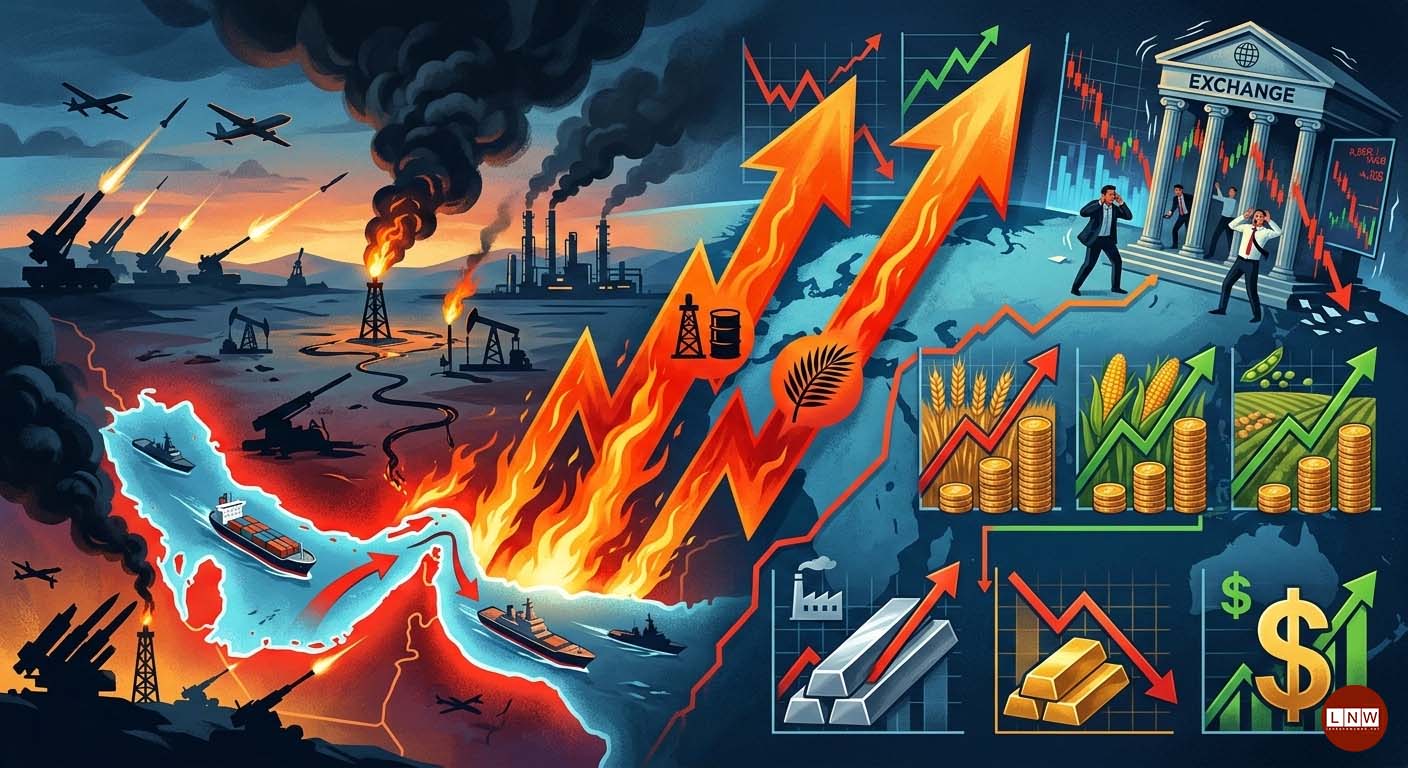
March 09, World (LNW): International commodity markets experienced sharp turbulence on Monday (09) as crude oil prices surged dramatically amid mounting tensions in the Middle East, raising fears of a prolonged disruption to global energy supplies, international news agencies claim.
Benchmark Brent crude jumped roughly 25 per cent during trading, reaching its highest level since mid-2022 and heading towards what analysts say could become its largest single-day increase on record, according to Reuters.
US West Texas Intermediate (WTI) also climbed steeply, with both benchmarks briefly touching around 119 dollars per barrel.
The surge was largely driven by concerns that the intensifying confrontation involving Iran, the United States and Israel could significantly restrict oil exports from the region. Market participants are particularly anxious about potential disruptions to shipping through the Strait of Hormuz, one of the world’s most critical oil transit routes.
Analysts say the absence of a clear diplomatic path to de-escalation has amplified market volatility. According to market observers, investors fear the conflict could evolve into a prolonged standoff, with neither side appearing willing to retreat, increasing the likelihood of wider economic repercussions.
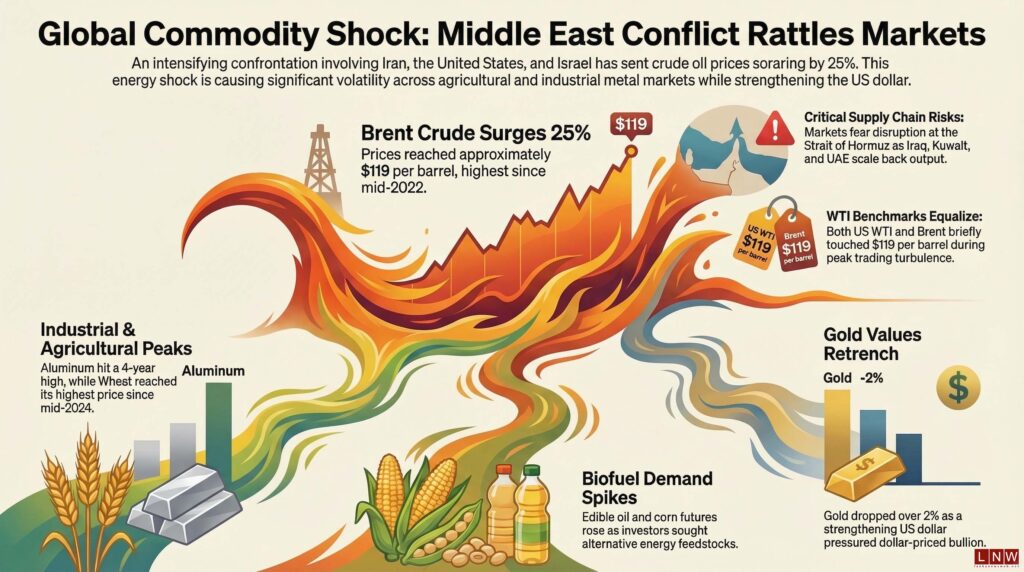
Oil-producing nations in the Middle East have reportedly begun scaling back output as logistical challenges and storage constraints emerge. Producers in countries such as Iraq, Kuwait and the United Arab Emirates are said to have reduced production levels, further tightening global supply.
The dramatic rally in crude prices quickly spilled over into agricultural markets. Edible oil prices surged, as vegetable oils are widely used in the production of biofuels and tend to move in tandem with energy markets. Malaysian palm oil recorded a sharp rise, while soybean oil futures in Chicago climbed to their highest level in more than two years.
Grain markets also reacted strongly. Wheat prices advanced to their highest point since mid-2024, while corn futures reached levels not seen for around ten months as investors anticipated increased demand for alternative energy feedstocks.
Meanwhile, precious metals moved in the opposite direction. Gold dropped by more than two per cent as the US dollar strengthened, making dollar-priced bullion more expensive for investors using other currencies. Rising energy costs have also heightened concerns about inflation, prompting traders to scale back expectations of imminent interest-rate cuts by major central banks.
In industrial metals, aluminium posted a significant gain, climbing to its highest price in roughly four years amid fears that production and shipments from the Middle East could be disrupted by the conflict. Some regional smelters have already declared force majeure on deliveries due to escalating tensions.
However, other base metals struggled to maintain momentum, weighed down by the stronger US dollar, which tends to pressure commodity prices globally. Market analysts warn that if geopolitical tensions continue to intensify, volatility across energy, metals and agricultural markets is likely to persist.