

By: Isuru Parakrama
March 15, Colombo (LNW): Sri Lanka is preparing to introduce a renewed QR code system for fuel distribution as mounting geopolitical tensions in the Middle East continue to disrupt global petroleum supply routes.
Authorities say these external pressures, combined with an unexpected surge in domestic fuel consumption, have significantly reduced the country’s available fuel reserves.
Officials noted that the current situation has made it essential to manage remaining stocks carefully in order to safeguard the country’s economic activities and ensure that fuel remains available for essential daily use.
Government sources also reported growing concern over instances where certain groups have allegedly been purchasing fuel in unusually large quantities through unofficial channels. Such practices, authorities say, risk further straining the already limited supply and could undermine efforts to ensure equitable access for the wider public.
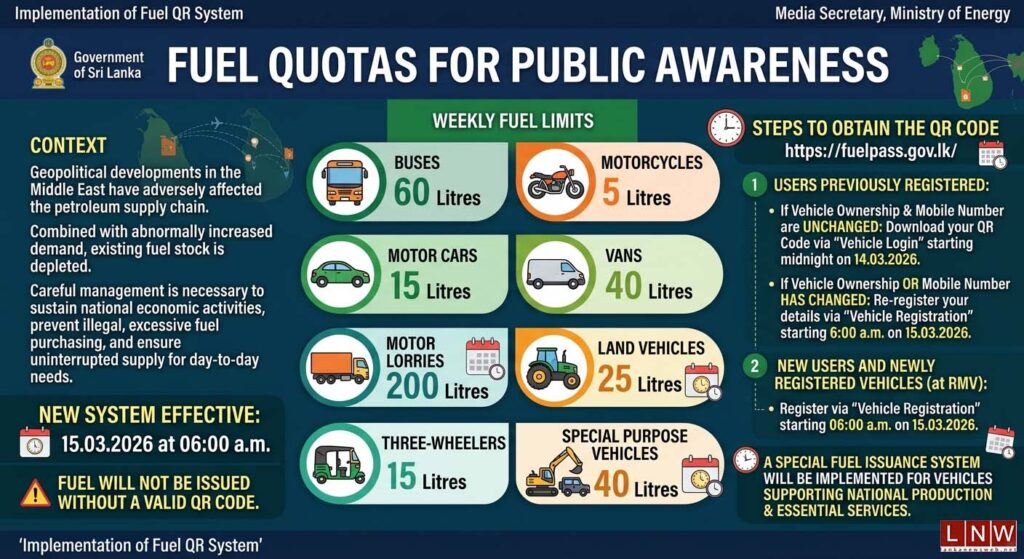
In response, the Government of Sri Lanka will activate a nationwide QR code–based fuel distribution mechanism beginning at 6.00 a.m. on March 15, 2026. From that time onward, filling stations across the country will only dispense fuel to vehicles that present a valid QR code issued under the system.
Accessing the QR Code
Motorists who have previously registered under the fuel QR programme and whose vehicle ownership details and mobile numbers remain unchanged can retrieve their QR codes online from midnight on March 14, 2026 by logging in through the “Vehicle Login” option on the official portal. (https://fuelpass.gov.lk/)
However, individuals whose vehicle ownership or registered mobile numbers have changed since their earlier registration will be required to update their details. They may do so via the same portal from 6.00 a.m. on March 15, 2026 by selecting the “Vehicle Registration” option.
Those who have not yet registered for the system—including owners of newly registered vehicles—will also be able to enrol from 6.00 a.m. on March 15, 2026 through the same online registration process.
Authorities confirmed that fuel allocations will be determined according to vehicle categories, with the permitted litre quantities specified in an accompanying schedule.
In addition, the government plans to introduce a separate fuel distribution arrangement for vehicles engaged in essential services and key sectors of national production, ensuring that critical operations continue without disruption.