
By: Staff Writer
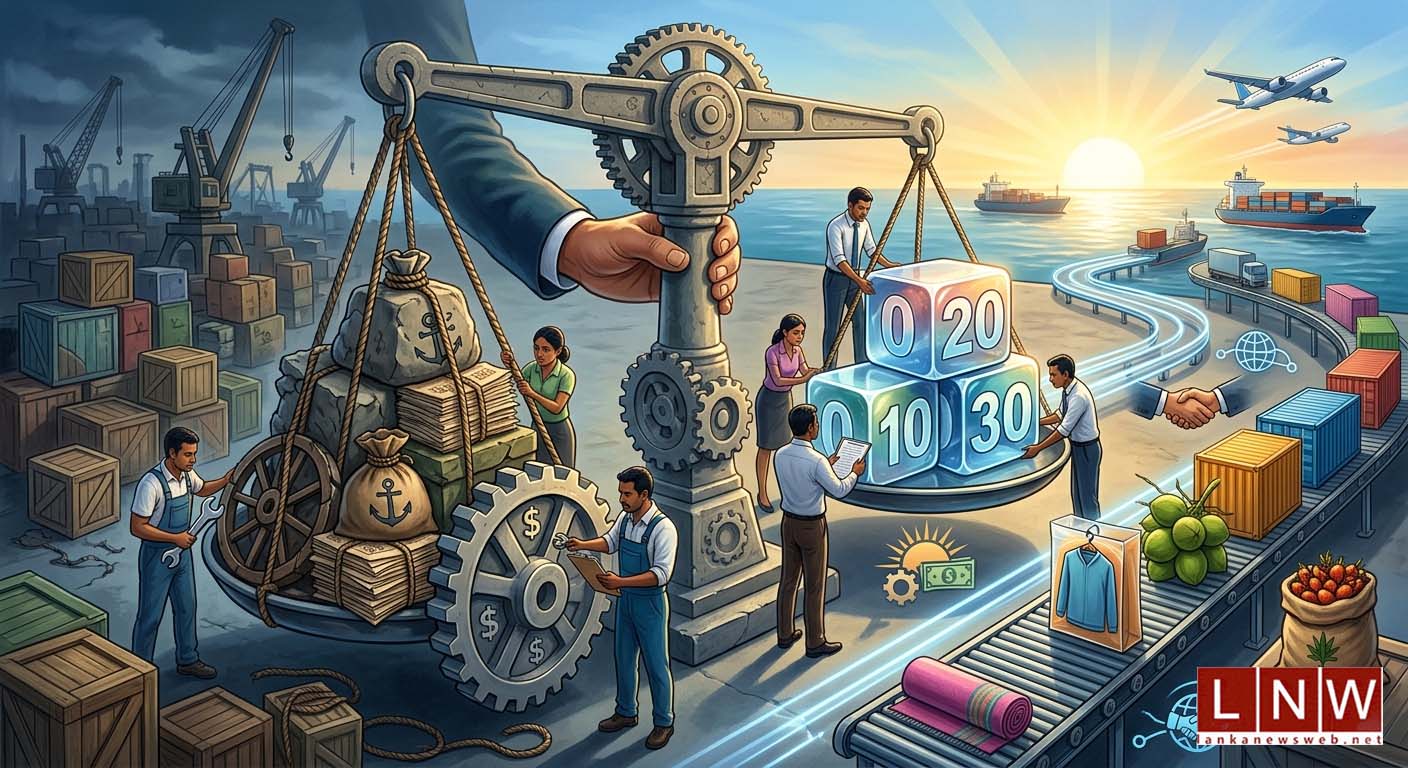
March 15, Colombo (LNW): Sri Lanka is preparing a sweeping trade reform aimed at phasing out complex para-tariffs, including the Cess and Port and Airport Development Levy (PAL), as part of a broader plan to modernize its economy and enhance export competitiveness. The reforms, set to begin in 2026, will simplify import duties into a four-tier structure (0, 10, 20, 30 percent) and gradually remove protectionist levies.
Export Development Board sources indicate the move is linked to commitments under the IMF-supported Extended Fund Facility (EFF) and the World Bank’s RESET program, which prioritize integrating Sri Lanka into global value chains by removing trade-distorting measures. The fifth review of the EFF is dependent on the successful execution of these reforms.
The government will phase out para-tariffs on 2,634 imported goods over four years, replacing them with standard VAT and Social Security Contribution Levy (SSCL) mechanisms. Key adjustments include eliminating the Rs. 100 per kg Cess on imported fabric, replaced with VAT, and substituting the SCL on coconut and palm oil with VAT/SSCL.
According to Ministry of Finance officials, these reforms are intended to support exporters by reducing input costs, while maintaining revenue stability through a gradual transition. A National Tariff Policy Committee, led by a Deputy Secretary to the Treasury, has been tasked with overseeing the phased implementation.
Economists highlight the potential benefits for Sri Lanka’s export sector, particularly in manufacturing, apparel, and agro-based industries. Simplified tariffs can reduce compliance costs, enhance transparency, and improve the country’s attractiveness for foreign investment.
However, there are risks to fiscal stability. Para-tariffs currently contribute a significant portion of customs revenue, and their removal could lead to short-term budget deficits if offsetting measures are insufficient. “The challenge will be balancing liberalization with revenue needs,” said a trade analyst.
The reforms also carry strategic implications for Sri Lanka’s trade policy. By reducing protectionism and aligning with international norms, the country positions itself to leverage global trade agreements and improve integration into regional and global value chains. This is seen as critical to improving the competitiveness of exports and resilience against external shocks.
Despite initial delays caused by political changes, the current administration has renewed its commitment, viewing the tariff overhaul as a cornerstone of the 2026 budget and a step toward sustainable economic growth. If executed carefully, the reforms could provide a transparent, investor-friendly trade environment while safeguarding local industry competitiveness and boosting Sri Lanka’s export potential.