
By: Staff Writer
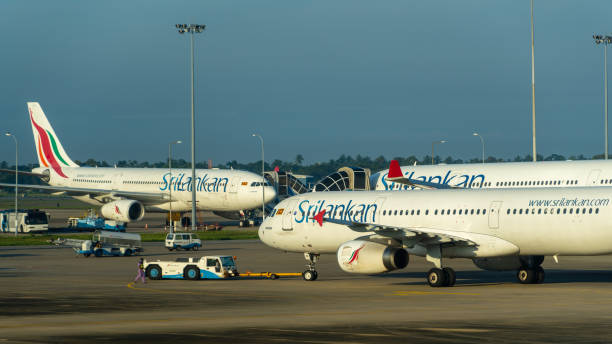
March 15, Colombo (LNW): Sri Lanka’s national carrier, SriLankan Airlines, remains a financial and operational challenge for successive governments, even as the current administration reaffirms its commitment to preserving the brand.
Speaking at the LOLC Securities Forum last week, Industry and Entrepreneurship Development Deputy Minister Chathuranga Abeysinghe acknowledged the airline’s long-standing cost to the state, stressing that the government believes maintaining a national carrier is essential for the island’s connectivity.
“The airline has been a huge burden to the Government and to the people of Sri Lanka, but our policy is that the country needs to have a national carrier,” he said, highlighting the carrier’s strategic importance.
SriLankan Airlines has faced decades of financial instability, with recurring operational losses and accumulated legacy debts. As of March 2026, the airline’s reported liabilities exceed Rs. 250 billion, while its total assets are estimated at just over Rs. 120 billion, indicating a substantial imbalance. These figures underscore the ongoing pressure on public finances and raise questions about the sustainability of past restructuring attempts.
Abeysinghe outlined the government’s current strategy, which includes a three-year operational turnaround plan presented by the airline’s management, supported by a government allocation of Rs. 1 billion. The plan targets cost reduction, route rationalisation, and efficiency improvements, aiming to increase revenue without relinquishing the airline’s national identity.
While officials have signalled the potential for strategic partnerships, they emphasise that the SriLankan Airlines brand must remain under national control. “We might go for an investment partnership, but we are not willing to lose the brand,” Abeysinghe said. Any partner would likely bring both financial and operational support to strengthen the airline before entering negotiations.
Connectivity remains a core justification for the national carrier. SriLankan Airlines provides direct international flights to destinations crucial for trade, tourism, and diplomatic engagement. The government also considers the airline’s international landing slots as strategic assets to be safeguarded. Losing these slots could undermine Sri Lanka’s position in regional and global aviation networks.
Experts caution that the airline’s future is fragile. Previous restructuring efforts under past administrations including debt write-offs, government bailouts, and operational reforms—have produced limited results. Abeysinghe acknowledged that if the current strategy fails, authorities may have to reconsider their approach, suggesting that the government could explore more radical options, including privatization or partial asset divestment.
For now, the airline remains a symbolic yet costly national asset, balancing the twin imperatives of operational viability and national identity. Observers warn that the next few years will be critical: success could restore SriLankan Airlines as a competitive regional carrier, while failure may deepen the fiscal burden on the country.