
By: Staff Writer
March 15, Colombo (LNW): An alleged U.S. submarine strike on an Iranian naval vessel near Sri Lanka has created a toxic mix of environmental damage, economic anxiety, and geopolitical tension while the government in Colombo remains conspicuously silent.
The Iranian frigate IRIS Dena sank after being struck by a torpedo reportedly fired by the U.S. Navy submarine USS Charlotte (SSN-766) on March 4, roughly 40 nautical miles south of Sri Lanka’s coast.
The vessel had just participated in the international naval gathering International Fleet Review 2026 hosted in Visakhapatnam.
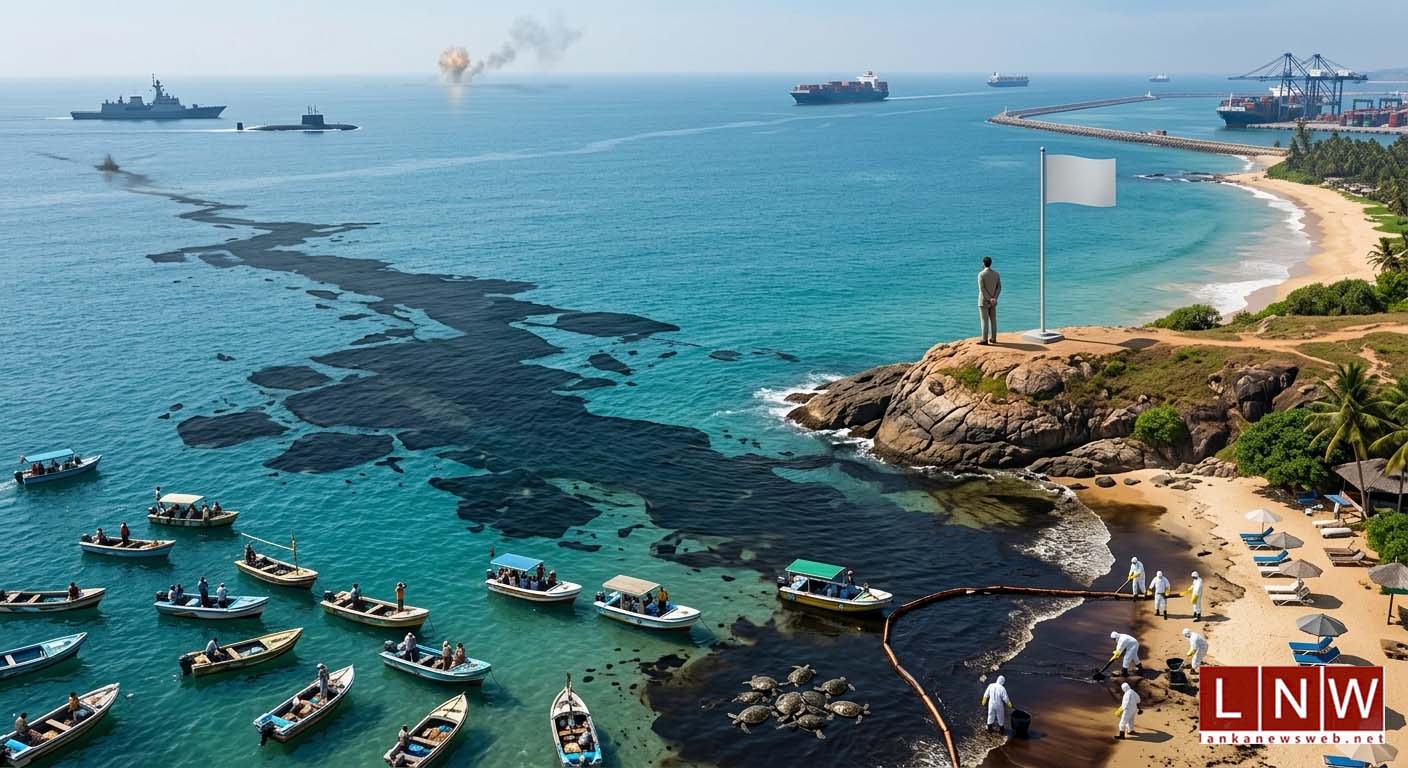
Within days, oil slicks appeared near the beaches of Hikkaduwa, raising fears of a new marine pollution crisis in a region already scarred by previous maritime disasters.
Authorities from the Marine Environmental Protection Authority launched emergency cleanup operations alongside the Sri Lanka Navy. Officials claim nearly 90 percent of the oil has been removed, although the origin of the slick has not yet been officially confirmed.
Environmental groups say the timing could not be worse.
March and April mark a critical period for marine reproduction along Sri Lanka’s southern coast. Fish eggs and larvae, known as ichthyoplankton, float near the surface, making them highly vulnerable to toxic oil contamination.
“Toxic hydrocarbons can kill fish larvae and damage coral reefs,” warned marine conservationist. “Once these ecosystems are damaged, recovery can take years.”
Sea turtles that surface frequently in Hikkaduwa’s shallow waters could also face serious threats from the contamination.
For Sri Lanka’s coastal economy, the implications are severe.
Fishing communities risk losing income if contaminated waters reduce catches. Tourism operators fear polluted beaches could discourage visitors during one of the busiest seasons for southern resorts.
However the most controversial aspect of the crisis may be the government’s muted diplomatic response.
Under the United Nations Convention on the Law of the Sea, states are obligated to prevent marine pollution and may face liability if military actions cause environmental harm.
Despite the potential legal implications, the administration led by the left-leaning National People’s Power alliance and its core party, the Janatha Vimukthi Peramuna, has not publicly challenged the United States over the alleged attack.
Political analysts say the silence reflects the realities of Sri Lanka’s economic vulnerability.
After a devastating financial crisis in recent years, Colombo continues to rely heavily on Western financial institutions, development aid, and international partnerships.
Challenging Washington could therefore carry significant diplomatic and economic risks.
But critics argue that failing to address the incident could undermine Sri Lanka’s sovereignty over its surrounding seas.
“With nearly a quarter of global oil shipments passing near Sri Lanka, our waters are already extremely vulnerable,” one environmental activist said. “If foreign military conflicts start spilling into our seas, the consequences could be catastrophic.”
As investigations continue, one question remains unanswered: whether Sri Lanka’s coastline has become collateral damage in the escalating rivalry between global powers.