
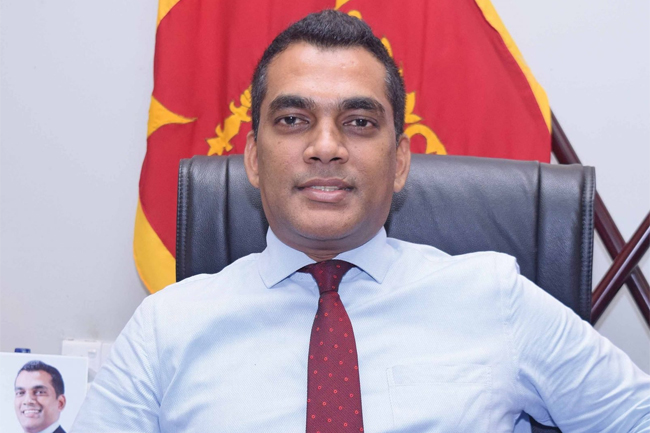
March 16, Colombo (LNW): Former Chairman of the Ceylon Petroleum Corporation Mohamed Uvais has urged the government to consider lowering fuel taxes in order to cushion the public and businesses from further price instability as tensions affecting global oil supply routes continue to escalate.
Addressing a media briefing, Uvais pointed out that disruptions around the Strait of Hormuz — one of the world’s most critical oil transit corridors — are already creating uncertainty in the international energy market.
He cautioned that any further escalation, particularly involving shipping lanes near the Middle East and the Red Sea region, could have far-reaching consequences for oil-importing countries such as Sri Lanka.
Uvais noted that another vital maritime route located between Yemen and the African coastline carries a significant share of global petroleum shipments. If Iran or groups aligned with it were to interfere with this passage as well, the resulting disruption could severely affect global oil transportation and drive prices higher across international markets.
Sri Lanka, which relies entirely on imported petroleum, is especially vulnerable to such developments. According to Uvais, fuel prices in the country have already risen by Rs. 25 across all categories, reflecting pressure from global market trends. With oil prices projected to climb further, he warned that the economic burden on both industries and ordinary consumers could intensify.
He stressed that the country must strengthen coordination with international fuel suppliers and ensure efficient management of reserves, storage facilities and distribution networks. Maintaining steady supply chains, he said, would be critical in preventing shortages or sudden price shocks.
However, Uvais argued that supply-side management alone would not be sufficient. In his view, the government should intervene by revisiting the tax component included in fuel prices.
He explained that reducing certain levies could help soften the impact of global price increases and prevent excessive volatility in domestic fuel prices. Rather than transferring the full weight of rising costs onto the public, he said, a temporary tax adjustment could provide much-needed relief to households, transport operators and manufacturers.
Uvais also emphasised that geopolitical tensions affecting oil shipping lanes could disrupt a substantial portion of global crude movement if multiple routes become restricted simultaneously. Such a scenario, he warned, would place intense pressure on import-dependent economies.
Given these risks, he called for forward-looking strategies that combine prudent fiscal policy with improved logistical planning to ensure Sri Lanka’s energy supply remains stable during a potentially turbulent period in global oil markets.