LISTEN TO STORY
WATCH STORY
By: Isuru Parakrama
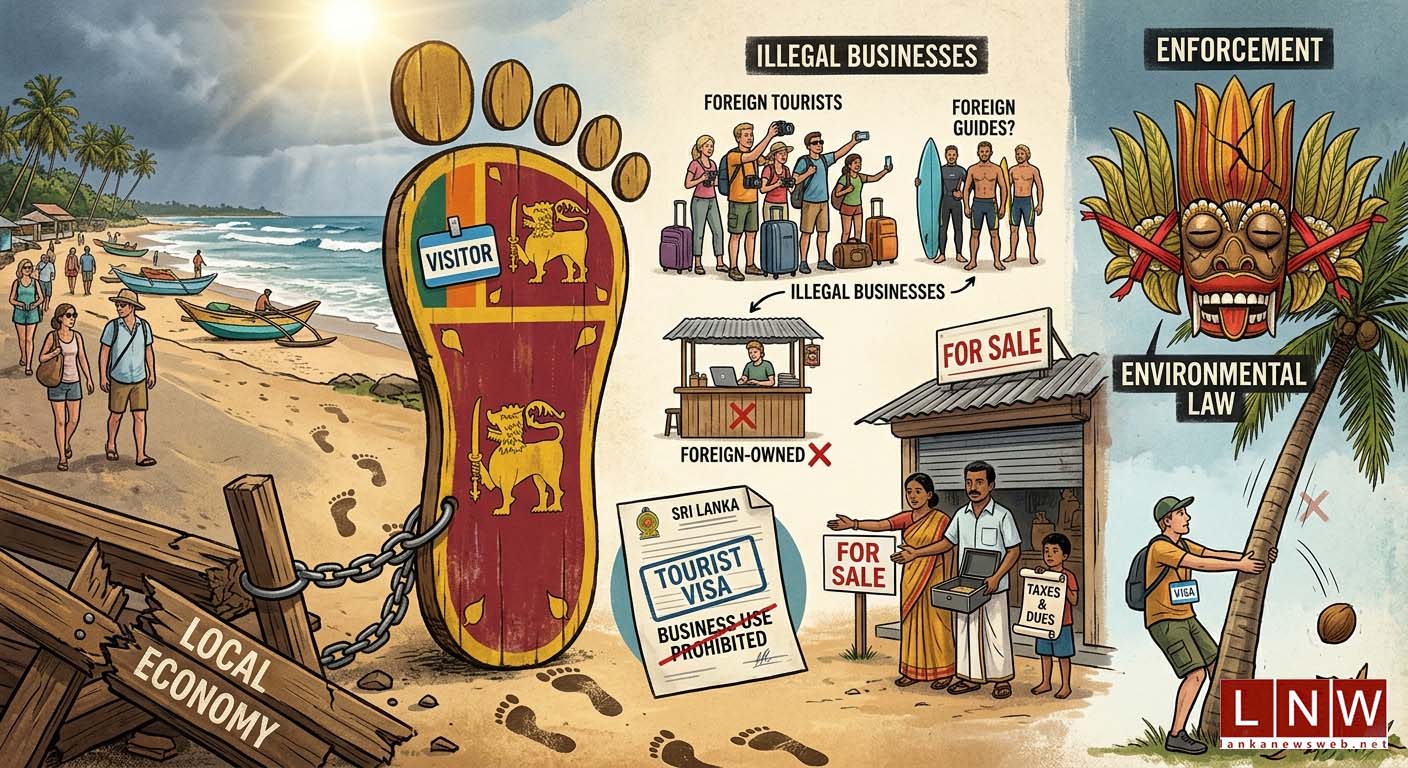
March 16, Colombo (LNW): Sri Lanka’s tourism revival is often celebrated as a symbol of economic recovery. Yet beneath the glossy marketing campaigns and official statistics lies a troubling reality: a growing number of foreigners are openly operating businesses on tourist visas, violating immigration laws, undermining local entrepreneurs, and exposing deep failures within the country’s regulatory authorities.
The issue is no longer anecdotal—it is systemic, visible, and increasingly damaging to Sri Lanka’s economy and social fabric.
Tourist Visas and the Law: Clear Rules, Frequent Violations
Under Sri Lankan immigration law, tourist visas strictly prohibit engaging in business, employment, trade, or self-employment. Such visas are intended only for activities such as sightseeing, visiting relatives, or short medical treatments, including Ayurveda. Even business visas allow only limited functions—such as attending meetings, conferences, or short training sessions—and do not permit foreigners to run ongoing commercial operations or repeatedly enter the country to sustain long-term ventures.
Yet in practice, these restrictions are routinely ignored.
Foreign nationals are establishing and promoting businesses—from wellness centres to hospitality ventures—while residing in the country on tourist visas. These informal operations often bypass legal requirements, evade taxation, and directly compete with local entrepreneurs who must comply with regulations and pay duties.
The Legal Route for Foreign Investors
The contrast with the lawful pathway for foreign investment could not be clearer. Foreigners are permitted to start businesses in Sri Lanka, but only through a structured process involving company incorporation, approvals from the Board of Investment (BOI), and appropriate visas. In many cases, enterprises must meet minimum investment thresholds—such as $250,000 under Section 16 of the BOI Law or $3 million or more under Section 17 for projects seeking incentives. Retail businesses targeting the local market require at least $5 million to allow full foreign ownership.
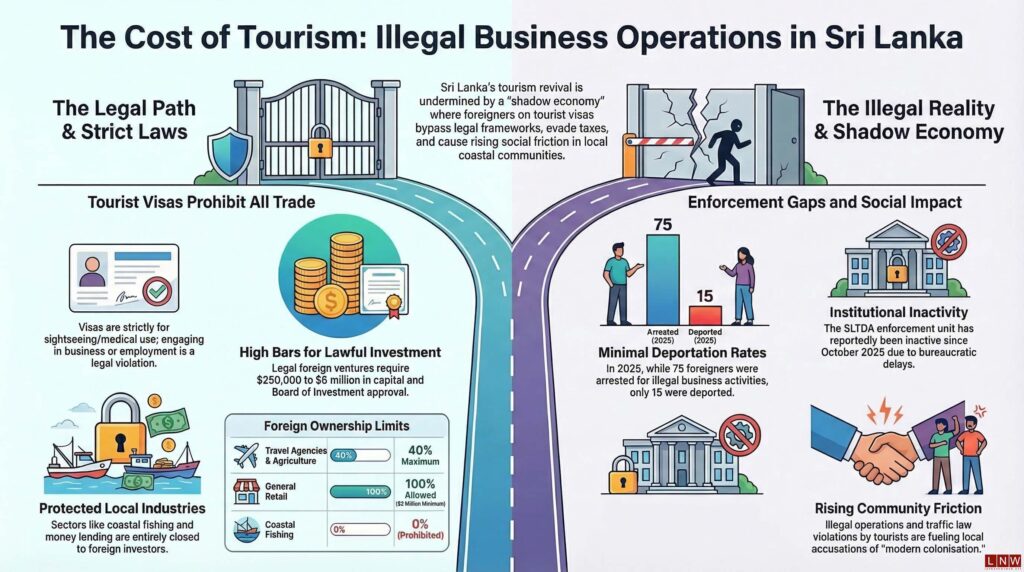
Moreover, certain sectors impose ownership restrictions. Fields such as education, travel agencies, and agriculture limit foreign ownership to 40 per cent, while industries including pawn broking, money lending, and coastal fishing are completely closed to foreign investors.
Legal investors must also follow procedural steps: reserving a company name through the eROC system, submitting corporate forms detailing directors and secretaries, publishing notices in newspapers, and obtaining a certificate of incorporation from the Registrar of Companies.
Yet informal operators bypass this entire framework.
The ‘Leela Healing Resort’ Controversy
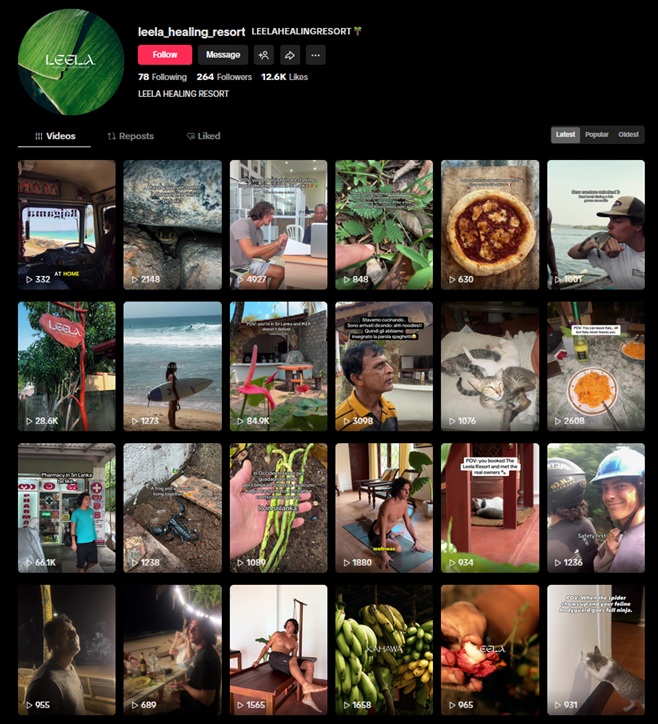
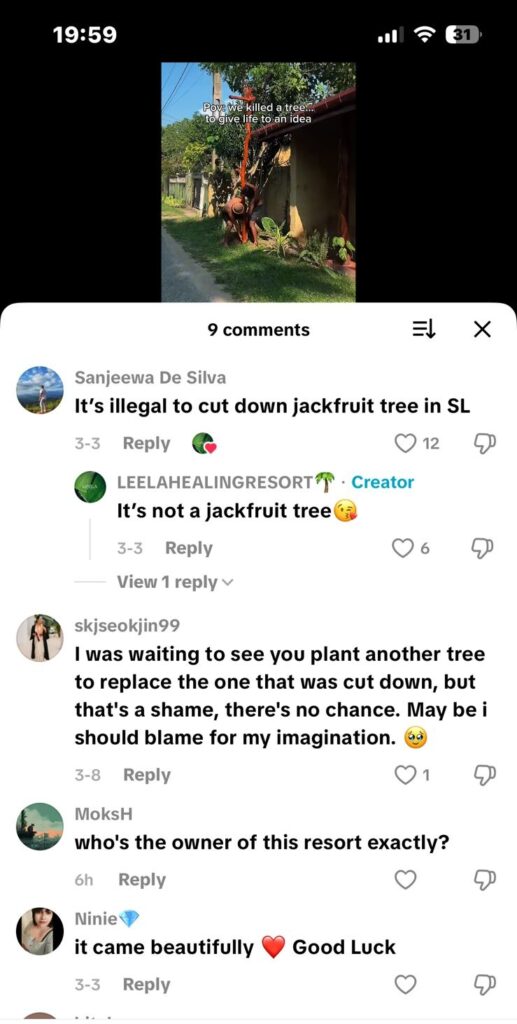
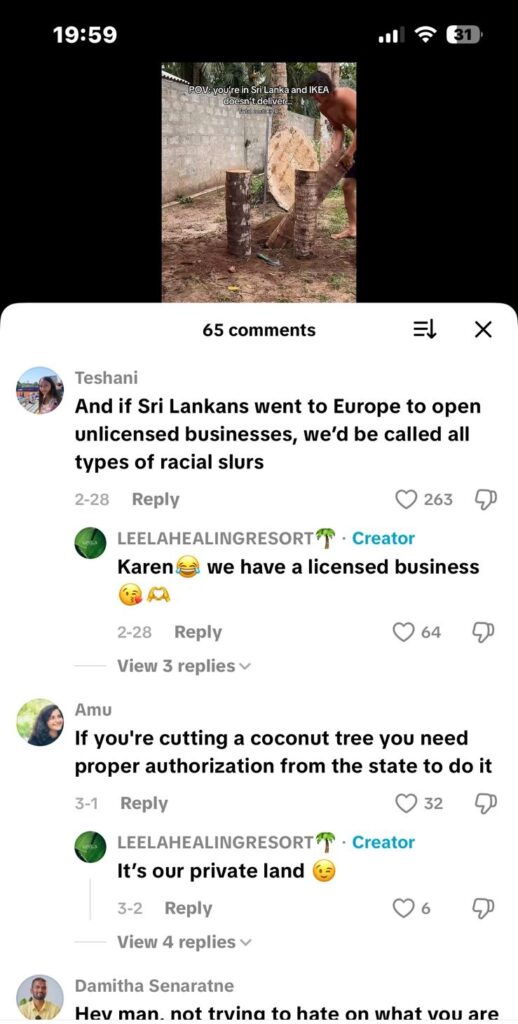
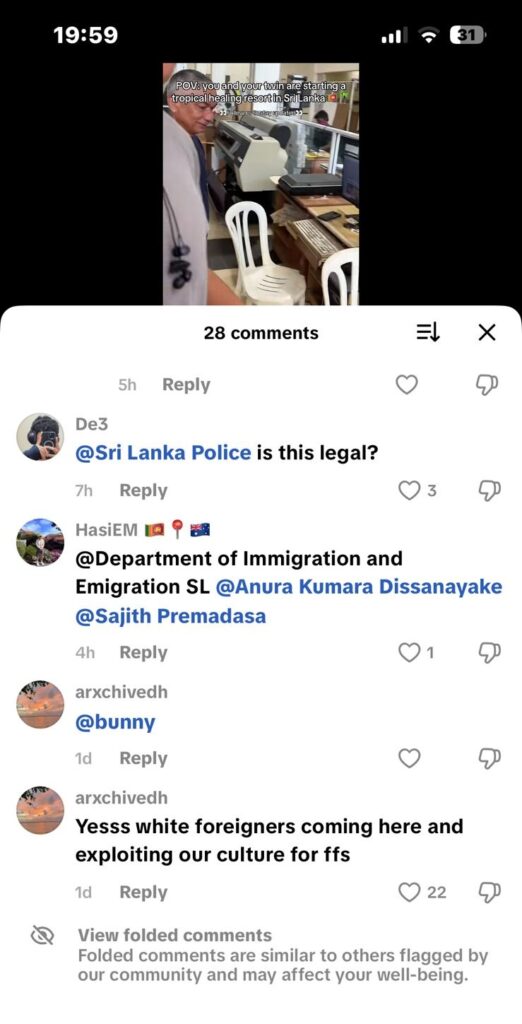
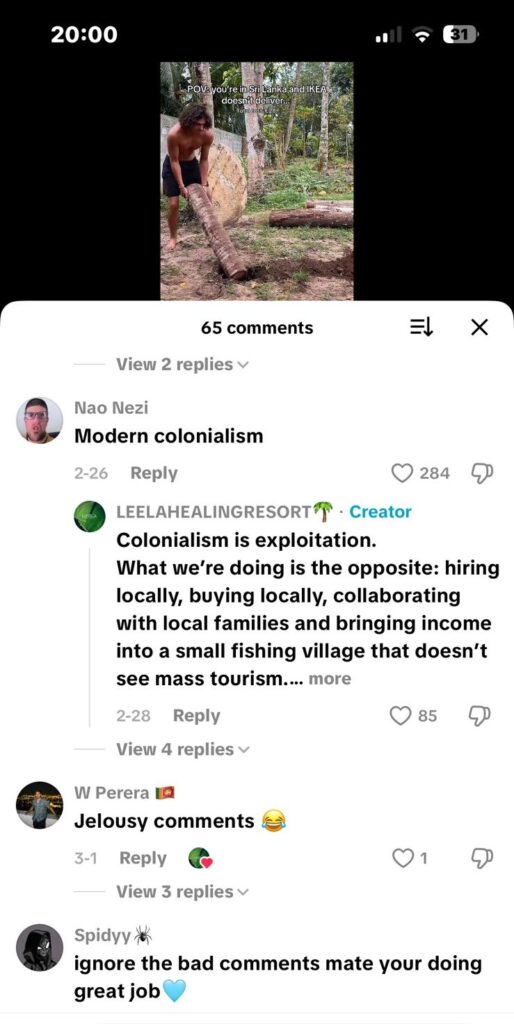
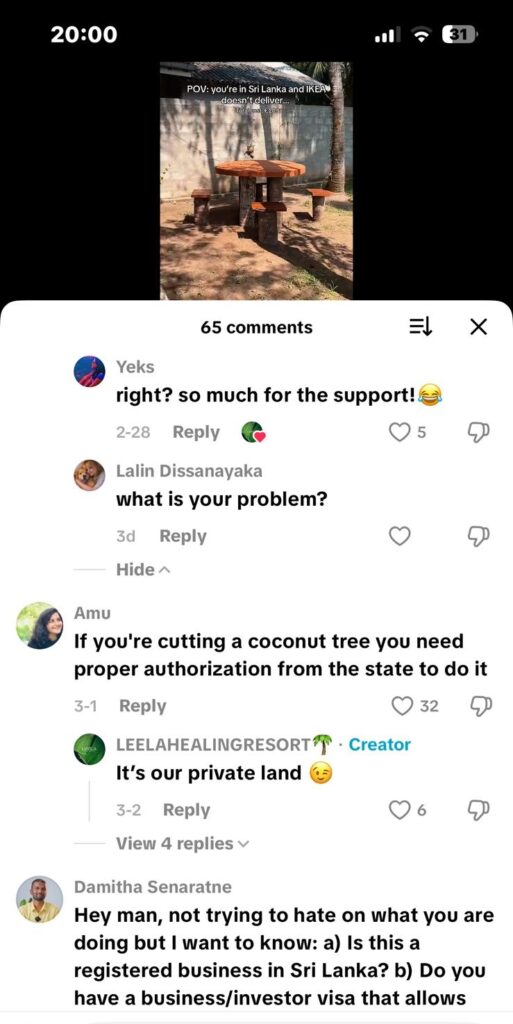
One widely discussed example involves foreign TikTok personalities who established an Ayurvedic centre known as “Leela Healing Resort” while residing in Sri Lanka on tourist visas. These individuals not only operate the centre but actively promote it on social media. When questioned about the legality of their activities and the economic outflow of earnings, they respond by highlighting small-scale job opportunities provided to local daily labourers—an argument critics say deliberately ignores the broader economic consequences.
More controversially, the same operators reportedly cut down coconut trees on what they describe as “private property” to produce furniture for their establishment. Sri Lankan law, however, requires prior approval from both the Divisional Secretary and the Coconut Development Board to remove coconut trees, particularly due to national shortages and the crop’s economic importance. Even foreigners leasing land must comply with these regulations.
Questions have also been raised about the centre’s Ayurvedic practices. Critics point out that the operators advertise fixed “menu cards” of treatments for specific diseases, despite the fundamental Ayurvedic principle that treatments must be individually tailored because patients with the same condition may require different remedies.
Sporadic Enforcement and Institutional Paralysis
Meanwhile, enforcement remains sporadic. Authorities arrested 75 foreigners in 2025 for running businesses on tourist visas, deporting 15 of them. In 2026, crackdowns intensified through joint actions involving the Sri Lanka Tourism Development Authority (SLTDA) and police, including raids on tourism hotspots along the southern coast.
But these measures reveal a deeper problem: the SLTDA’s own enforcement unit has reportedly remained inactive since October 2025 due to bureaucratic delays and procurement issues. Officials have suggested that tourism’s economic importance discourages overly aggressive crackdowns, leading authorities to prioritise regularisation rather than mass deportations. Political patronage has also been cited by sources as shielding some operations from scrutiny.
Rising Social Tensions in Tourist Zones
Beyond economic concerns, the situation is also fuelling social tensions.
In Ahangama, Israeli tourists reportedly assaulted locals in December of the previous year. In Arugam Bay, hotel owners were allegedly attacked simply for obstructing tourists. Social media videos show foreigners riding motorcycles without helmets, ignoring traffic laws, and intimidating police officers—behaviour some commentators have described as a form of “modern colonisation”.
The concentration of Israeli visitors in Arugam Bay has sparked particular controversy, with online commentators referring to the area as resembling a “small Tel-Aviv” spawned by “IDF propaganda”. Content creators allege that some of these Israeli nationals are ex-military, or more disturbingly “war criminals,” residing in small oceanic nations like Indonesia, Thailand, and Sri Lanka for personal benefit.
Double Standards in Everyday Enforcement
Yet contradictions persist even in everyday governance. At the Temple of the Tooth Relic in Kandy, locals report that police prohibit Sri Lankan visitors from taking photographs while allowing foreigners to do so, sometimes telling locals to “memorise and move on.”
“The police told us not to take photographs inside the Maligawa, but they allowed foreigners to do so. When we asked why, they told us that it’s because we’re Sri Lankans and they’re foreigners. They told us to see the Maligawa with our eyes and move on,” one pilgrim told LNW.
Another revealed that officers sometimes shout at locals with filthy words in an event of rules being breached, but exhibit a servant-like attitude towards foreigners and let them do whatever they please.
Critics argue that such behaviour reflects a troubling culture of deference toward foreign tourists while treating citizens with hostility.
Discrimination Within the Tourism Industry
Ironically, misconduct is not limited to foreigners. In Hikkaduwa, a restaurant known as “Funky De Bar” reportedly charged a foreign visitor higher prices because staff believed he was Indian based on his skin colour, even threatening him for recording the incident—raising questions about discrimination and human rights violations within the tourism sector itself.
Taken together, these incidents expose a deeper governance failure. Sri Lanka has clear laws regulating foreign investment, visa conditions, and environmental protection. The problem is not the absence of rules but the absence of consistent enforcement.
If authorities continue to turn a blind eye, the island risks transforming its tourism industry into a lawless marketplace—one where regulations apply only to those who choose to follow them, and where local entrepreneurs are left competing against a growing shadow economy operating in plain sight.