
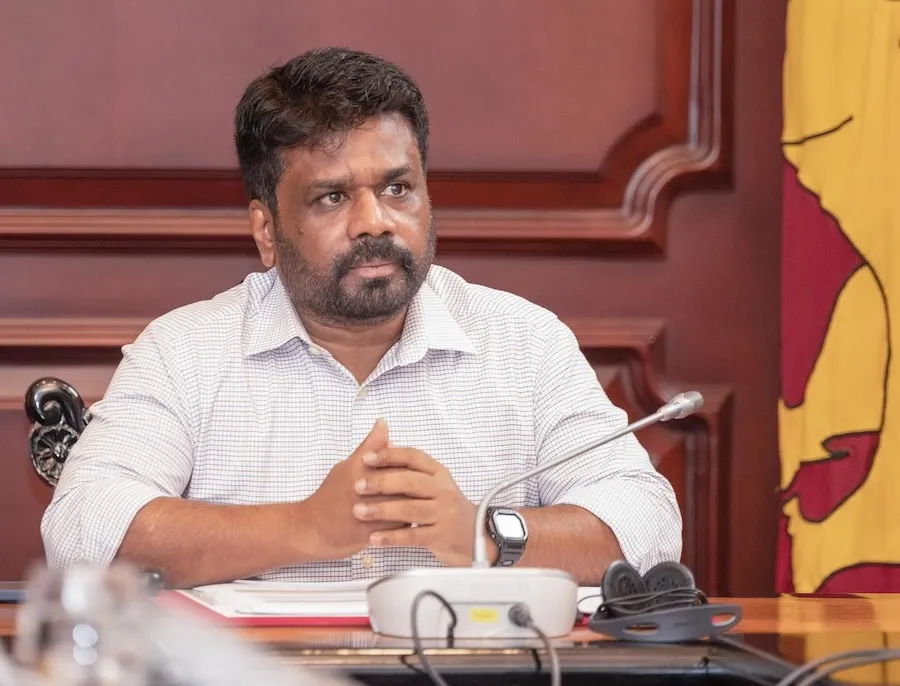
March 17, Colombo (LNW): President Anura Kumara Dissanayake has announced that the government is preparing a series of measures to manage the country’s energy resources more carefully as tensions in the Middle East continue to disrupt global fuel supplies.
The President made the remarks during a high-level meeting held yesterday afternoon at the Presidential Secretariat, where senior ministers and top officials gathered to assess the potential impact of the evolving situation on Sri Lanka’s energy availability and economic stability.
Discussions centred on immediate steps needed to ensure that key economic activities and public services continue without interruption while also reducing energy consumption across government institutions.
Among the proposals considered was the possibility of introducing a weekly public service holiday as a temporary measure to limit electricity and fuel usage in state offices. Officials also explored alternative working arrangements, including the expanded use of remote work for certain government departments where duties can be carried out online.
The meeting further examined how critical sectors such as education, healthcare, tourism, fisheries, manufacturing, agriculture, port operations, aviation services and digital infrastructure could continue operating efficiently while minimising energy demand.
To support these efforts, the President directed a committee comprising ministry secretaries and sector specialists to submit an urgent report outlining the fuel requirements needed to maintain operations in essential industries. The report was expected to provide guidance on how limited fuel resources should be allocated in the coming weeks.
Officials also discussed strengthening the national fuel distribution monitoring system, particularly the QR-based fuel allocation programme introduced during the country’s previous fuel shortages. The system is expected to help authorities track daily fuel usage more accurately and distribute supplies in a manner that protects both energy reserves and economic productivity.
The government stressed the importance of each ministry sharing updated data with the Ministry of Digital Economy to improve the efficiency of the system. Authorities are also considering further refinements to the mechanism in collaboration with recognised petroleum sector institutions.
During the meeting, attention was drawn to the pressures faced by farmers and small and medium-scale industrialists, who are particularly vulnerable to disruptions in fuel supply. The President noted that targeted relief measures could be introduced if necessary to support these sectors.
In addition, officials discussed suspending certain state ceremonies and large-scale official events as part of a broader effort to conserve resources during the current period of uncertainty.
President Dissanayake emphasised that cooperation from all sectors of society would be vital in reducing the potential economic impact of the global situation. He noted that prudent energy use and coordinated planning would help the country maintain stability while safeguarding essential services.
The meeting was attended by Prime Minister Harini Amarasuriya and several cabinet ministers, including Vijitha Herath, Wasantha Samarasinghe, Nalinda Jayatissa, A. H. M. H. Abeyratne, Anil Jayantha Fernando, Sunil Handunnetti and Bimal Rathnayake, along with senior government officials and economic advisers.