
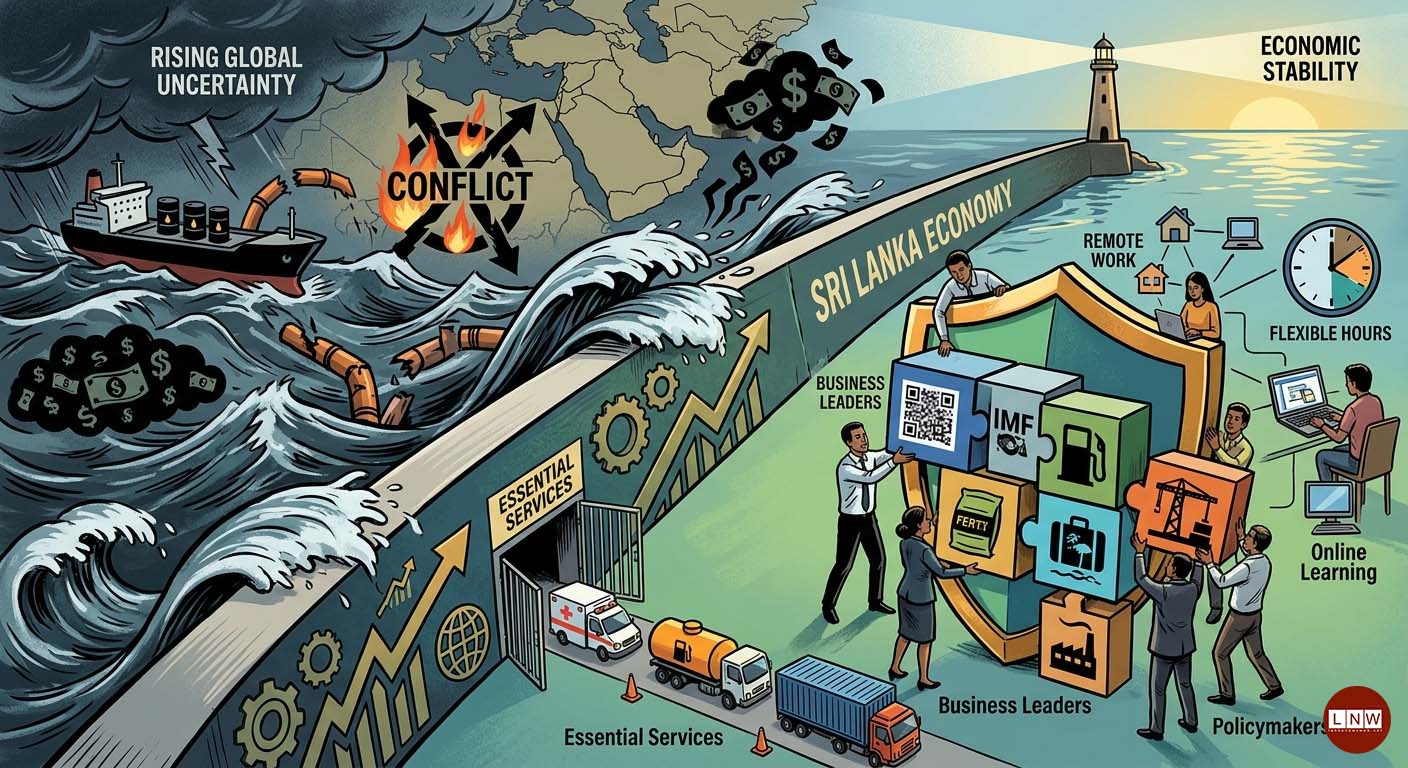
March 17, Colombo (LNW): The Ceylon Chamber of Commerce has called on the government to adopt coordinated and forward-looking measures to shield Sri Lanka’s economy from potential shocks stemming from the intensifying conflict in the Middle East and the broader global uncertainty surrounding energy supplies.
In a statement issued this week, the Chamber said it stands ready to collaborate closely with policymakers and has already presented a series of policy proposals aimed at maintaining economic stability and protecting vital sectors.
The organisation noted that in recommendations submitted on March 11, 2026, it emphasised the `importance of continuing the country’s programme with the International Monetary Fund and ensuring that upcoming financial disbursements are received on schedule.
It also advocated reforms to the fuel pricing structure to make it more responsive to market changes, as well as the revival of the QR-based fuel distribution system — measures that authorities have already begun to implement.
Earlier proposals from the Chamber also focused on strengthening energy security and supporting key industries. These included accelerating fuel procurement processes, maintaining sufficient fertiliser supplies ahead of the next cultivation season, and intensifying tourism marketing campaigns, particularly in fast-growing travel markets such as India and parts of East Asia. It also suggested expediting port clearance procedures and reassessing policies that may place additional strain on the country’s foreign exchange reserves.
Building on those recommendations, the Chamber has now proposed several further steps designed to ensure that economic activity continues even if supply disruptions occur. Among the key suggestions is the identification of essential services and priority economic sectors that should receive preferential access to limited resources such as fuel and foreign currency during periods of constraint.
The Chamber also recommended adopting a more strategic approach to securing fuel supplies by widening the range of international suppliers and strengthening procurement arrangements. It warned that maintaining adequate aviation fuel reserves would be particularly critical to sustain the country’s tourism industry and ensure uninterrupted international connectivity.
Another proposal involves permitting licensed domestic bunkering firms to independently source fuel for use by export-oriented manufacturers and tourism operators. Such purchases could potentially be conducted in foreign currency, a model that the Chamber noted had previously helped sustain certain industries during the country’s recent economic crisis.
To further reduce fuel consumption without halting productivity, the organisation suggested introducing flexible working arrangements across both the public and private sectors. Options such as remote working and staggered office hours could help limit daily travel and reduce energy demand.
The Chamber also proposed adjusting the academic calendar if necessary, including bringing forward the closure of schools and universities ahead of the traditional Sinhala and Tamil New Year holidays, while temporarily relying on online learning platforms where feasible.
Additionally, it advised that the government consider temporarily restricting non-essential outflows of foreign currency while prioritising reserves for critical imports. These would include fuel, food supplies, pharmaceutical products and raw materials required by export industries.
According to the Chamber, close cooperation between the government and the private sector will be essential in navigating potential global disruptions. It stressed that businesses should be kept regularly informed of policy developments so that companies can plan ahead and respond effectively to changing economic conditions.