
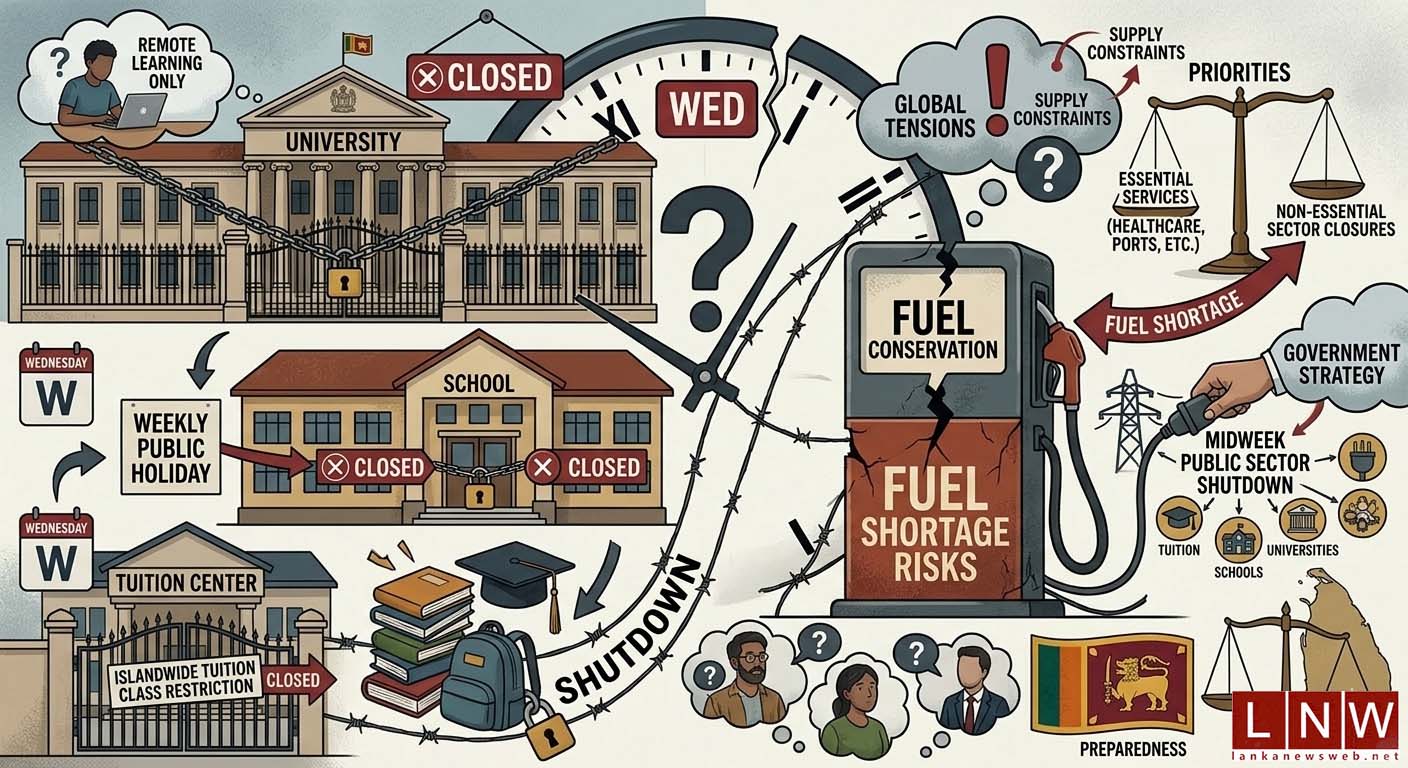
March 17, Colombo (LNW): Private tuition classes across Sri Lanka will not be permitted on Wednesdays, now designated as a weekly public holiday, as part of a wider effort to curb fuel consumption, authorities have announced.
Prabath Chandrakeerthi confirmed that the restriction applies islandwide, bringing after-school academic activities in line with the government’s broader midweek closure policy.
At the same time, universities have been directed to shift teaching online where possible. According to Wasantha Liyanage of the University Grants Commission, vice chancellors have been advised to ensure lectures continue via digital platforms to minimise disruption to higher education.
Students currently residing in university hostels will be allowed to remain on campus, with their studies continuing remotely. However, individual universities have been granted discretion to decide whether students may return home or be granted leave, depending on prevailing circumstances.
The sweeping measures form part of a government strategy to brace for potential fuel shortages linked to ongoing global tensions. Weekly public holidays on Wednesdays will apply to most state institutions, including schools, universities, and courts, although critical sectors such as healthcare, ports, water services, and customs will continue to function as usual.
The policy was finalised following high-level consultations chaired by President Anura Kumara Dissanayake and Prime Minister Harini Amarasuriya, alongside senior ministers and top officials. Discussions centred on safeguarding essential services while preparing for possible constraints in fuel availability.
In a further move to conserve resources, all state-sponsored ceremonial events have been suspended indefinitely. Authorities are also engaging with private sector stakeholders, including business chambers and trade unions, to encourage similar energy-saving practices beyond the public sector.
Officials noted that fuel distribution continues under the existing QR-based system, with ongoing assessments to prioritise supply for vital industries such as agriculture, healthcare, tourism, and manufacturing. Special attention is being given to maintaining transport networks for essential goods, particularly food distribution.
To oversee the evolving situation, the Cabinet has established several dedicated committees tasked with ensuring continuity of public services, managing energy use, monitoring essential goods distribution, and addressing welfare concerns among vulnerable groups.
While Wednesdays are now largely non-working days for the public sector, ministry secretaries and department heads retain the authority to deploy limited staff where necessary to maintain critical functions. Weekend closures for most government offices will also remain in place.
Despite assurances that current fuel reserves are adequate, officials say these precautionary steps are intended to strengthen preparedness and minimise disruption should global supply conditions worsen.