LISTEN TO STORY
WATCH STORY
By: Puli
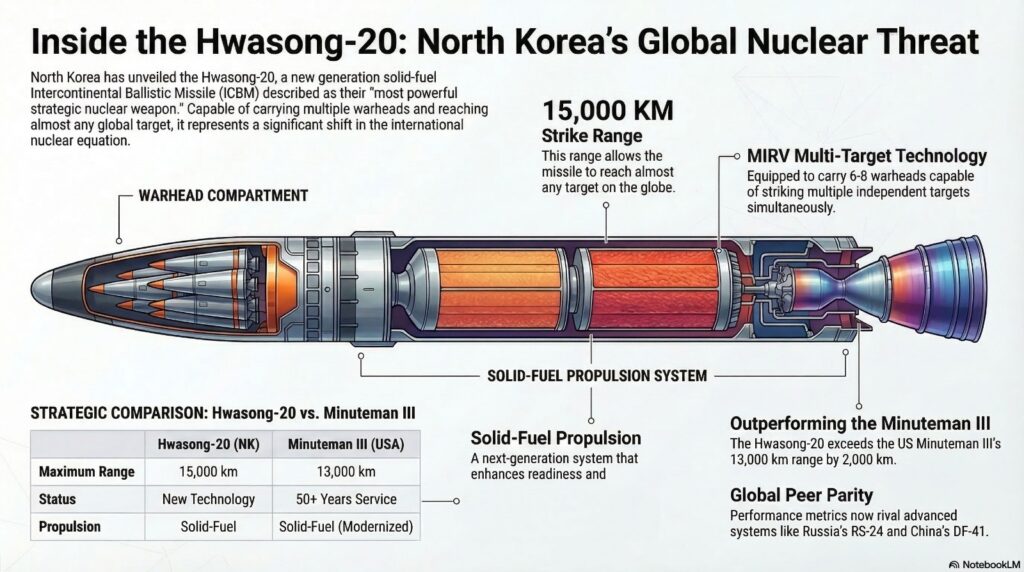
March 17, LNW (Colombo): North Korea’s Hwasong-20, reportedly capable of traveling up to 15,000 kilometers and carrying 6–8 MIRV warheads, stands in sharp contrast to the United States’ LGM-30G Minuteman III, which has an estimated range of about 13,000 kilometers.
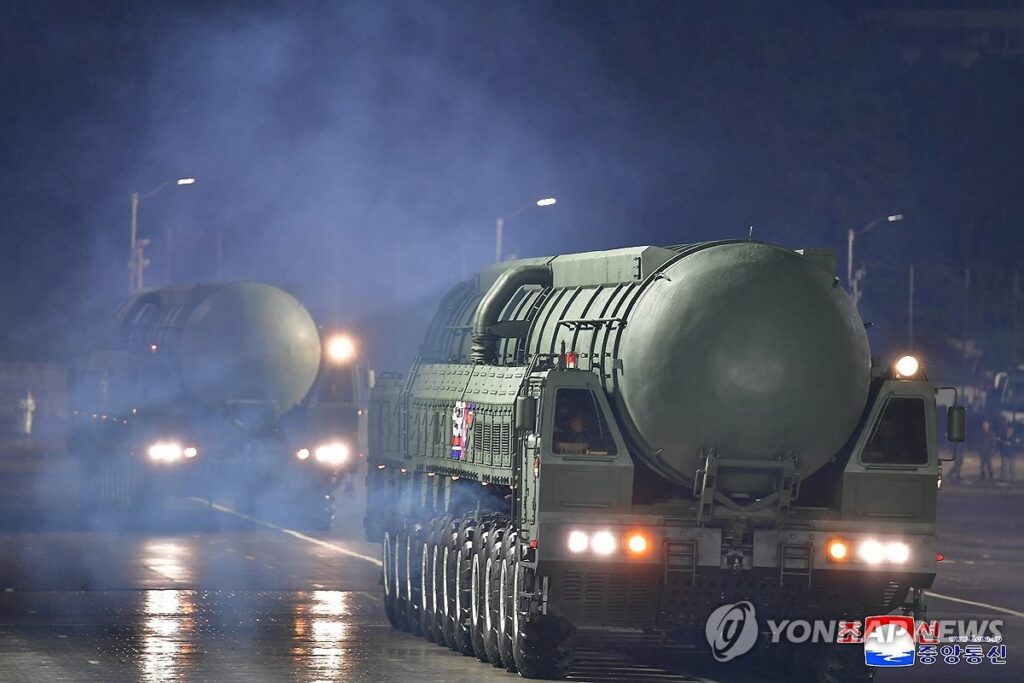
In terms of range and reach, missiles in the 15,000 km class – comparable to Russia’s RS-24 Yars or China’s DF-41 are designed for true global strike capability. They can potentially hit almost any target on Earth from their home territory. By comparison, the Minuteman III remains a fully intercontinental missile, but with a slightly shorter range than these newer systems.
North Korea has now unveiled the Hwasong-20 as what it calls its “most powerful strategic nuclear weapon,” a next-generation solid-fueled ICBM. Meanwhile, the Minuteman III has served as the backbone of the U.S. land-based nuclear arsenal for over 50 years.
On one hand, the Hwasong-20 represents a cutting-edge system that has yet to be fully tested and proven in real operational conditions. On the other hand, the Minuteman III is a highly mature platform, validated through decades of testing and continuous upgrades.
A comparison of these two missiles highlights a clear gap in technological maturity, accuracy, and operational reliability. While North Korea’s system may showcase impressive theoretical capabilities, the U.S. missile reflects long-standing performance and precision.
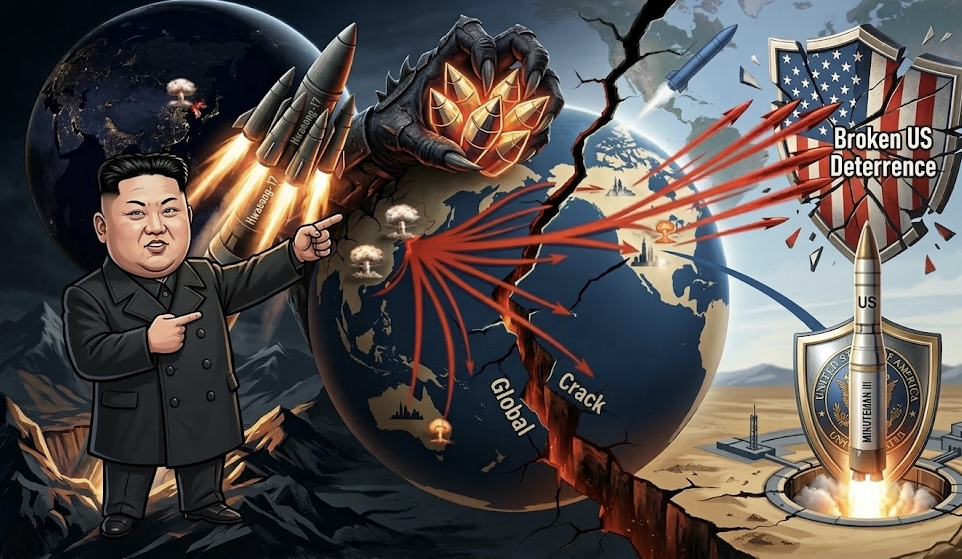
Strategically, a missile of this class can travel across continents in a single launch and threaten multiple targets simultaneously. This compresses decision-making time during crises and increases uncertainty for missile defense systems, significantly raising the stakes in global security dynamics.